The Two-Oil Capsule That Cut Upper-Belly Pain By 40%, Versus 22% With Placebo
Peppermint oil plus caraway oil, 28 days, 96 people. Pages 126 and 135. [3]
For energy, focus, sleep, back pain and about 70 everyday concerns: every remedy checked against the clinical studies, every one on a page number you can find in seconds, and most of the teas ready in about 10 minutes. [1]
I read it standing at the kitchen counter, still in my coat.
The patient portal had posted my lab results before my doctor’s office even called. Down the page, next to a line that said Hemoglobin A1c, there was a number, 6.1, with a little bold letter H beside it. High. In the column next to it, in smaller print: Reference range: 4.0–5.6.
I read that range three times, as if it might change.
The call came the next morning. My doctor was kind and quick, the way doctors have to be. Prediabetes, she said. Borderline. Not a reason to panic, but a warning. Given my family history, she wanted to start a low dose of Glucophage alongside the diet and exercise, and recheck in six months.
I thanked her. I hung up. And I sat down at the kitchen table, because my knees had done something I didn’t like.
I’ll be honest with you: I wasn’t surprised. I’m fifty-three years old, and I come from a family of diabetics.
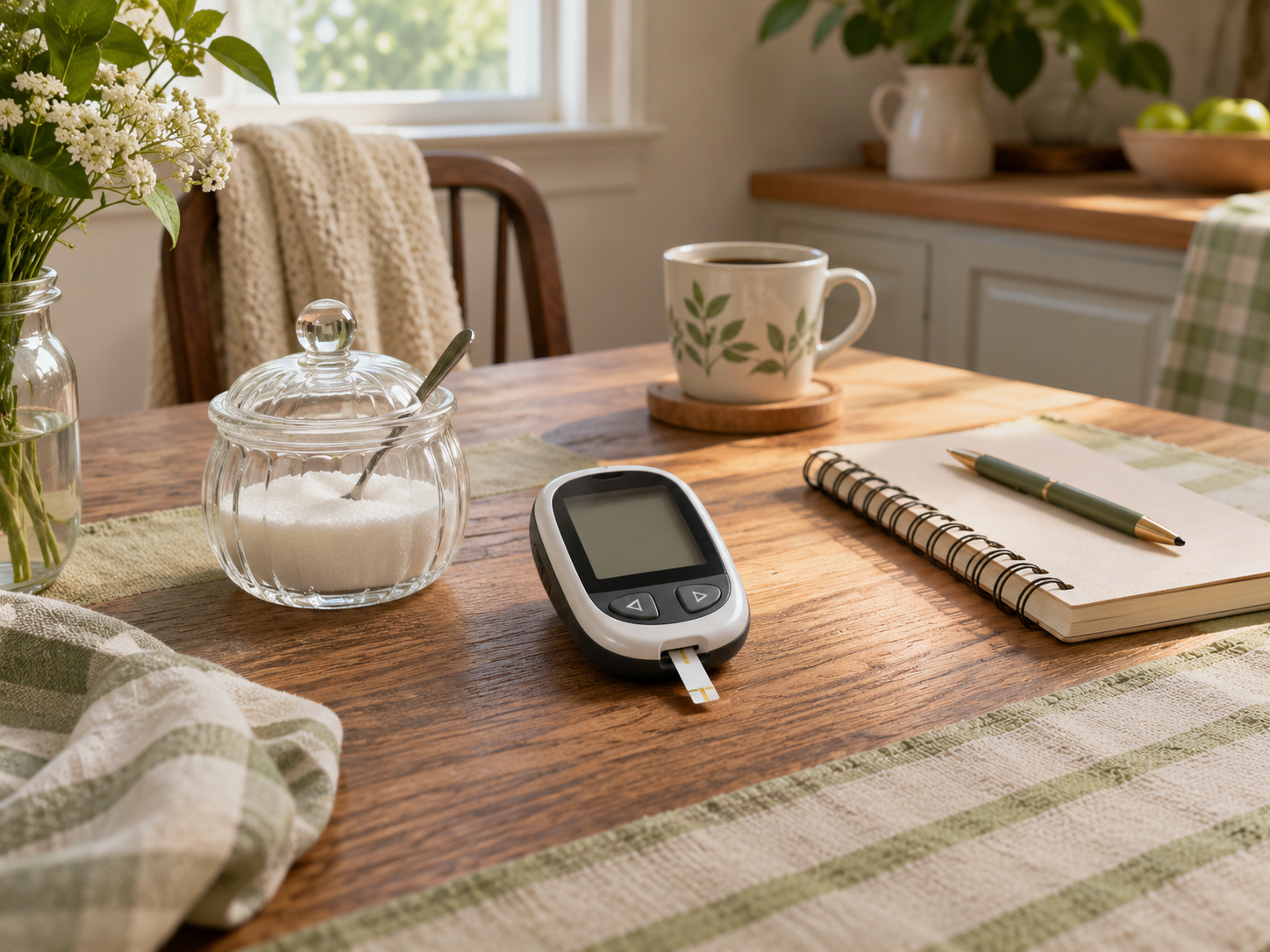
My dad had Type 2 for twenty-two years. He had the meter, the logbook, the pill organizer, the pharmacy on speed dial, and, toward the end, a calendar full of specialists.
That’s the part that stayed with me. Not the diagnosis. The dependence.
My dad rebuilt carburetors on the kitchen table. He fixed his own roof. He never called anybody for something he could figure out himself. And in his last years, somebody had to drive him to every appointment, and he hated every minute of being driven.
My aunt went the same way. My grandmother before either of them. In our family, getting older had a shape: the notebook, the pills, the careful plates at holiday dinners, and eventually, the passenger seat.
Sitting at that table with a printout in my hand, I made myself a promise. I was going to stay in the driver’s seat.
I just had no idea how.
Before I tell you about the herbs, I want you to know that I did what I was told. I’m not the kind of person who skips the first step.
I gave up the soda. Two a day, for thirty years. I put the rice and pasta in smaller bowls and read every label like a contract. I started walking after supper, twenty minutes around our block, with my husband, Tom, who complained for the first two weeks and then quietly started wearing his good sneakers.
I took the medication. The metallic taste and the upset stomach were no fun, and I kept going, because my doctor and I agreed it was the right call.
And I kept a notebook. Everything I ate, every walk. A page a day.
Here’s what nobody tells you about prediabetes: nothing hurts. You feel fine. And you’re asked to rearrange your whole kitchen, your whole idea of dinner, for a number on a screen. At the church potluck I took one small scoop of everybody’s casserole and felt like I was making a scene. Tom, who’s had high blood pressure for years and has his own list of things he’s supposed to avoid, said at our third restaurant in a row, “We’re not turning into people who eat salad for dinner, are we?”
We laughed. But it wasn’t really funny, either.
It’s a quiet kind of fear, and it’s daily. And it’s a lot of work for something you can’t feel.
After a few months of doing everything right, I wanted to know what else I could do. Not instead of my doctor. Alongside.
So I did what any of us would do. I looked.
At the pharmacy there was a whole aisle with “blood sugar” on the labels. On Facebook, a video of a man in a white coat explaining a “breakthrough.” On the evening news, between the insurance ads, a calm voice and a bottle. In my doctor’s waiting room, a magazine with a full-page ad for a “natural glucose formula.” A woman at church told me, with total conviction, that cinnamon capsules had “done wonders” for her brother. My neighbor swore by a spoonful of vinegar before supper. My sister texted me a link at six in the morning with seventeen exclamation points.
I bought some of it. Cinnamon capsules, $14.99. A bottle of turmeric, because I’d read about it in a magazine. And a “ herbal blood sugar support formula” for $39.99, with five stars, a photo of a doctor, and the same four-word phrase in a dozen different reviews, which I noticed and pretended I hadn’t.
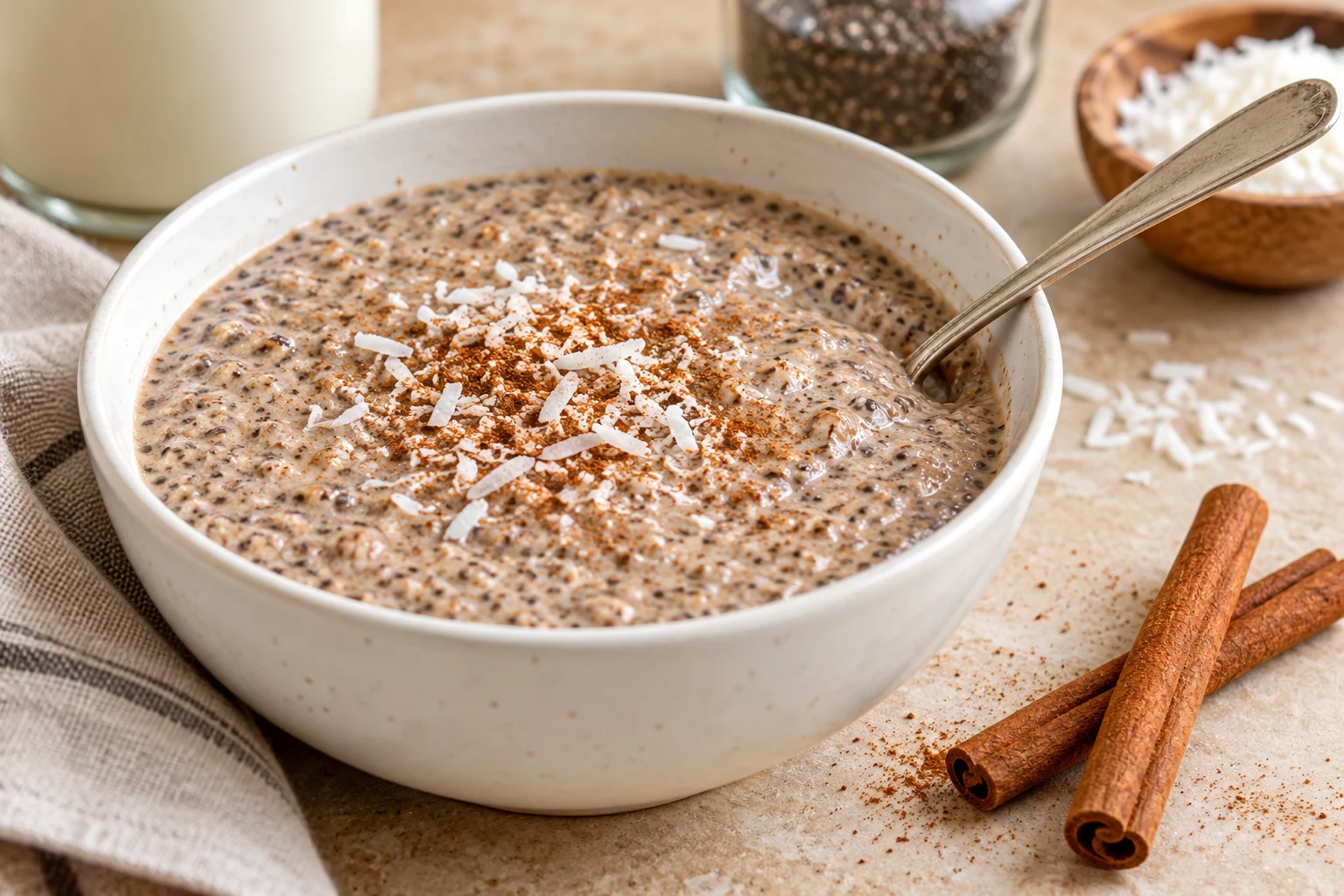
The cinnamon I sprinkled on my oatmeal every morning, fairly generously, as if it were a prescription.
Everything arrived in boxes bigger than it needed to be. And the more of it that arrived, the less I knew.
One evening Tom picked up the $39.99 bottle off the counter and turned it over. He’s a practical man. He reads the back of everything: cereal boxes, paint cans, the warranty on a lawnmower.
“Seven ingredients,” he read. “Proprietary blend, 800 milligrams.” He looked at me over his reading glasses. “Honey, that’s not an ingredient list. That’s a rumor.”
I laughed. Then I stopped, because he was right. What do they even put in these ‘herbal formulas’?
Which part of the plant? How much of each? Tested on whom? For how long? In what form? The bottle couldn’t tell me. The website couldn’t tell me. The woman at church, bless her, couldn’t tell me. And the five-star reviews all said the same thing in the same words.
I’d bought a house. I’d negotiated a car lease. I’d raised a daughter, handled my parents’ paperwork, the funeral home, the estate. And I had never felt so completely unqualified to make a decision in my life.
The next morning I took the bottle to my pharmacist, a woman I’ve known for fifteen years. She was kind, and she was honest: she couldn’t tell what was in it either. But she said something I’ve never forgotten. “Bring me whatever you’re thinking about taking, and I’ll check it against what you’re already on. That’s what I’m here for.”
Nobody else had offered me that. I wrote it on the first page of my notebook.
That’s the part I don’t think people understand.
I wasn’t looking for a miracle. I was looking for the kind of answer my dad’s generation expected: a clear one. The manual. The part number. If you wanted to fix a carburetor, you got the manual. You didn’t buy a bottle that said “carburetor support.”
I wanted to make my own decisions, with real information, the way I always had. And the voices online weren’t explaining. They were selling.
My whole life I’ve believed in doing things for myself. Growing tomatoes and canning them. Fixing the leaky faucet. Balancing the checkbook. And somewhere along the way, on this one subject, I’d handed the wheel to a label.
I wanted it back.
I wrote three lines on the first page of a yellow legal pad. I still have the page.
That’s it. No miracles. Just the ones worth my time, so I could stop wasting it.
And a fourth line underneath, which I didn’t need to write down: I wanted to stay in the driver’s seat. To be the one in the kitchen who can look at a bottle, a tea or a claim and say, calmly, “Here’s what that is, and here’s what was tested.”
I’m not a scientist. I’ll say it again: I had to look up half the words.
But I’m a reader. So after supper, at the dining room table, with my reading glasses on and a yellow highlighter in my hand, I started going through the actual sources: the clinical trials on PubMed, and the herbal guidance from the NIH, Health Canada and the European Medicines Agency. I printed what mattered, because I think better on paper, and the printer in the spare room ran out of ink twice. It all went into a three-ring binder, tabs and all.
The first month was discouraging. Page after page ended with “more research is needed.” More than once I shut the laptop and thought, what am I doing? Just follow what the doctor said, and stop.
What kept me going was small. Every so often I’d find a page where somebody had actually measured something. A real number. A real group of people. A real length of time. Each time, I put a dot of highlighter in the margin. Slowly, the dots added up.
I set one rule that I never broke: nothing goes into my body that my pharmacist and I haven’t looked at together. And at my next appointment, I told my doctor what I’d been doing. She raised an eyebrow. Then she said, “Bring me what you find.”
I did. That’s why I trust the way this book was built: it was made to be carried into the room with the people who know you.
Here’s the thing I wish somebody had handed me on day one. It takes about a minute, and once you see it, you can’t unsee it. When someone tells you a remedy “works,” ask four things:
1. Which part of the plant/herb? Leaf, root, flower, fruit or resin are different things. (Milk thistle, for example, is the fruit, not the leaves that give the plant its marbled look. Page 241.)
2. What form? A tea, a tablet and a lab-made extract aren’t the same, and the studies often tested the last one. The book says it plainly on green tea: “A leaf tea and an extract capsule need different doses.” (Page 84.)
3. Who, how many, how long? Sixty-five adults for six weeks is a different story than “studies show.”
4. What did they actually measure? Absorption is not the same as relief. A memory test score is not the same as a life changed. The best studies tell you, in plain words, what they counted.
I put every herb I came across through those four questions. And it started to feel like a flashlight in a dark room.
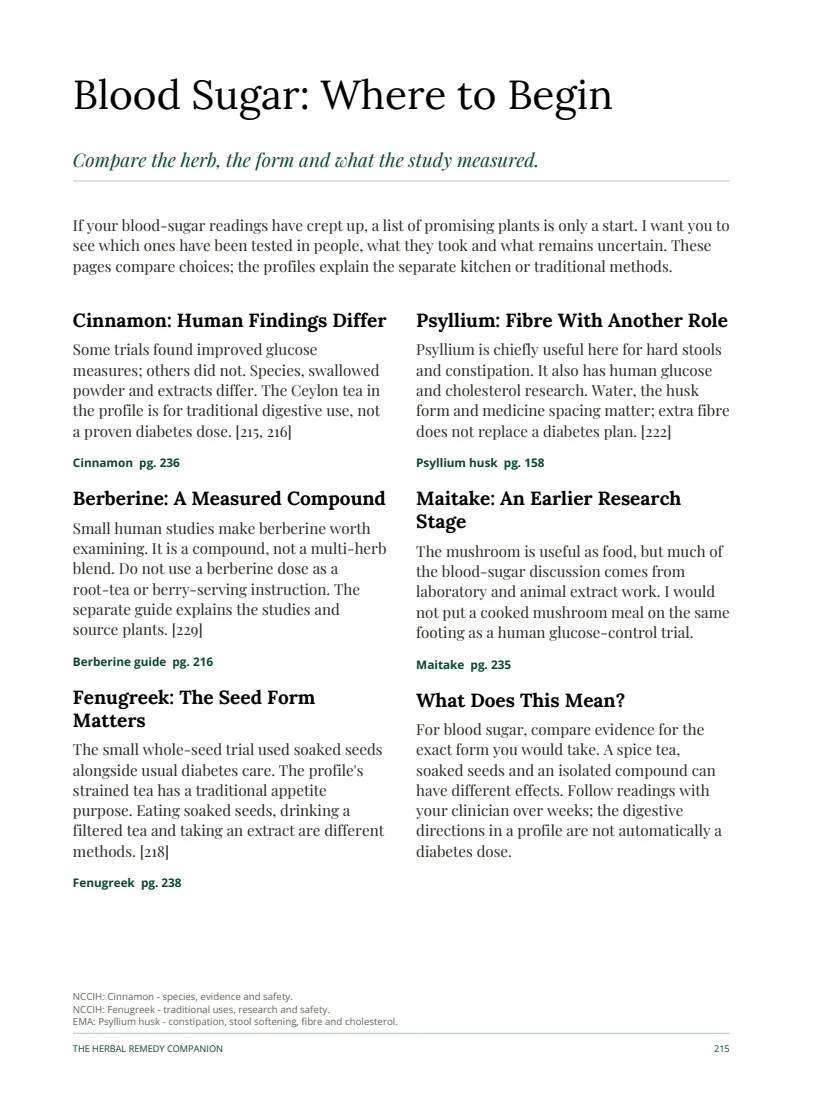
One evening I spread the printouts across the dining room table and made a comparison. Just for me. Every blood-sugar herb I could find, sorted by a single question: has it been tested in people, and in what form?
Cinnamon had human trials with differing results. Berberine had small human studies that made it worth examining. Fenugreek had a small whole-seed trial. Psyllium was fibre with another job. Maitake was still at an earlier stage of research. [8] [6]
I took off my reading glasses, rubbed my eyes, and sat back. For the first time in months, the noise went quiet. Not because I had an answer. Because I finally had a way to sort the answers.
That comparison became page 215 of the book, and the seed of everything else. Because once I could tell what was tested and what wasn’t, I couldn’t stop. I did it for sleep. For stress. For energy. For the cough Tom gets every winter. One herb after another, until the binder turned into a manuscript, and the manuscript turned into 158 herbs, each one checked, each one actually showing results.
Somewhere in my second notebook, I noticed a pattern I hadn’t gone looking for.
The most interesting remedies weren’t always working alone. Researchers had paired them on purpose.
They call it synergy. And it’s easier to understand than it sounds. Think of a good duo: one opens the door, the other walks through. Sometimes one ingredient helps your body absorb the other. Sometimes a pair was tested together as a formula, measured against a placebo. Either way, there’s a reason behind the pairing, and a way to see it in the research.
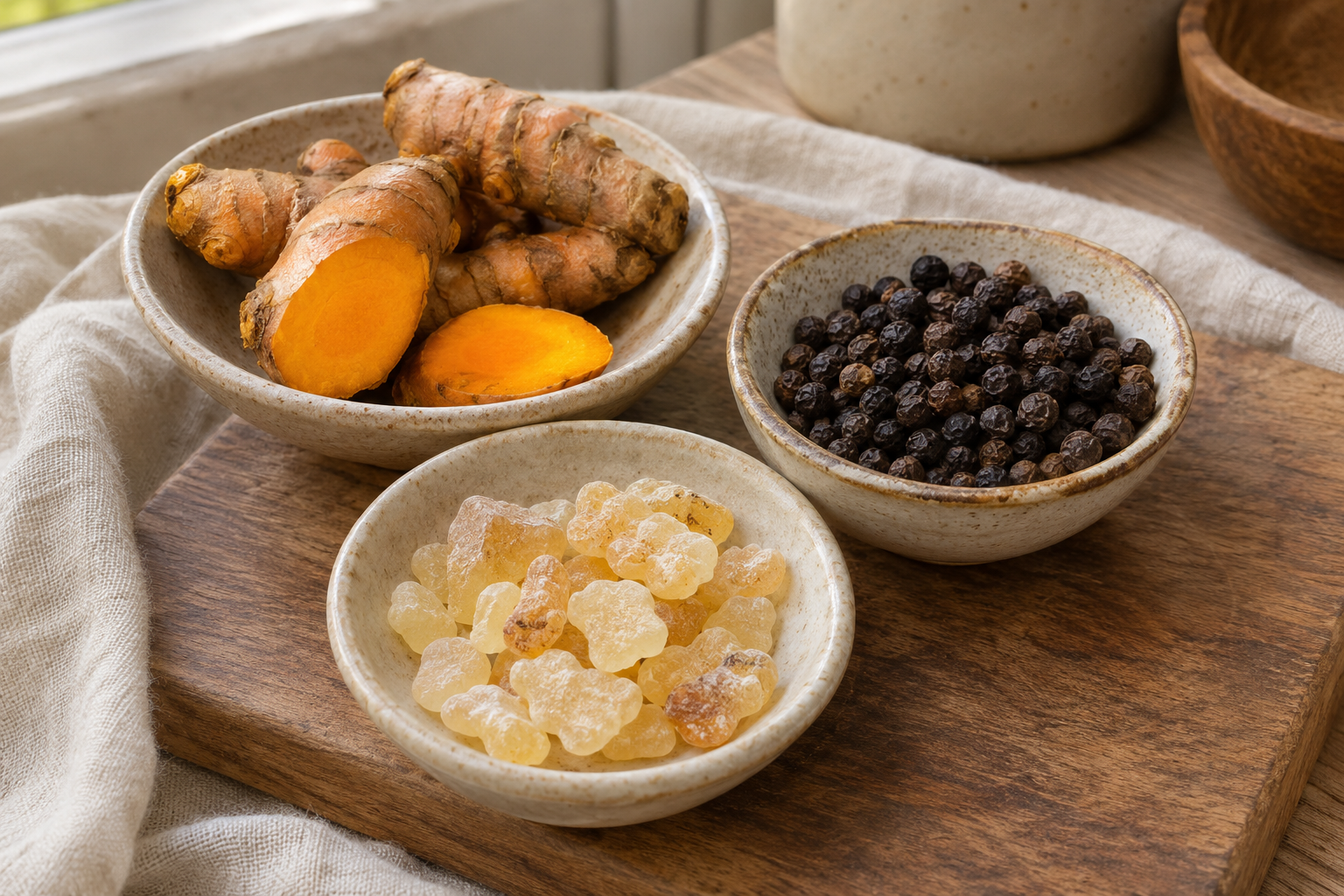
Black pepper + turmeric. A pepper grinder is such an ordinary thing to keep on the table. The interesting part is what researchers found when they moved beyond seasoning. In a small 1998 human study, adding 20 mg of piperine, the compound in black pepper, to 2 g of curcumin from turmeric raised absorption by 2,000%. [2]
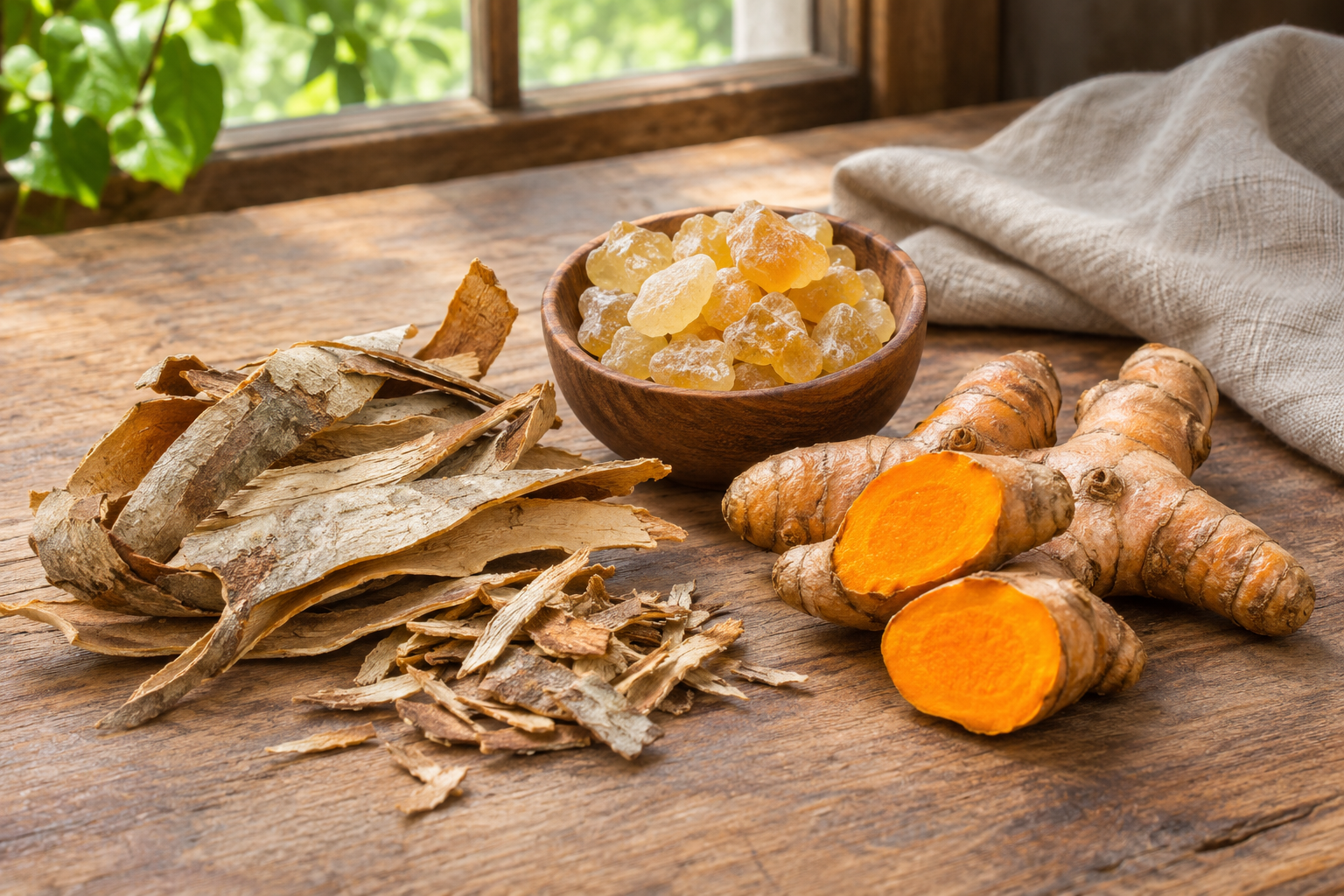
Turmeric + boswellia. Boswellia is frankincense: harvesters cut the tree’s bark so the resin seeps out, and it hardens into little pieces called “tears.” In a 12-week trial of 201 people with knee osteoarthritis, the two extracts together brought benefits for aching, stiff knees. [4]
Five herbs, one formula. Rhodiola, tulsi, schisandra, ashwagandha and milky oat seed were tested together for 60 days, compared with ashwagandha alone and with placebo, and the complete formula improved stress and sleep measures. [5]
But the pairing that stopped me, the one I keep coming back to, came from a place I never expected.
From my mother’s kitchen.
I’ll tell you about the dinner.
It was a Sunday at my parents’ house, a few months after my diagnosis. The windows were fogged. My mother had made her pot roast, the one with caraway in the gravy, and the whole house smelled like it. My father, who’d been so careful all week, took a second small helping and then sat back with one hand flat on his stomach, quiet.
Not in danger. Just heavy. The way you feel when a big meal sits high in your belly, and you’re too proud to say so in front of the kids.
My mother didn’t say a word. She filled the kettle. She took a pinch of caraway seeds from one jar and a few dried mint leaves from another, crushed the seeds under the flat of a spoon, and set a steaming cup in front of him.
“Drink that,” she said.
He drank it. And I remember thinking, that’s the kind of thing nobody ever writes down.
Years later, I found it written down.
Peppermint oil can relax gut muscle. Caraway oil also affects how things move through the digestive tract. Two plants, two jobs, one pairing that kitchens had been using for generations without a name for it. And then, in a 28-day trial with 96 people who had upper-belly pain with indigestion, researchers tested the two oils together in one capsule.
Pain fell 40% with the peppermint-caraway capsule, versus 22% with placebo. [3]
I put my pencil down. It was my mother’s kettle, in a lab coat.
Here’s what I love most about the book: you get to see exactly what they tested. One enteric-coated capsule with 90 mg of peppermint oil and 50 mg of caraway oil, taken twice daily for 28 days. All of it is on page 135, because “a pairing with a number on it” is the whole point of this book. [3]
And for your own kitchen? The same page gives you the old-world version, an after-meal tea of chamomile, caraway and peppermint:
Or go simpler, the way my mother did: lightly crack half a teaspoon of caraway seeds just before brewing, cover with boiling water, and wait 10 to 15 minutes (page 134). One small kitchen note from me: I crack only the caraway I need for that cup, then keep the rest whole and sealed. If old ground caraway has lost its fragrance, adding more won’t bring the freshness back. [24]
Is it IBS, or upper-belly indigestion? Page 127 sorts out which peppermint preparation fits which problem, because they aren’t the same question. And if mint tends to give you heartburn, pages 126 and 135 point you toward a different blend. [3]
I called my father that evening. “Your wife has been doing this for fifty years,” I said. He laughed for a long time. Then he said, “Well. Tell her she was right.”
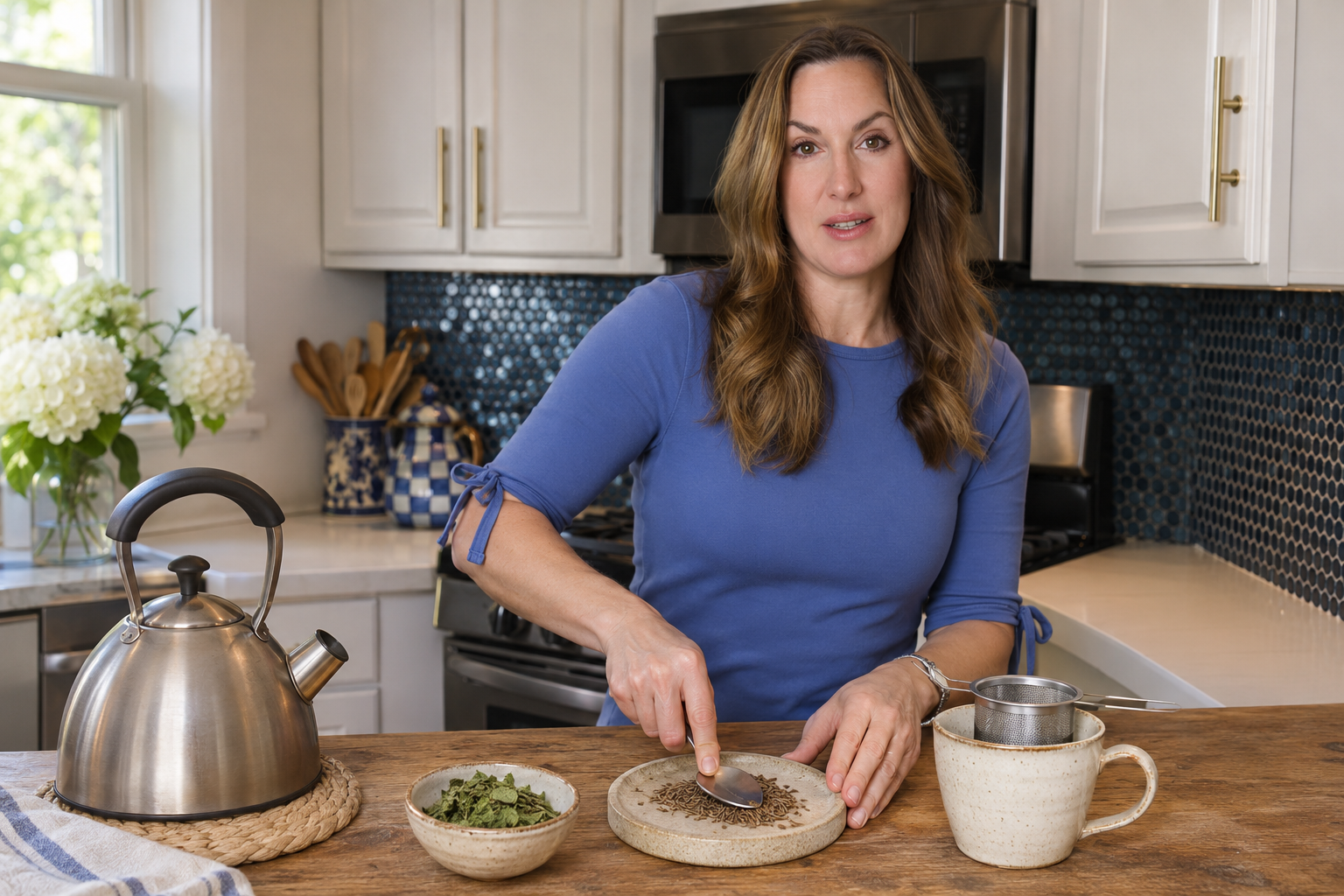
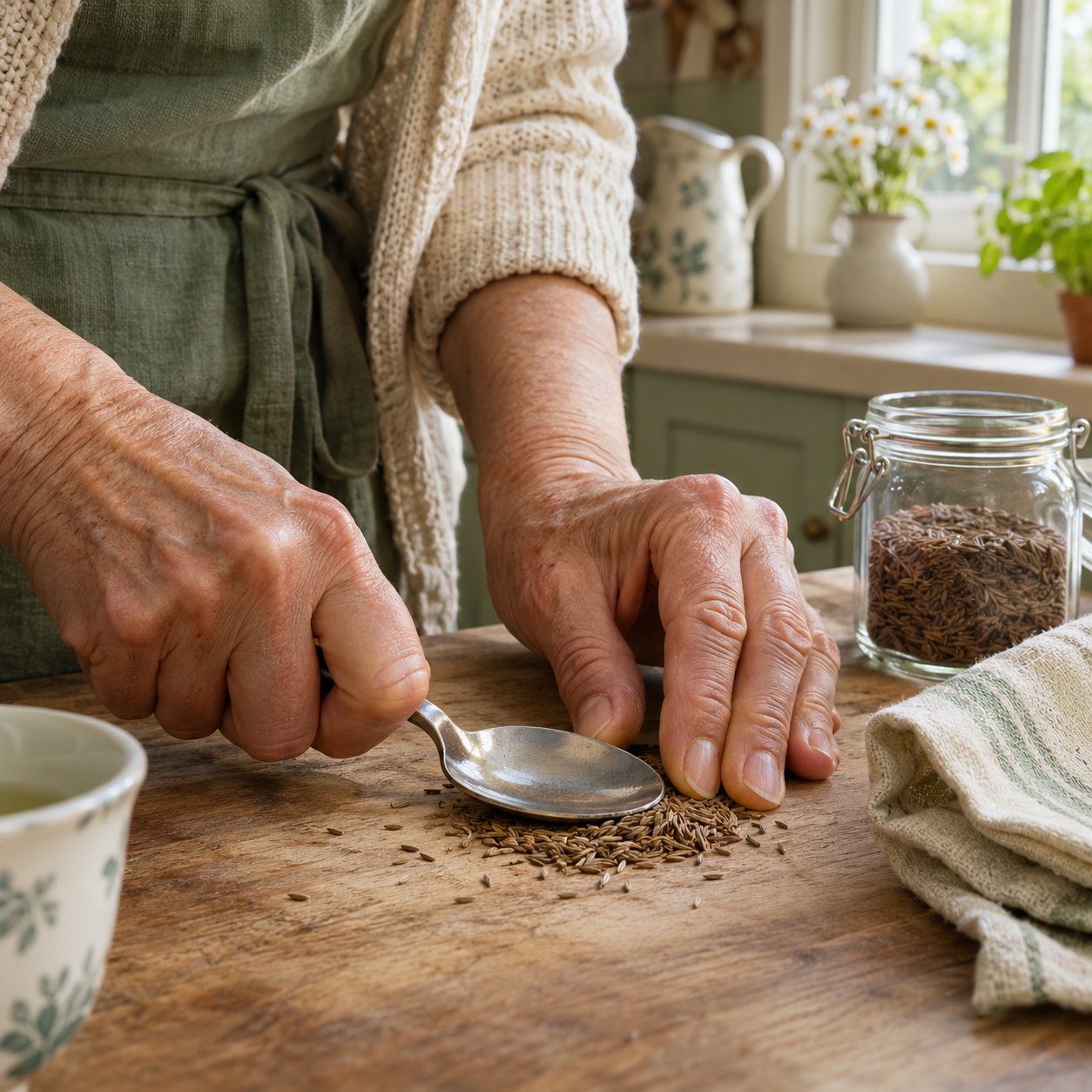 Crack the caraway
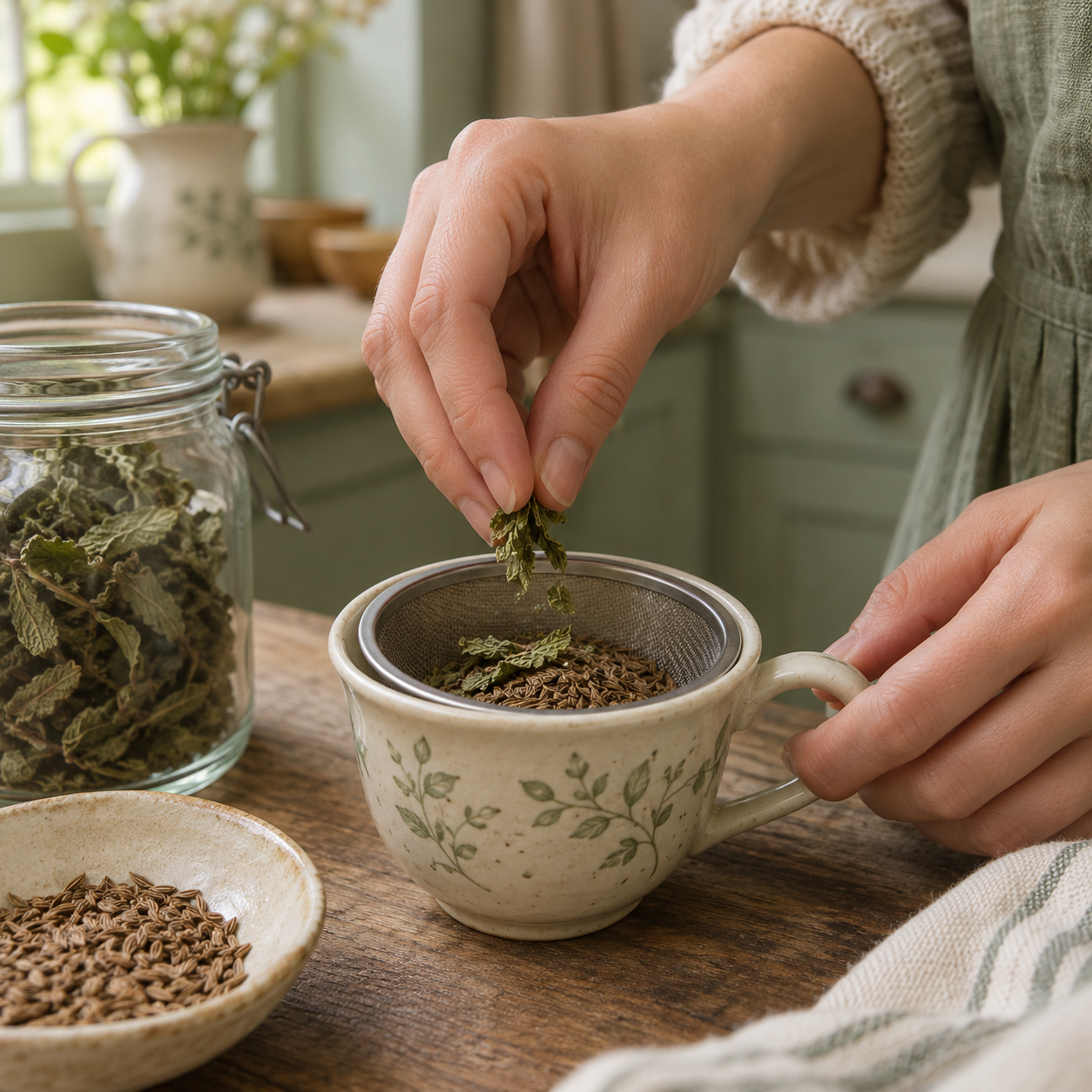 Add dried mint
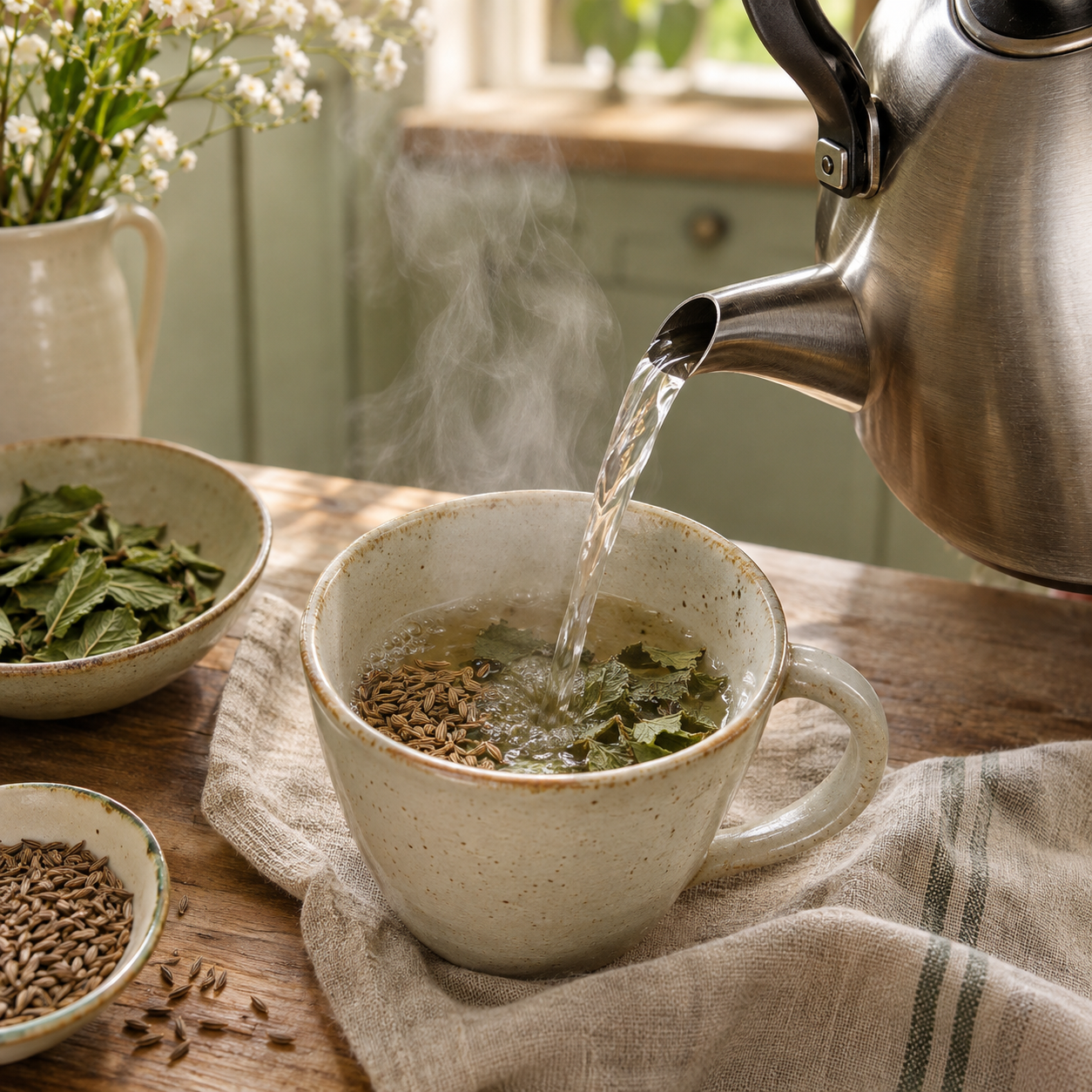 Pour and steep
This one’s in the book because I couldn’t leave it out.
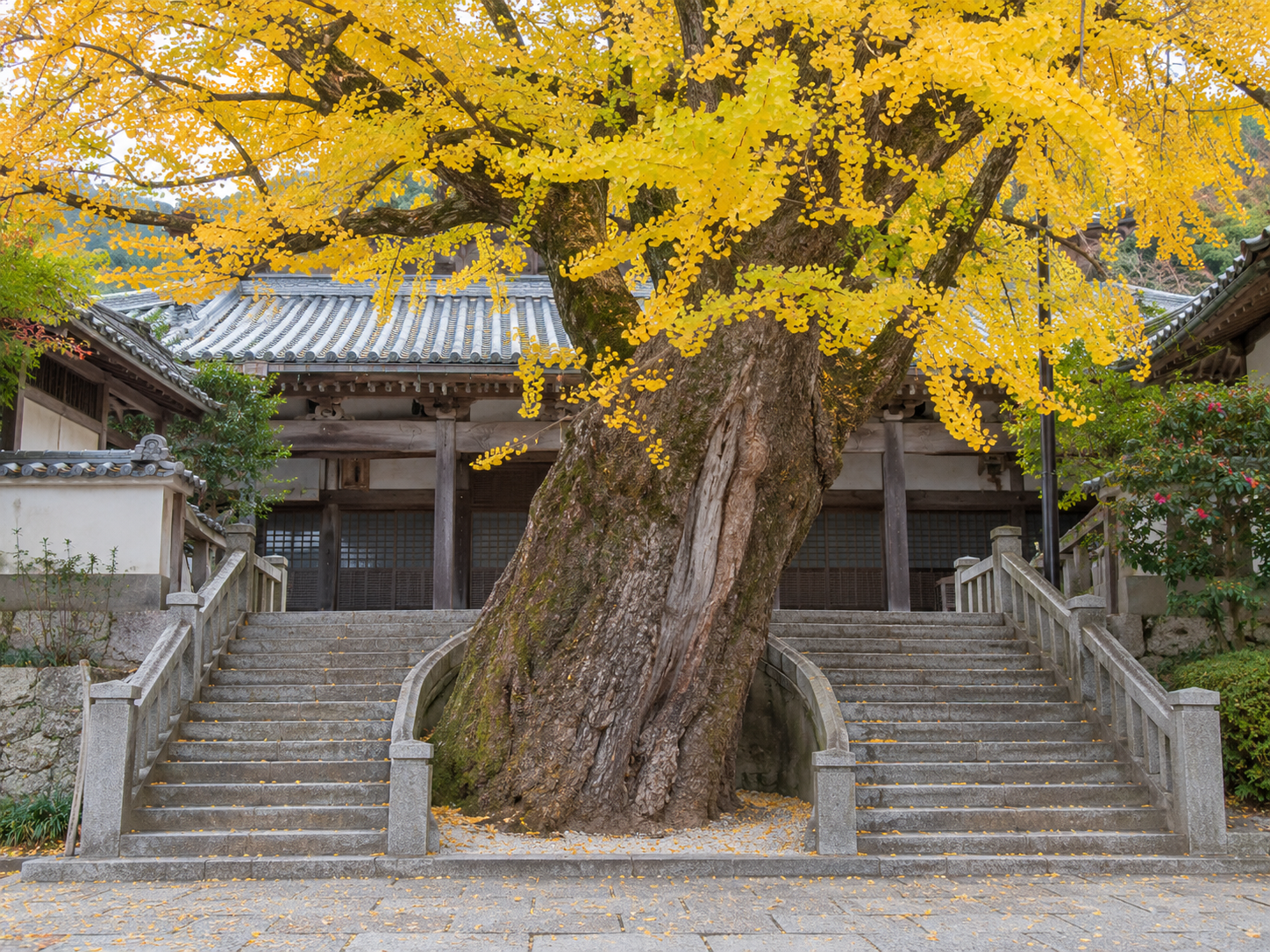
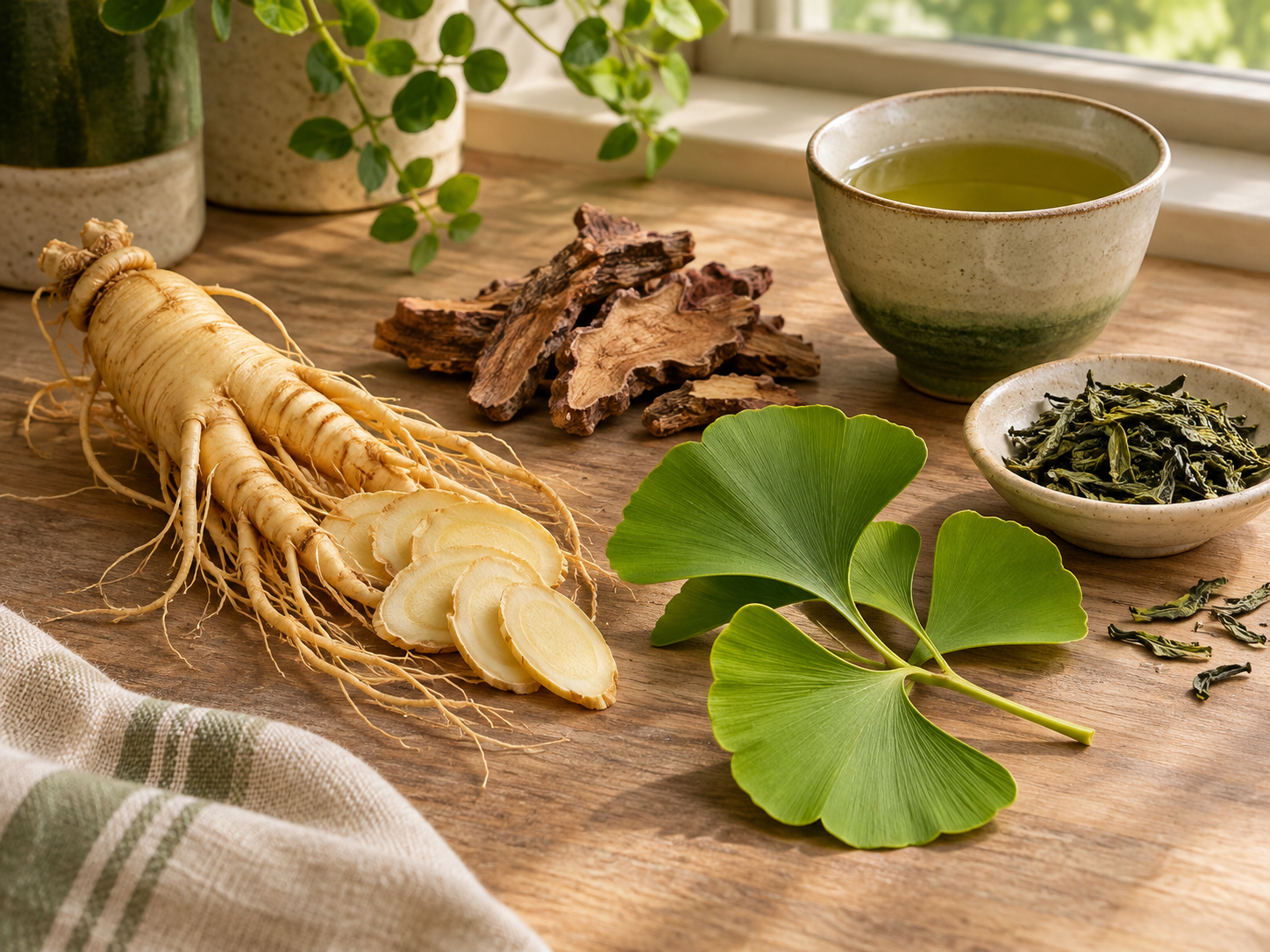
At Hosenbo Temple in Hiroshima, a ginkgo tree stood about 1,120 metres from the centre of the atomic bomb in 1945. It was badly burned, and it sprouted again years later. When the temple’s new main hall was built in 1994, the tree wasn’t cut down. The staircase was built around its trunk, with a large opening to let it breathe. [25]
It’s the ginkgo that was paired with Korean ginseng in a trial completed by 256 people. After 12 weeks of the ginkgo-and-ginseng extract blend, they showed a 7.5% average improvement on a memory test. [25] It was about memory and concentration in otherwise healthy middle age, not about curing dementia, and page 73 keeps that distinction clear.
I love that the plant and the study live on the same page. Pages 73 and 89.
I won’t tell you a book fixed my numbers. I’ll tell you what changed.
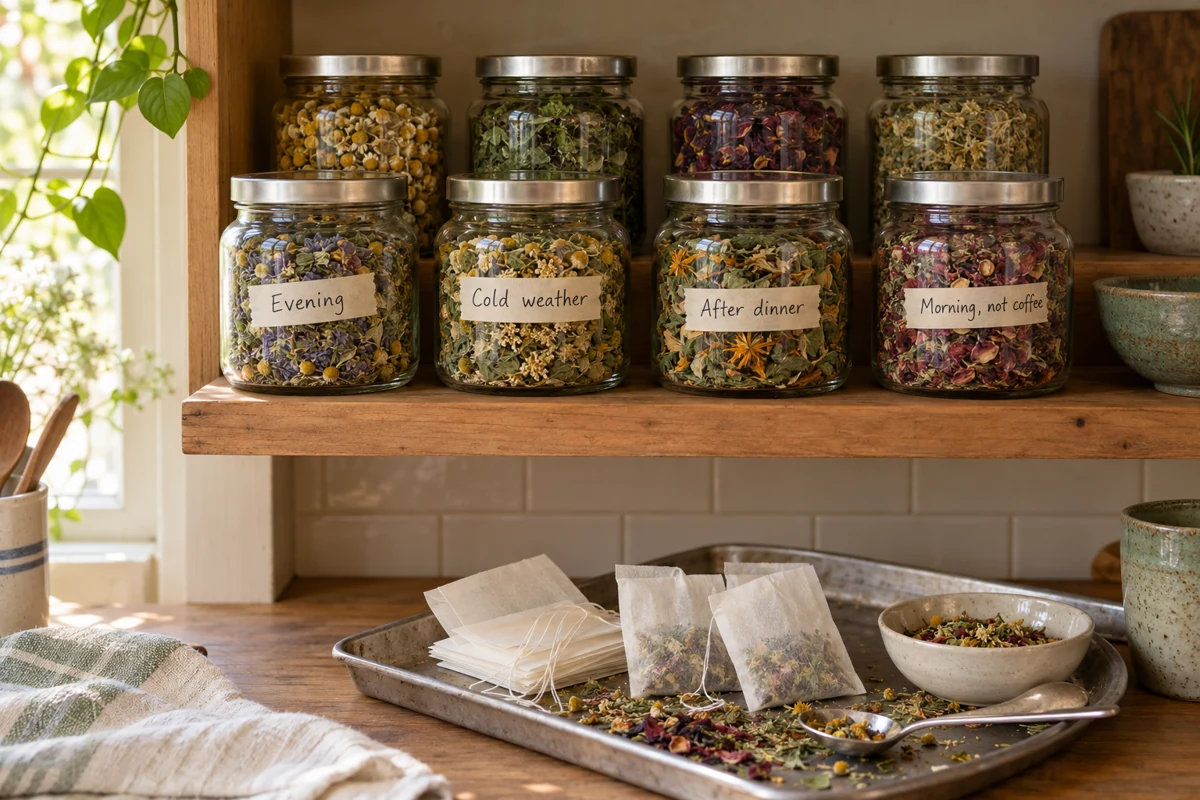
The drawer of half-used bottles went into a trash bag. It felt like exhaling. On the second shelf of the pantry there are now eight glass jars with masking-tape labels in my own handwriting: Evening. Cold weather. After supper. Morning, but not coffee. On Sunday afternoons around two, with the kettle going and a cookie sheet to catch the spills, I mix a ten-bag batch, and the house smells like caraway and mint.
At my six-month follow-up, I walked in with a single page: what I’d changed, what I’d been drinking, and what I’d looked up. My doctor read the whole thing, and said, “This is better organized than most of what I get.” I felt like a driver, not a passenger.
When Tom’s cough comes back each winter, I open my binder before I open my phone. When a friend asks, “Wait, what’s in that?” I can actually answer. I know the part of the plant, the amount, the study, the page.
And here’s something that’s hard to explain until you’ve had it: the quiet. I don’t go looking for answers online at 11 p.m. anymore, because I know where the answers are, and how to read them.
That’s what nobody sells you. It isn’t a result. It’s the feeling of being the one who knows. I haven’t bought a mystery bottle since, and I know exactly what’s in everything on that shelf.
Here’s what a day can look like. Not a rule. Just a day.
7:30 a.m. One green-tea bag, water that’s cooled a few minutes after boiling, two minutes of steeping. I set a timer, because green tea can turn bitter while you’re busy with something else (page 84). I keep caffeine earlier in the day. [9]
3 p.m., the slump. Maybe a root drink I simmered over the weekend (ginseng, page 88). Maybe just a walk. Either way, I notice what I reach for.
After supper. Tom and I walk around the block. Then a cup of my mother’s tea: ten minutes, a cover on the cup (page 135).
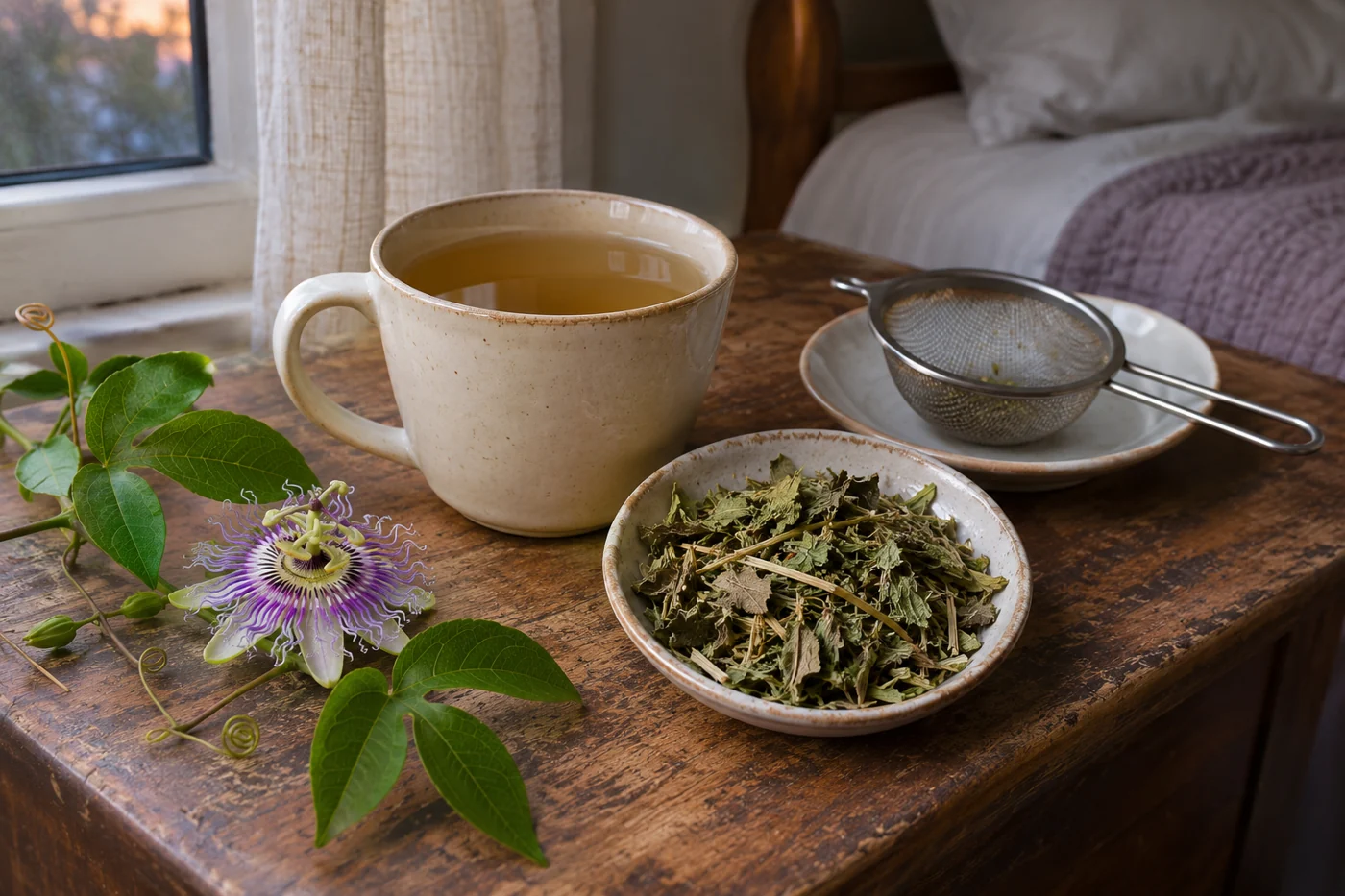
9 p.m. The book’s line on ashwagandha (page 14) stopped me: “Ashwagandha is one I look at when stress leaves you worn out but unable to settle at night.” For me it’s usually lemon balm, 1½ teaspoons covered with boiling water for 10 minutes, with a saucer over the cup (page 16). Crush a leaf between your fingers and lemon balm makes its introduction. [12] [13]
Sunday, 2 p.m. The ten-bag batch. Kettle, spoons, a cookie sheet, the whole week mixed and labeled.
Small. Ordinary. And mine.
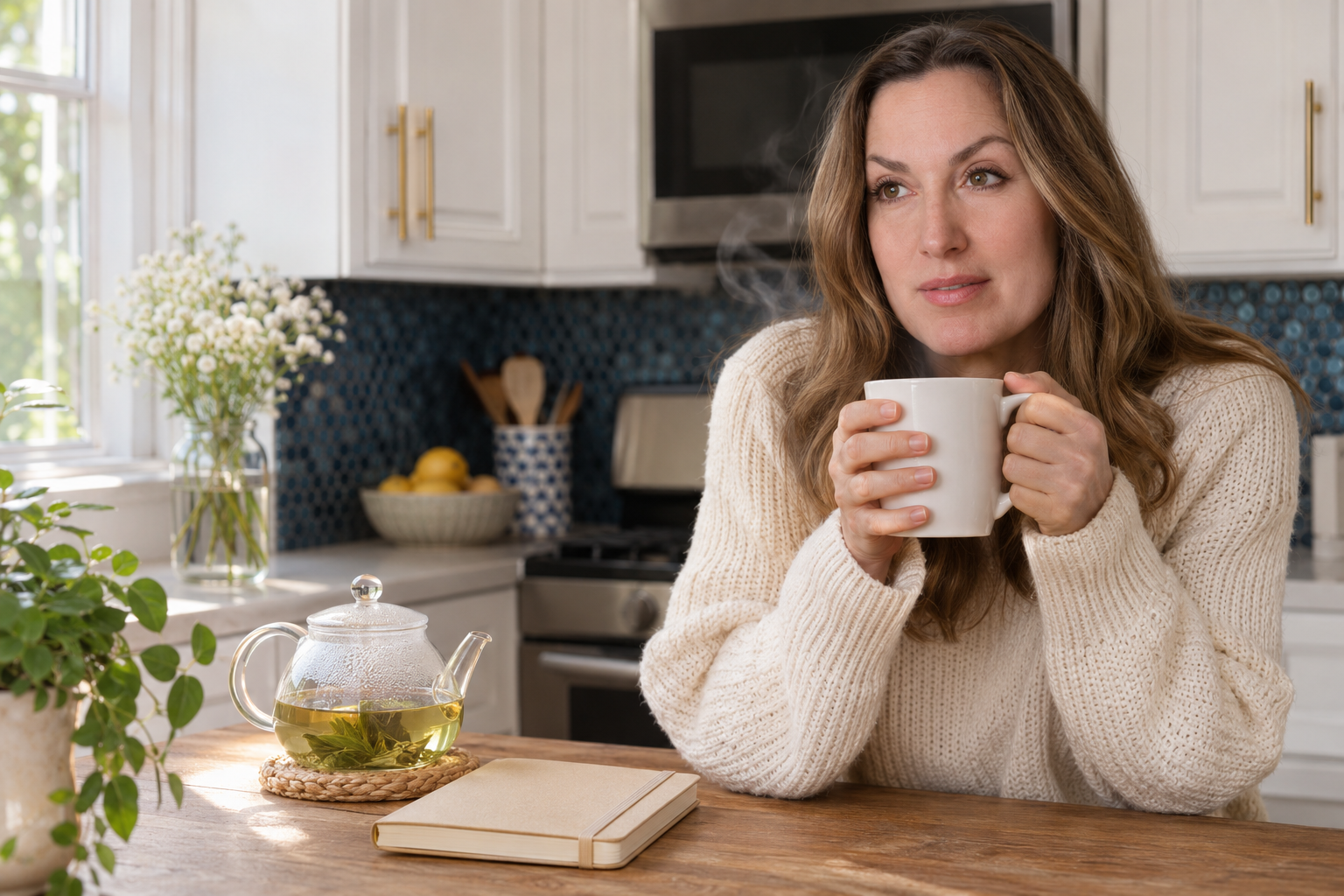
Here’s the part I care about most: you can make these at home, and you don’t have to be an herbalist.
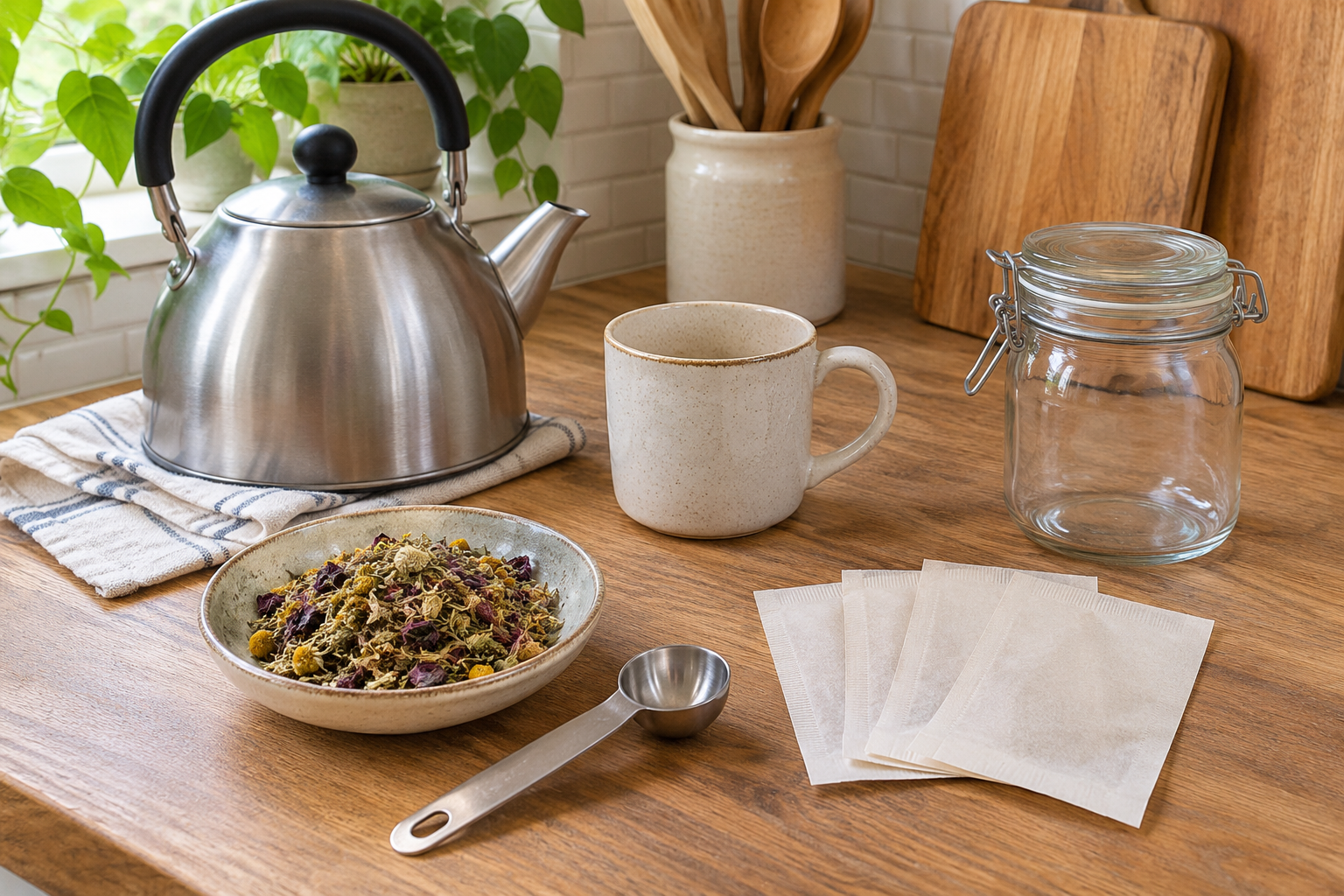
Most of the remedies in the book are teas and kitchen preparations that run on the same simple rhythm. Lemon balm: cover 1½ teaspoons with freshly boiled water for 10 minutes. Passionflower: ½ teaspoon, 10 minutes. Tulsi: 10 minutes. Hibiscus: simmer 2 teaspoons in a cup of water for 10 minutes. [1]
Want to do it once and be done? Mix a ten-bag batch, fill ten paper tea filters, label the jar with the blend and the date, and brew one bag at a time (page 9). Start with a cup and a spoon, the book says. Fill the spoon to the rim, without a heap or pressing the herbs down. That’s the whole skill.
And the cost? Dried herbs, a kettle and a set of measuring spoons. No monthly bottle. No refills. No subscription.
Every profile also carries a short Vivian’s Kitchen Note, the small things I learned by doing it wrong first. Why I crack only the caraway I need and keep the rest whole and sealed (page 134). How to spot fresh lemon balm by its lemon scent, and why a saucer goes over the cup (page 16). Why a timer saves you from a bitter cup of green tea (page 84).
Neither was I. Here’s what I hear most, and what I’d say to you across the kitchen table.
“I don’t trust anything I read online anymore.” Good. Neither do I. That’s why every page of the book names its source, and why I give you the page numbers and the studies so you can check for yourself.
“I’m already on medication.” Then you’re exactly who I wrote the safety notes for. Every profile tells you who should avoid it and what it can interact with. Take the page to your pharmacist, the way I do. Tom’s on a blood-pressure medicine, and that’s the first thing we check, every time.
“I’m not good with this kind of thing.” Neither was I. If you can make a pot of tea, you can make a ten-bag batch. The book gives measures in spoons and grams, and the Kitchen Notes are the small mistakes I made so you don’t have to.
“I don’t have time.” Ten minutes of steeping isn’t ten minutes of work. You boil water, put a cover on the cup, and go do something else. With a ten-bag batch, you do the “work” once.
“Will it lower my blood sugar?” I can’t promise that any herb will change your numbers, and I’d be wary of anyone who does. What I can show you is what was tested in people, how, and in what form, so you and your doctor can decide with your eyes open. That’s the whole point.
“Where do I even buy dried mullein?” Many are grocery and pantry staples. For the rest, the book tells you which part of the plant to look for and what to check on the label, so you never end up with a “proprietary blend” you can’t read. For anything outside the grocery aisle, look for the herb and plant part by name, a single-ingredient label, and clear sourcing and quality details. Bring the product label to your pharmacist before using it with medication.
“My family will think I’ve lost it.” Tom raised one eyebrow when the jars appeared on the shelf. Then he asked for a cup. Then he asked what was in it. And I could tell him.
I wrote it for the person whose life has been plagued by medical bills and not many options.
For the one who watched a parent’s independence shrink to a calendar of appointments, and decided they’d stay in the driver’s seat.
For the person who has done everything right, the smaller plates, the evening walks, and still wants to know what else is worth knowing.
For the one who has stood in a pharmacy aisle reading a “proprietary blend” and thought, that’s not telling me anything.
For the one who’d rather read the manual.
If that’s you, I built this for you, and I put the page numbers on it so you’d never have to hunt.
You don’t have to hand the wheel to a label. You don’t have to take a stranger’s word for it, or an ad’s, or mine. You can look it up, you can check it, and you can make the call yourself, together with the people who know you.
That’s what independence looks like at this stage of life: not doing everything alone, but knowing enough to decide.
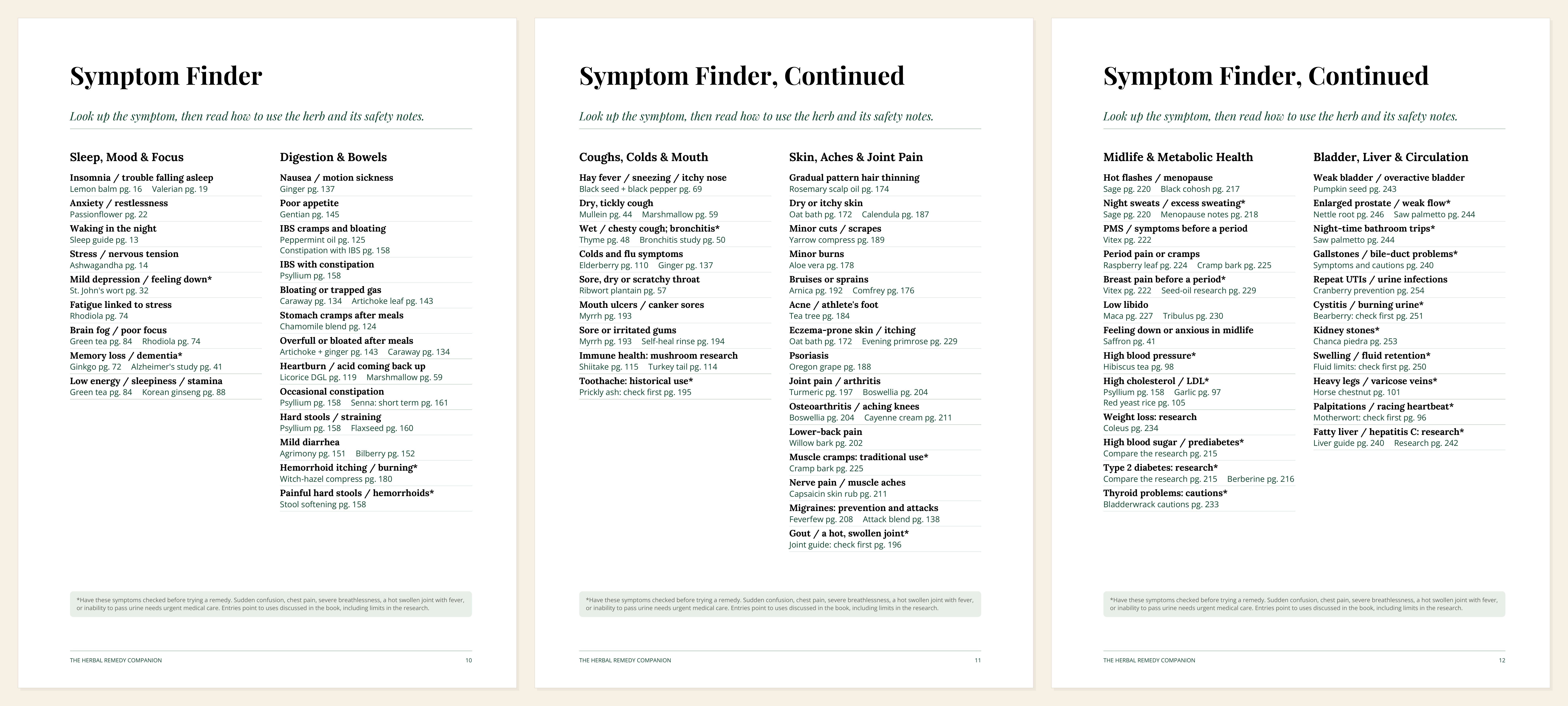
The Symptom Finder (pages 10–12) works like a menu: look up what’s bothering you, and it sends you straight to the page. Here are some of the remedies waiting for you.
Peppermint oil plus caraway oil, 28 days, 96 people. Pages 126 and 135. [3]
Chamomile, caraway and peppermint, a ten-bag batch. Page 135. [3]
Page 127. [3]
Caraway tea, freshly cracked, covered 10–15 minutes. Page 134. [24]
A 126-person trial, 30 days. Page 138.
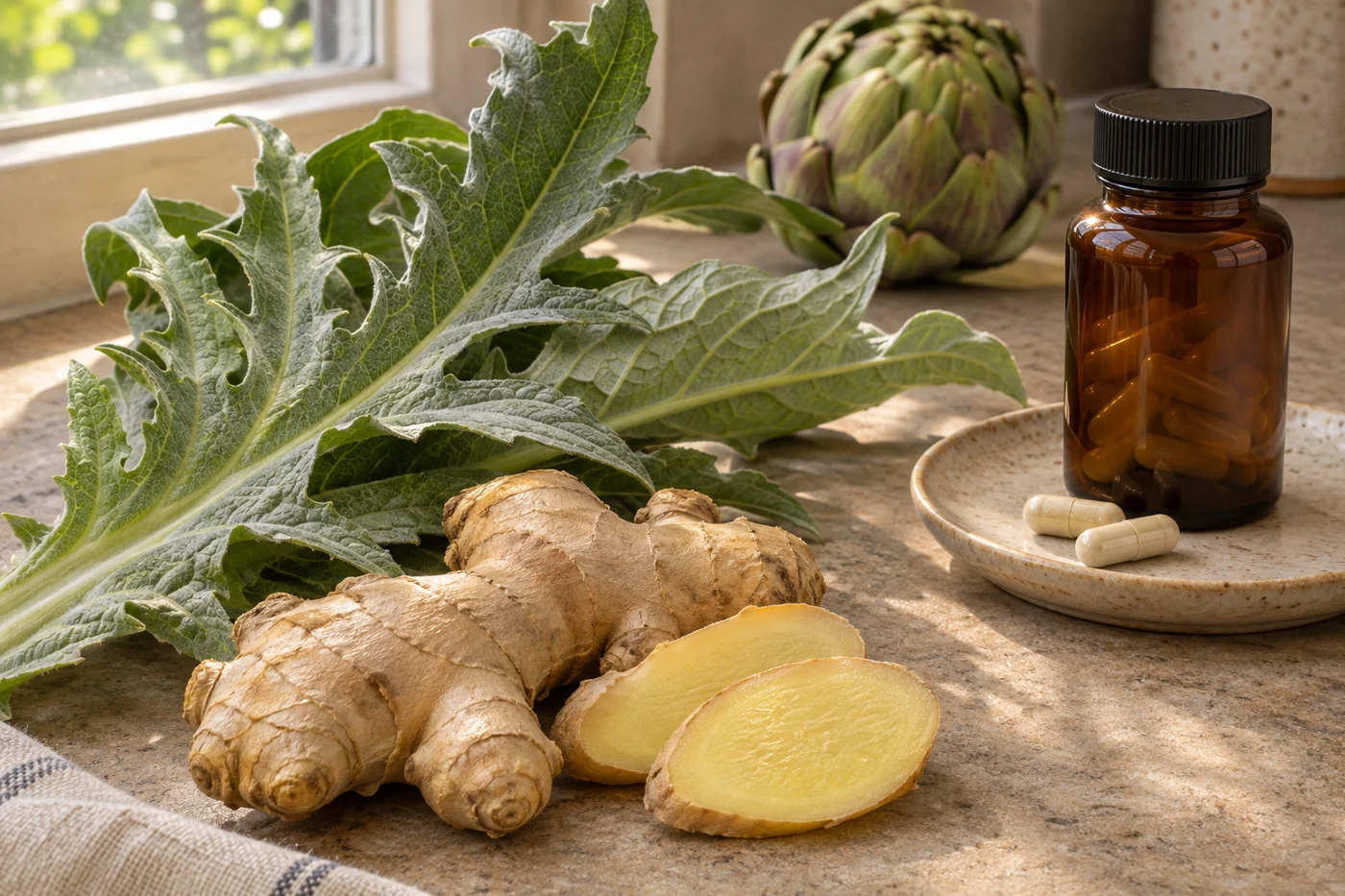
One bag, water that’s cooled a few minutes after boiling, two minutes of steeping. Caffeine can begin increasing alertness in about 15 to 30 minutes. Page 84. [9]
Korean ginseng: simmer sliced root for 15 to 20 minutes. Studies suggest benefits for temporary fatigue and thinking tasks. Page 88. [10]
Rhodiola root extracts have a place in temporary stress-related fatigue, and human studies have explored mental performance. Page 74. [11]
Ginkgo plus Korean ginseng, 256 people, 12 weeks. Pages 73 and 89. [25]
Lemon balm, covered while it brews. Long used for mild stress, restless sleep and an unsettled stomach. Page 16. [13]
A small trial found better sleep ratings after seven nights, which makes a week a useful first test. Page 22. [14]
Valerian: 10 to 15 minutes, one cup 30 to 60 minutes before bed. Page 19.
Compared with ashwagandha alone and with placebo. Page 29. [5]
Short studies found root extracts helped people feel less stressed or sleep better. Page 14. [12]
Some willow-bark extracts have recognized use for short-term lower-back pain. As the book says, you shouldn’t judge an amount by how bitter a garden twig tastes. Page 202. [15]
Turmeric plus boswellia, 12 weeks, 201 people. Pages 198 and 205. [4] [26]
Black pepper’s piperine and turmeric’s curcumin. Pages 198 and 200. [2]
Cinnamon, psyllium, berberine, maitake and fenugreek, compared by herb, form and what the study measured. Page 215. [8]
A small 2008 pilot tested berberine in people with type 2 diabetes. A 2025 trial with 113 people tested a new berberine-based medicine. Page 216. [6] [7]
Ceylon and cassia are different, and human trials have differed too. Page 236. [8]
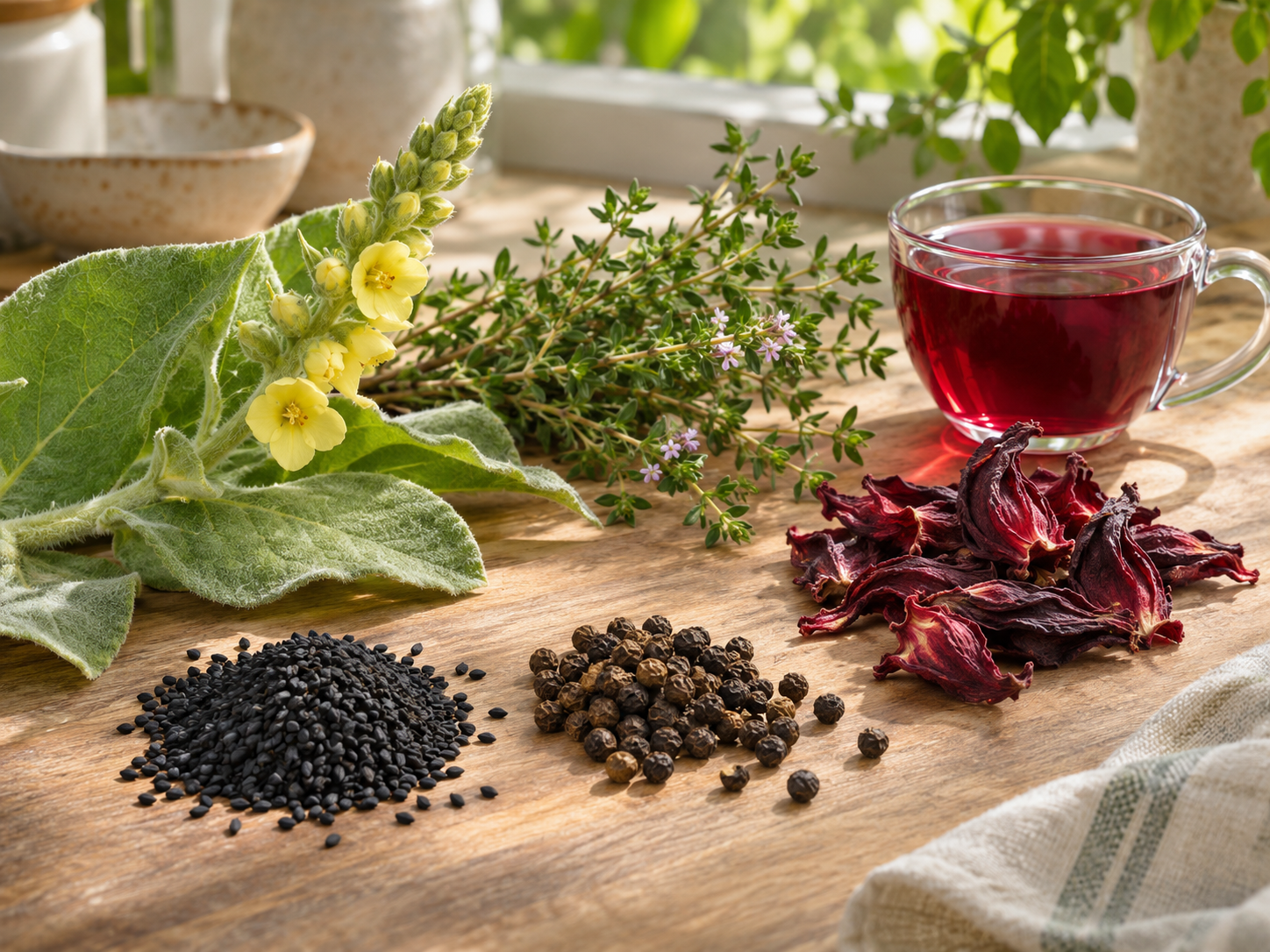
Mullein flowers have a traditional use for an irritated throat and the dry cough that comes with a cold. Strain through a paper filter to remove the irritating hairs. Page 44. [18]
Acute bronchitis, 11 days, compared with placebo. Pages 48 and 50. [17]
A 65-person trial in seasonal allergy. Pages 69 and 70. [23]
In a six-week trial, adults with mildly raised blood pressure drank three cups of hibiscus tea a day, and their top number fell more than in the comparison group. Pages 98 and 99. [16]
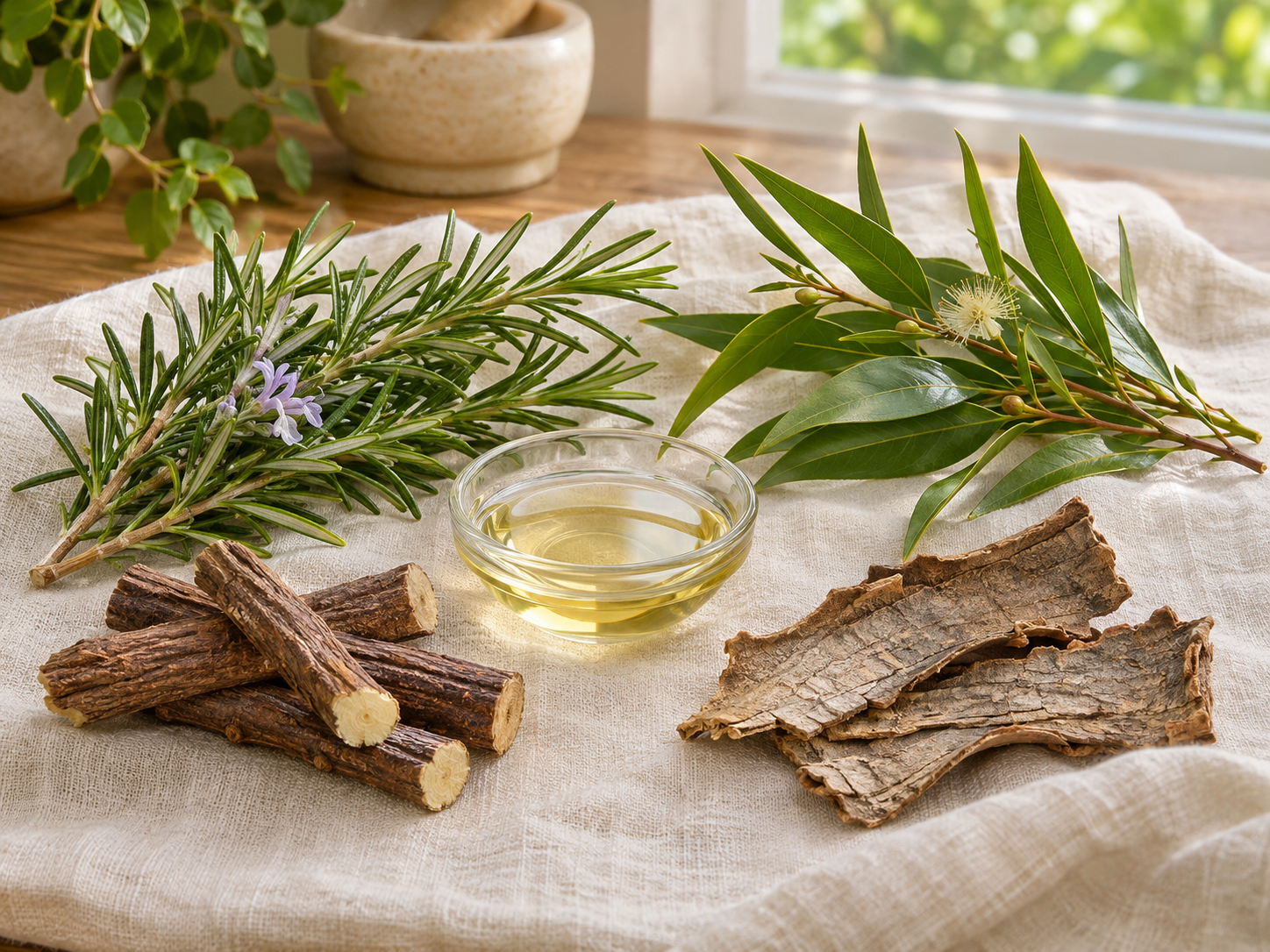
In a six-month study of 100 men, hair counts increased in both the rosemary and minoxidil groups. Early evidence, not proof of equal results. The trial used a prepared lotion; page 175 shows a simple home scalp oil. Pages 174 and 175. [19]
Long used for itching and irritation in mild athlete’s foot, with a European Medicines Agency monograph for 10% oily preparations. Pages 184 and 185. [20]
DGL, tested for heartburn in a four-week trial of 200 adults. Pages 119 and 121. [21]
A traditional witch-hazel bark compress for itching and burning on the outside skin. Page 180. [22]
---
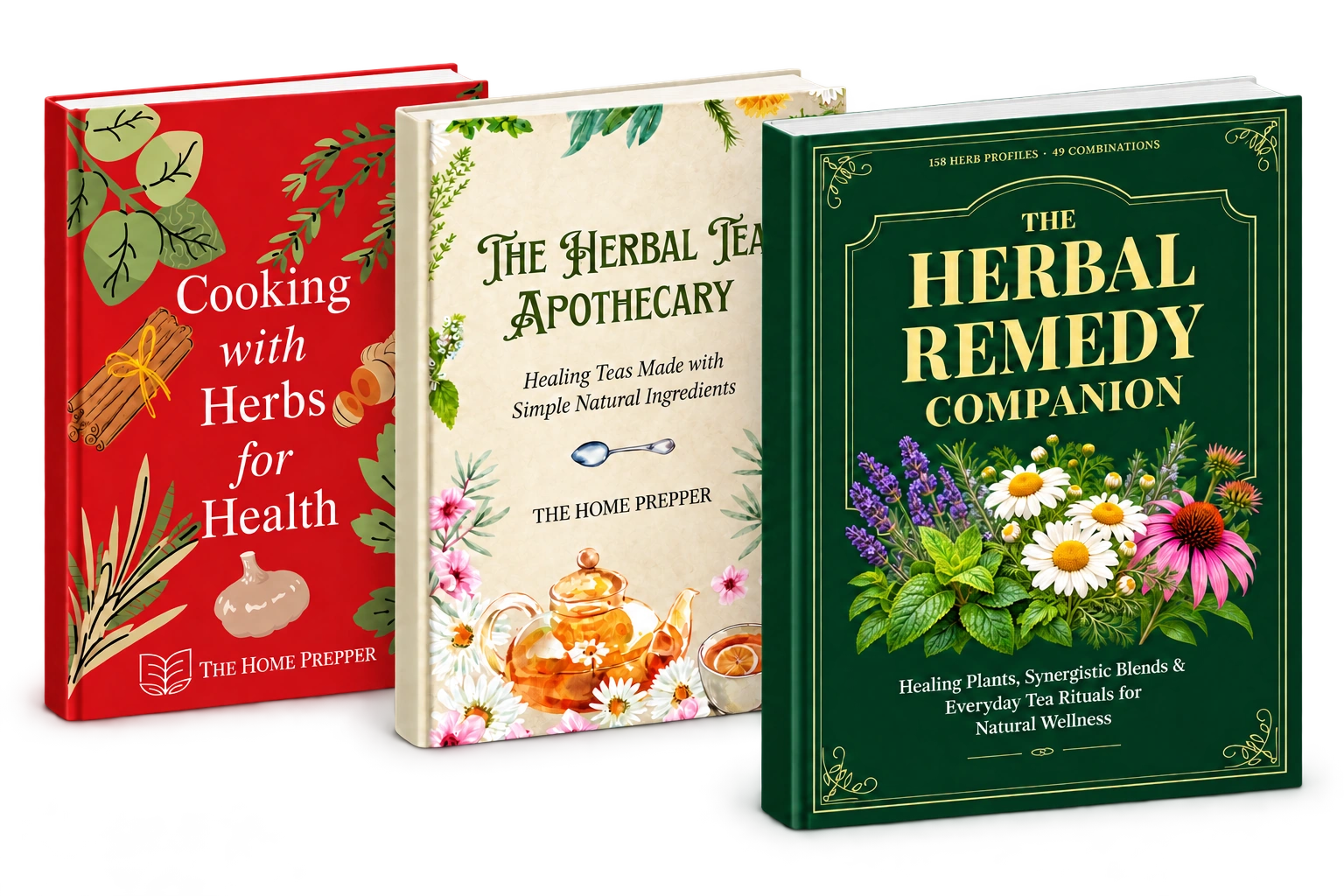
All three guides · Instant PDF access
Your price for all three digital guides:
One payment. No subscription.
One payment of $19.99 · 60-day money-back guarantee · Instant PDF access
Instant PDF download · Secure checkout through Digistore24 · Also available as a paperback on Amazon
Prefer the main book in print? See the separate paperback on Amazon →
Download the guides. Brew the first cup. Make the first batch. If it isn't for you, ask for a refund within 60 days and you'll get 100% of your money back. All the risk is on us.

“The handbook saved me so much time. Instead of Googling random remedies, I knew exactly which herbs to pair. My brain fog lifted, and I finally feel focused at work again.”
“I’ve struggled with blood sugar swings for years. The cinnamon porridge recipe was a game changer. Tastes great, and my levels have been more stable than they’ve been in ages.”
“Honestly, the teas are the easiest part of my routine now. A cup at night, and I sleep deeper without reaching for sleep aids.”
Choice one: keep doing what I did. Pay for the bill, then Google at 11 p.m., then pay for a guess.
Choice two: spend one afternoon learning the 3-Question Test, and never wonder again which remedies deserve your money.
Get The Self-Reliant Herbal PantryOne payment of $19.99 · 60-day money-back guarantee · Instant PDF access
P.S. One 12-minute visit cost me $215. This entire system, 158 herbs, 50+ teas and 73 recipes, costs $19.99.
P.P.S. You have 60 days to try it. If it isn't for you, you get 100% of your money back. The only thing you risk is another 11 p.m. guess.
These guides are for educational purposes only and are not a substitute for advice from a qualified healthcare professional. Vivian Greene is the author persona and pen name used in these guides; her story is told in her voice and is not a clinical case history. Always check herbs with your pharmacist if you take medication, and keep prescribed treatment in place unless your clinician changes it.