The Two-Oil Capsule That Cut Upper-Belly Pain By 40%, Versus 22% With Placebo
Find in the book: p. 135
For energy, focus, sleep, back pain and about 70 everyday concerns: every remedy checked against the clinical studies, every one on a page number you can find in seconds, and most of the teas ready in about 10 minutes. [1]
Go ahead. Open it. I'll wait.
The turmeric you bought in January because a TikTok post said it was "basically a superfood." The gummies with the cartoon fruit on the label. The sleep thing a coworker swore by. The green powder you had every morning for a week, with real determination, until the morning you didn't. The "immune" something, still sealed, behind the cereal.
Now do the part nobody likes. Add up what you paid.
If you winced, you're in good company. I winced, too. Because the money isn't what really stings. What stings is the feeling underneath it: I tried. I did everything right. I read the labels. And I still can't tell you if any of it did a thing.
I don't think that's because you're careless, or gullible, or "bad at health." I think it's because nobody ever gave you a way to check.
I'm going to tell you how I finally found one. It started with a glucose meter sitting next to a sugar bowl.
That's the first thing I remember about my father's kitchen.
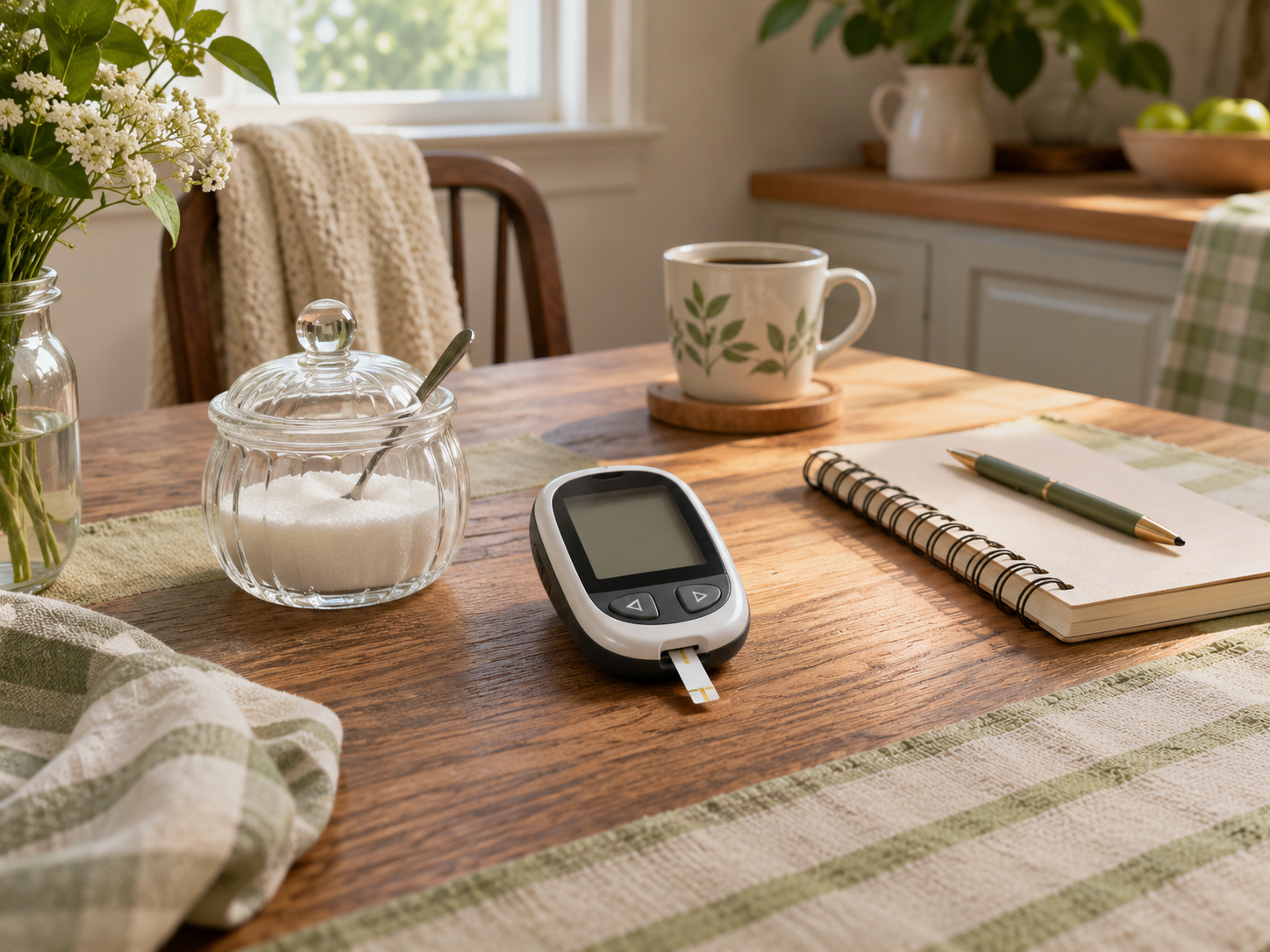
A small gray glucose meter. A lancet in a plastic case. A spiral notebook with a pen clipped to the cover, where he wrote down his morning number before he'd even put the coffee on. My mother kept a pill organizer on the windowsill, the kind with the days of the week on the lids, and I learned to read "S M T W T F S" before I could read most other things.
Nobody ever sat us down and explained it. It was just how our house worked. Dinner was a quiet negotiation. A little less rice. No, thank you, none of the pie. My aunt had the same meter, and she'd catch my father's eye across the table, and the two of them would just know. Plates with rules.
On holidays, the family gathered around a table where half the adults were counting something in their heads. Nobody made a speech about it. You just grew up understanding that this was what "getting older" looked like in our family: the notebook, the meter, the pill organizer, the careful plates.
I grew up in a family of diabetics. And I think a part of me spent my whole childhood waiting for my turn to be handed a meter of my own.
She was kind about it. That's what I remember.
She looked up from my lab results, turned her chair a little toward me, and said the word the way you'd set down something fragile.
Prediabetic.
I nodded. I asked a sensible question about numbers. I thanked her. I even smiled, which is the part I still can't explain. And then I walked out to my car, sat in the parking lot for a very long time with both hands on the steering wheel, and didn't go anywhere.
I wasn't hearing a diagnosis. I was hearing the meter next to the sugar bowl.
I called my husband from the car. I don't remember what I said. I remember that he didn't try to fix it. He didn't say "it's probably nothing." He said, "Okay. We'll figure it out." And then, softer, he said it again: "We'll figure it out." That was the moment I finally let out the breath I'd been holding since I was a kid.
I started the medication my doctor prescribed. I took it faithfully. But the metallic taste and the upset stomach were hard to live with, and somewhere in those first weeks, a thought took root that I couldn't shake: What else is there? What else could sit alongside this, something I actually understand and can use?
So I did what you probably did.
I went looking for natural remedies.
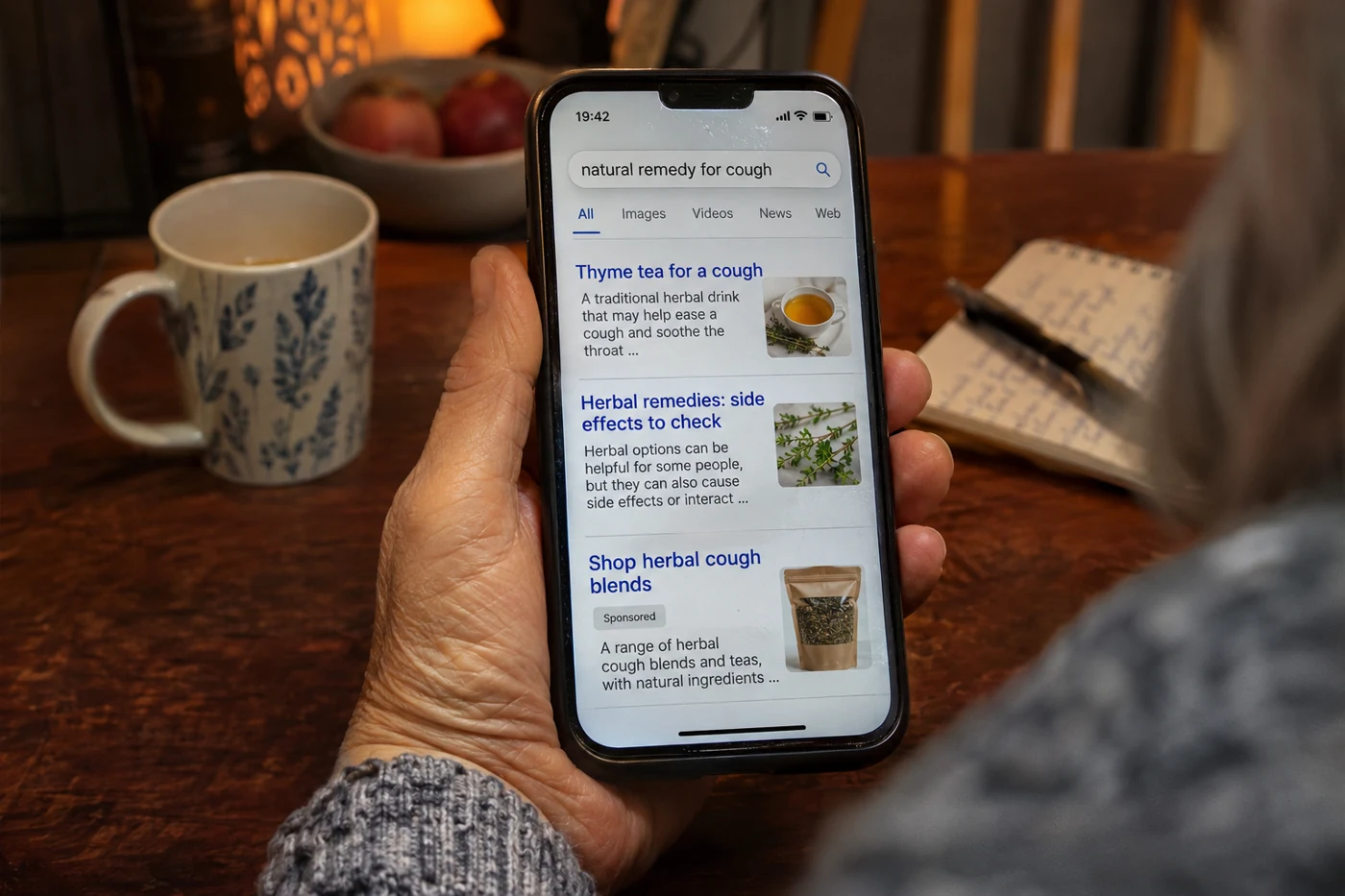
I opened my phone at 11 p.m., after the dishes, after the house had gone quiet, and I typed a question into the search bar the way you might whisper it.
You know the next hour. A site that says a certain spice is a miracle. A site that says it's a myth. A forum thread where three strangers argue, and one of them is shouting in capital letters. A video, beautifully lit, with calm music, selling a capsule "doctors don't want you to know about." A blog that wants my email address before it'll tell me anything at all.
The next day I went to the store and did what everybody does: I stood in the supplement aisle with my phone flashlight, reading the backs of bottles like I was defusing a bomb.
Blood sugar support. On the front. And on the back: "Proprietary Blend." Seven ingredients, one total weight, no amounts. Which part of the plant? How much of each? Who tested it? In what form? The label wasn't saying, and the person who could tell me was a teenager restocking shelves who said, kindly, "I just work here."
My coworker swore by a vinegar shot every morning. My friend who sells essential oils invited me to a "wellness night." A relative sent me a chain forward at 6 a.m. with seventeen exclamation points. Everyone had an opinion. Nobody had a source.
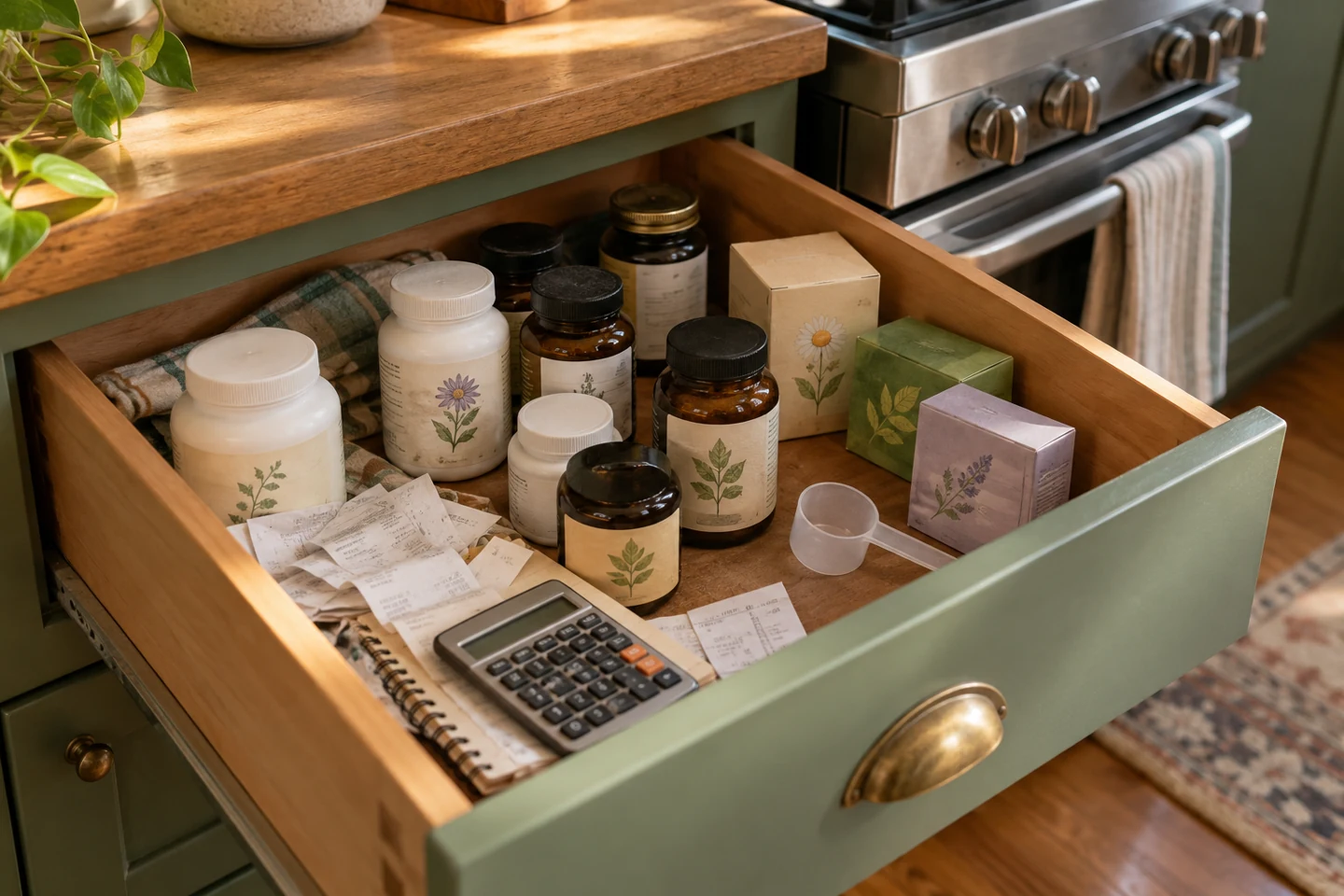
I bought some of it, of course. I'm not proud of that. Boxes started arriving at the house, and I began carrying them in a little faster than I needed to, tucking them away before my husband got home. I told myself it was research.
It wasn't research. It was hope, with a credit card.
Here's what nobody warns you about when you start looking for natural remedies.
The hardest part isn't finding one. There are thousands. The hardest part is not knowing who to believe.
Which part of the plant? Leaf, root, flower, seed? How much, and how do you measure it? Was it tested on real people, or on cells in a dish? For how long? In what form: a tea, a tablet, a lab-made extract? And the question that sat on my chest at 1 a.m.:
Is this even safe with what I'm already taking?
Nobody I could find was answering those. They were all selling.
And I'll tell you the part I felt most. The loneliness. It's a strange thing to be surrounded by confident voices and feel completely alone, because not one of them was explaining. They were all just asking me to trust them.
I had been trusting for months. I wanted to understand.
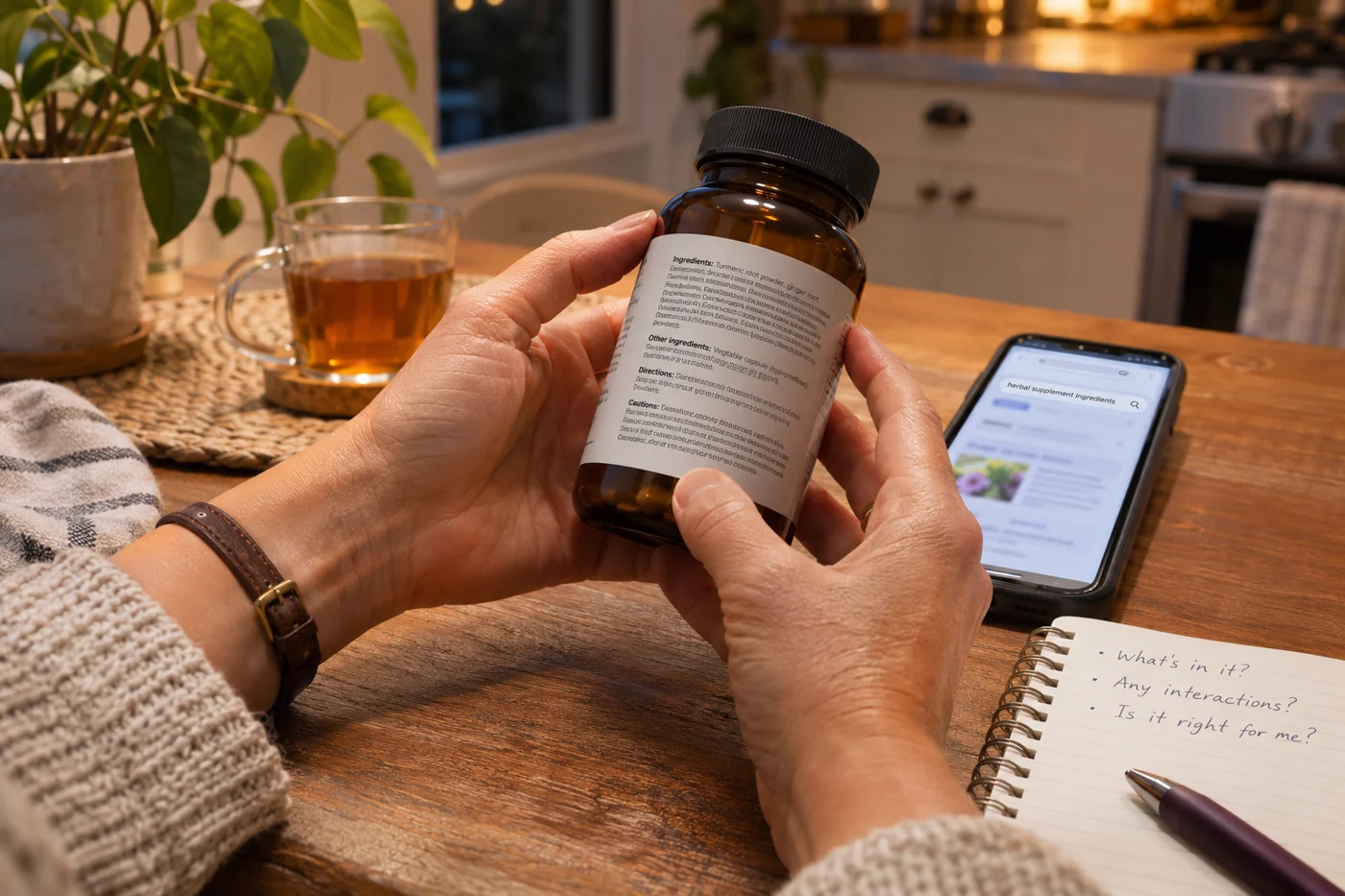
I wrote it on the first page of a yellow legal pad. Three lines. I still have the page.
That's it. Not miracles. Not a secret. Just the ones worth my time, so I could stop wasting it.
And a fourth line, which I didn't write down, but which was underneath all of it: I wanted to be the one who knows. The person in the kitchen who can look at a bottle, or a tea, or a claim, and say, calmly, "Here's what that is, and here's what was tested."
I want to be completely honest with you: I'm not a scientist. I had to look up half the words.
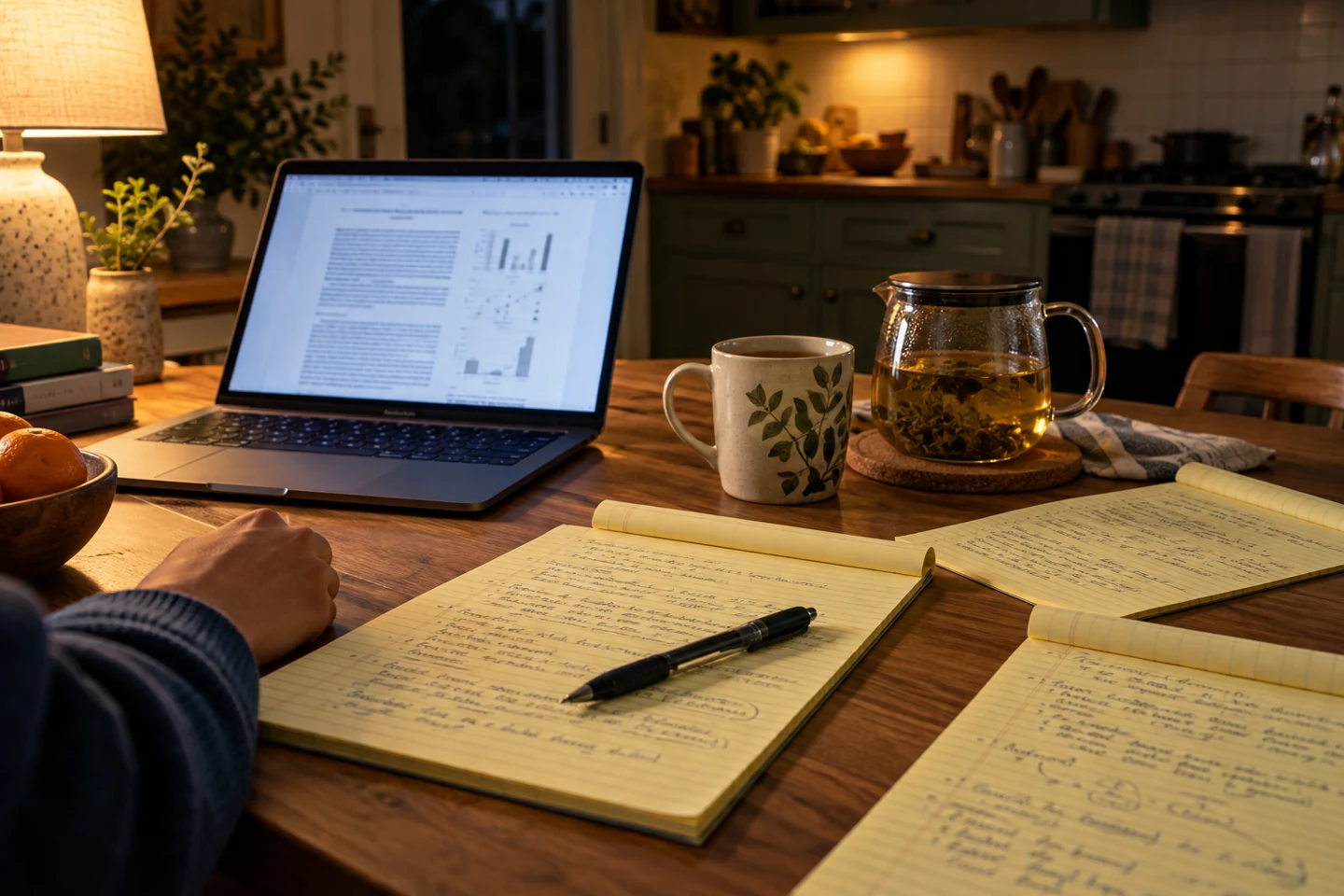
But a few nights a week, after the dishes were done and the house went quiet, I sat at the kitchen table with a pot of tea on one side of the laptop and the legal pad on the other, and I started reading the actual sources: the clinical trials on PubMed, and the herbal guidance from the NIH, Health Canada and the European Medicines Agency.
The first month was discouraging. Page after page ended with "more research is needed." More than once I closed the laptop and thought, this is a waste of time. Just go back to guessing like everyone else.
What kept me going was a small, stubborn thing: every so often, I'd find a page where somebody had actually measured something. A real number. A real group of people. A real length of time. And every time I found one, I'd put a star next to it on the pad. Slowly, the stars started to add up.
I set one rule that I never broke: nothing goes into my body that my pharmacist and I haven't looked at together. Not because anyone told me to. Because the whole point was to stop guessing, and I wasn't going to start guessing about safety.
Here's the thing I wish somebody had handed me on day one. It takes about a minute, and once you see it, you can't unsee it. When someone tells you a remedy "works," ask four things:
1. Which part of the plant? Leaf, root, flower, fruit or resin are different things. (Milk thistle, for example, is the fruit, not the leaves that give the plant its marbled look. Page 241.)
2. What form? A tea, a tablet and a lab-made extract aren't the same, and the studies often tested the last one. The book says it plainly on green tea: "A leaf tea and an extract capsule need different doses." (Page 84.)
3. Who, how many, how long? Sixty-five adults for six weeks is a different story than "studies show."
4. What did they actually measure? Absorption is not the same as relief. A memory test score is not the same as a life changed. The best studies tell you, in plain words, what they counted.
I put every herb I came across through those four questions. And it started to feel like a flashlight in a dark room.
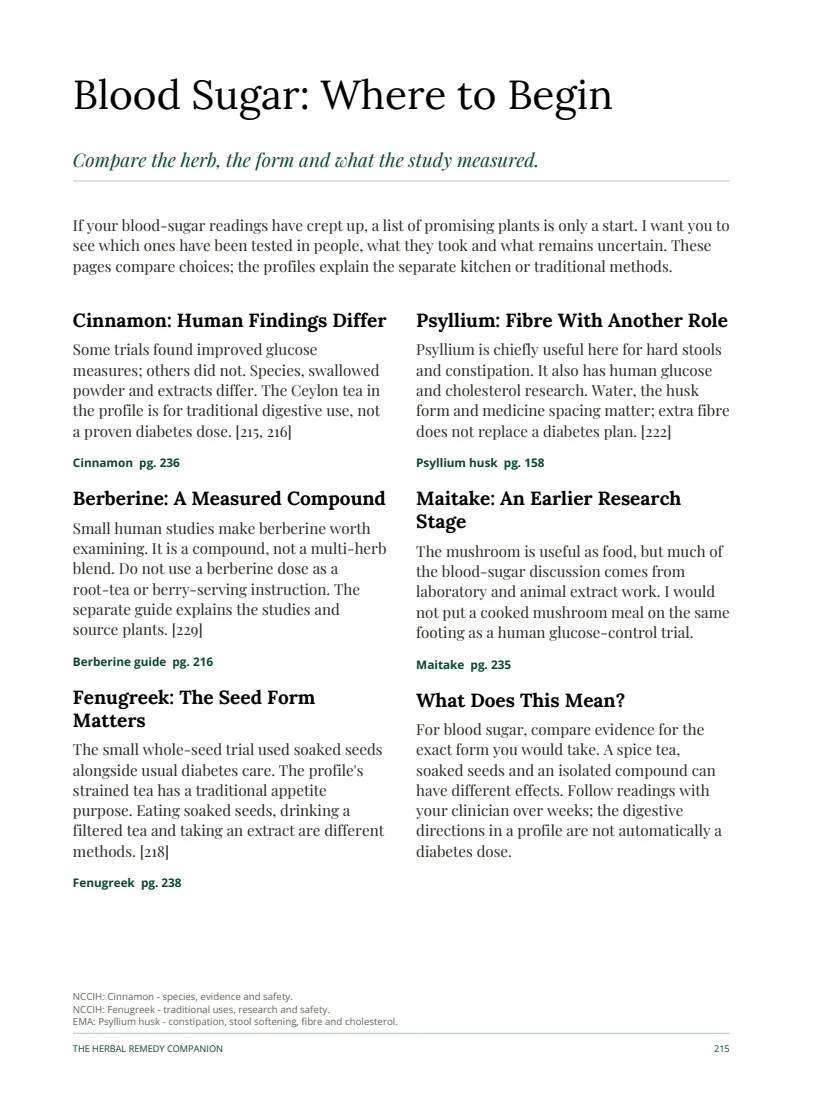
One night I made a comparison. Just for me. Every blood-sugar herb I could find, sorted by a single question: has it been tested in people, and in what form?
Cinnamon had human trials with differing results. Berberine had small human studies that made it worth examining. Fenugreek had a small whole-seed trial. Psyllium was fibre with another job. Maitake was still at an earlier stage of research. [8] [6]
I sat back, and for the first time in months, the noise went quiet. Not because I had an answer. Because I finally had a way to sort the answers.
That comparison became page 215 of the book, and the seed of everything else. Because once I could tell what was tested and what wasn't, I couldn't stop. I did it for sleep. For stress. For energy. For the cough my husband gets every winter. One herb after another, until the legal pads turned into a manuscript, and the manuscript turned into 158 herbs, each one checked, each one on a page you can find in seconds.
Somewhere in my second notebook, I noticed a pattern I hadn't gone looking for.
The most interesting remedies weren't always working alone. Researchers had paired them on purpose.
They call it synergy. And it's easier to understand than it sounds. Think of a good duo: one opens the door, the other walks through. Sometimes one ingredient helps your body absorb the other. Sometimes a pair was tested together as a formula, measured against a placebo. Either way, there's a reason behind the pairing, and a way to see it in the research.
Black pepper + turmeric. A pepper grinder is such an ordinary thing to keep on the table. The interesting part is what researchers found when they moved beyond seasoning. In a small 1998 human study, adding 20 mg of piperine, the compound in black pepper, to 2 g of curcumin from turmeric raised absorption by 2,000%. [2] (That measures absorption, not relief, and page 198 keeps those two things honest.)
Turmeric + boswellia. Boswellia is frankincense: harvesters cut the tree's bark so the resin seeps out, and it hardens into little pieces called "tears." In a 12-week trial of 201 people with knee osteoarthritis, the two extracts together brought benefits for aching, stiff knees. [4]
Five herbs, one formula. Rhodiola, tulsi, schisandra, ashwagandha and milky oat seed were tested together for 60 days, compared with ashwagandha alone and with placebo, and the complete formula improved stress and sleep measures. [5]
But the pairing that stopped me, the one I keep coming back to, came from a place I never expected.
From my mother's kitchen.
I'll tell you about the dinner.
It was a Sunday at my parents' house, a few months after my diagnosis. The windows were fogged. My mother had made her pot roast, the one with caraway in the gravy, and the whole house smelled like it. My father, who'd been so careful all week, took a second small helping and then sat back with one hand flat on his stomach, quiet.
Not in danger. Just heavy. The way you feel when a big meal sits high in your belly, and you're too proud to say so in front of the kids.
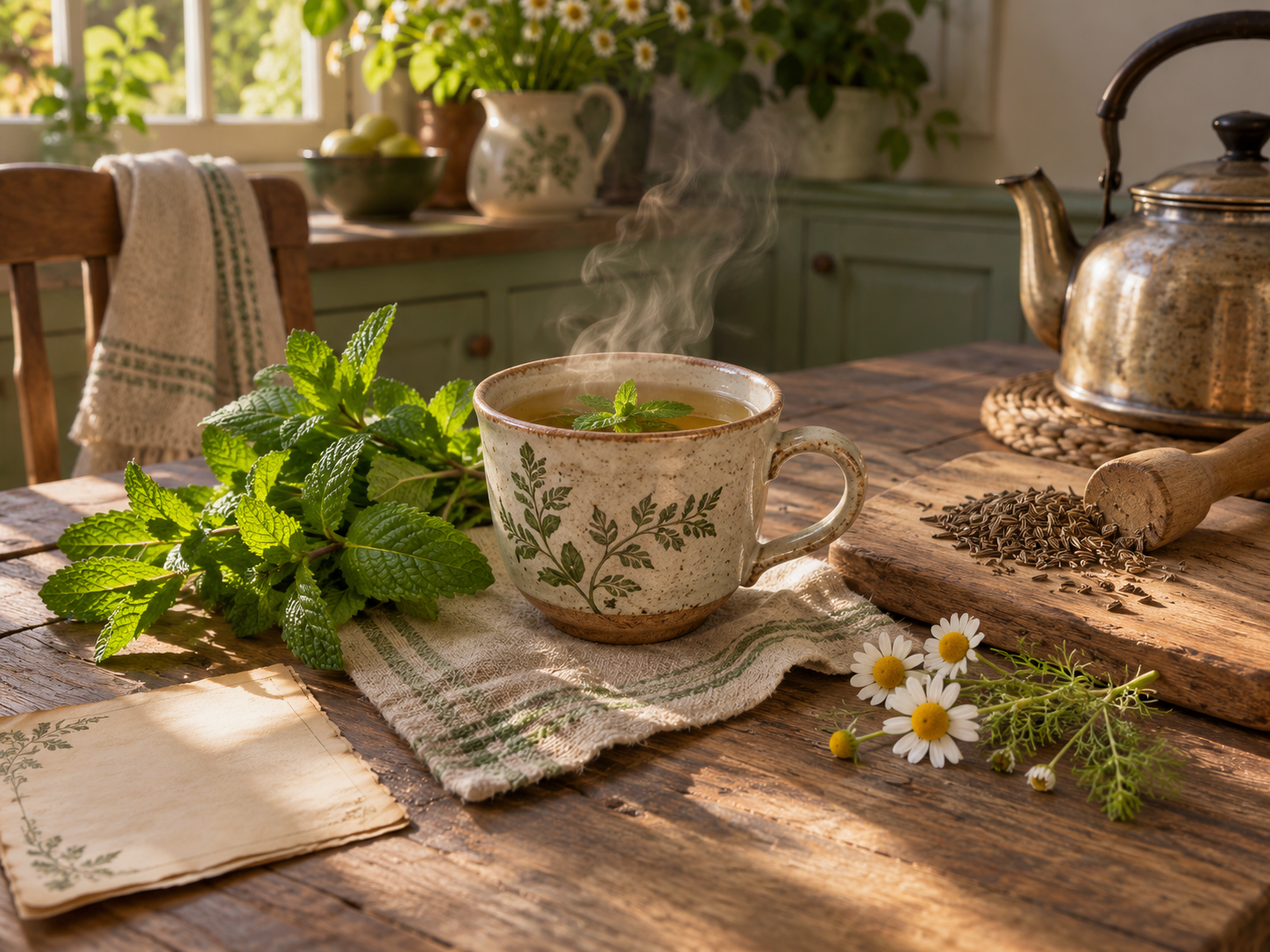
My mother didn't say a word. She filled the kettle. She took a pinch of caraway seeds from one jar and a few dried mint leaves from another, crushed the seeds under the flat of a spoon, and set a steaming cup in front of him.
"Drink that," she said.
He drank it. And I remember thinking, that's the kind of thing nobody ever writes down.
Years later, I found it written down.
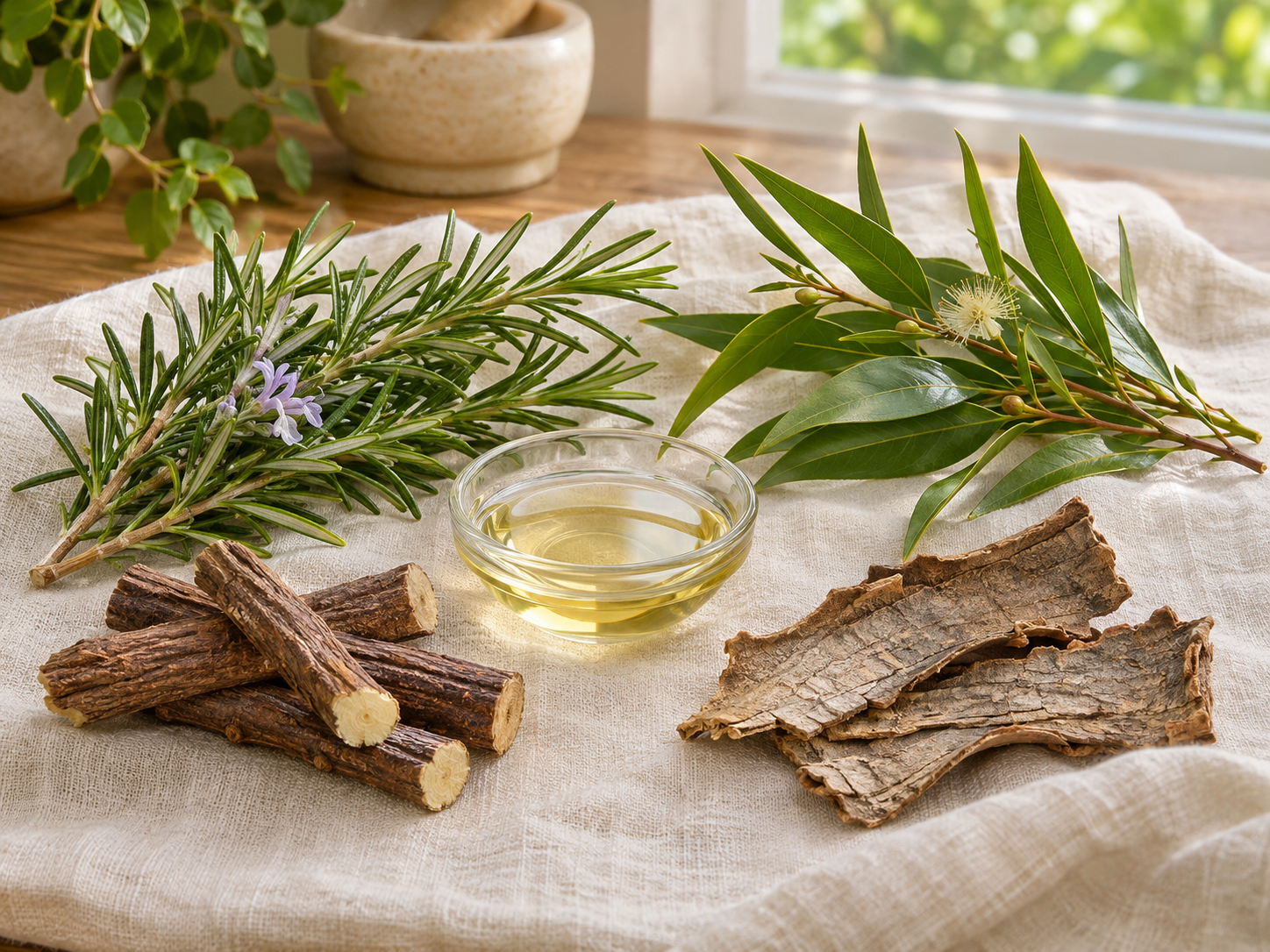
Peppermint oil can relax gut muscle. Caraway oil also affects how things move through the digestive tract. Two plants, two jobs, one pairing that kitchens had been using for generations without a name for it. And then, in a 28-day trial with 96 people who had upper-belly pain with indigestion, researchers tested the two oils together in one capsule.
Pain fell 40% with the peppermint-caraway capsule, versus 22% with placebo. [3]
I put my pencil down. It was my mother's kettle, in a lab coat.
Here's what I love most: you get to see exactly what they tested. One enteric-coated capsule with 90 mg of peppermint oil and 50 mg of caraway oil, taken twice daily for 28 days. All of it is on page 135, because "a pairing with a number on it" is the whole point of this book. [3]
And for your own kitchen? The same page gives you the old-world version, an after-meal tea of chamomile, caraway and peppermint:
Or go simpler, the way my mother did: lightly crack half a teaspoon of caraway seeds just before brewing, cover with boiling water, and wait 10 to 15 minutes (page 134). One small kitchen note from me: I crack only the caraway I need for that cup, then keep the rest whole and sealed. If old ground caraway has lost its fragrance, adding more won't bring the freshness back. [24]
Is it IBS, or upper-belly indigestion? Page 127 sorts out which peppermint preparation fits which problem, because they aren't the same question. And if mint tends to give you heartburn, pages 126 and 135 point you toward a different blend. [3]
I called my father that evening. "Your wife has been doing this for fifty years," I said. He laughed for a long time. Then he said, "Well. Tell her she was right."
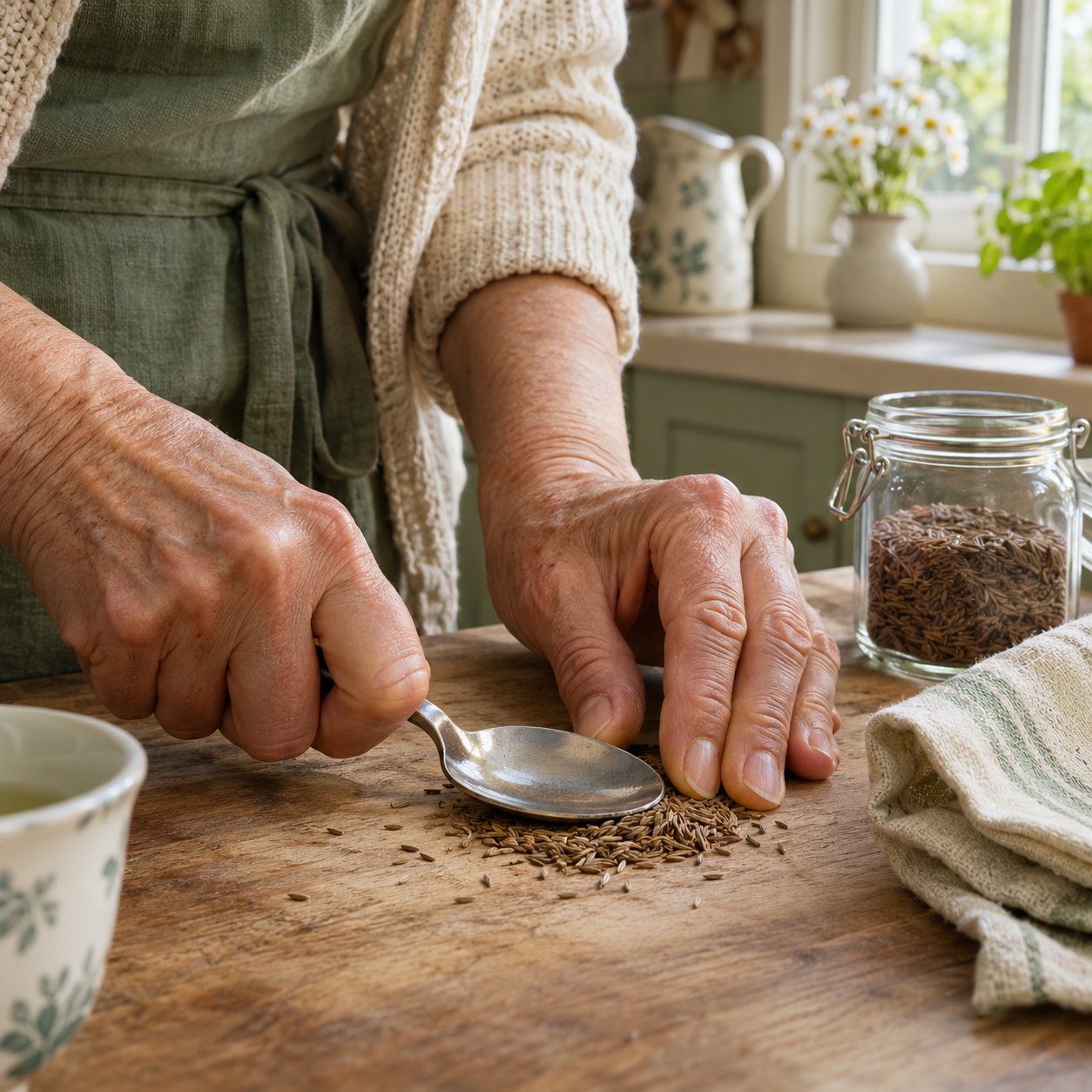 Crack the caraway
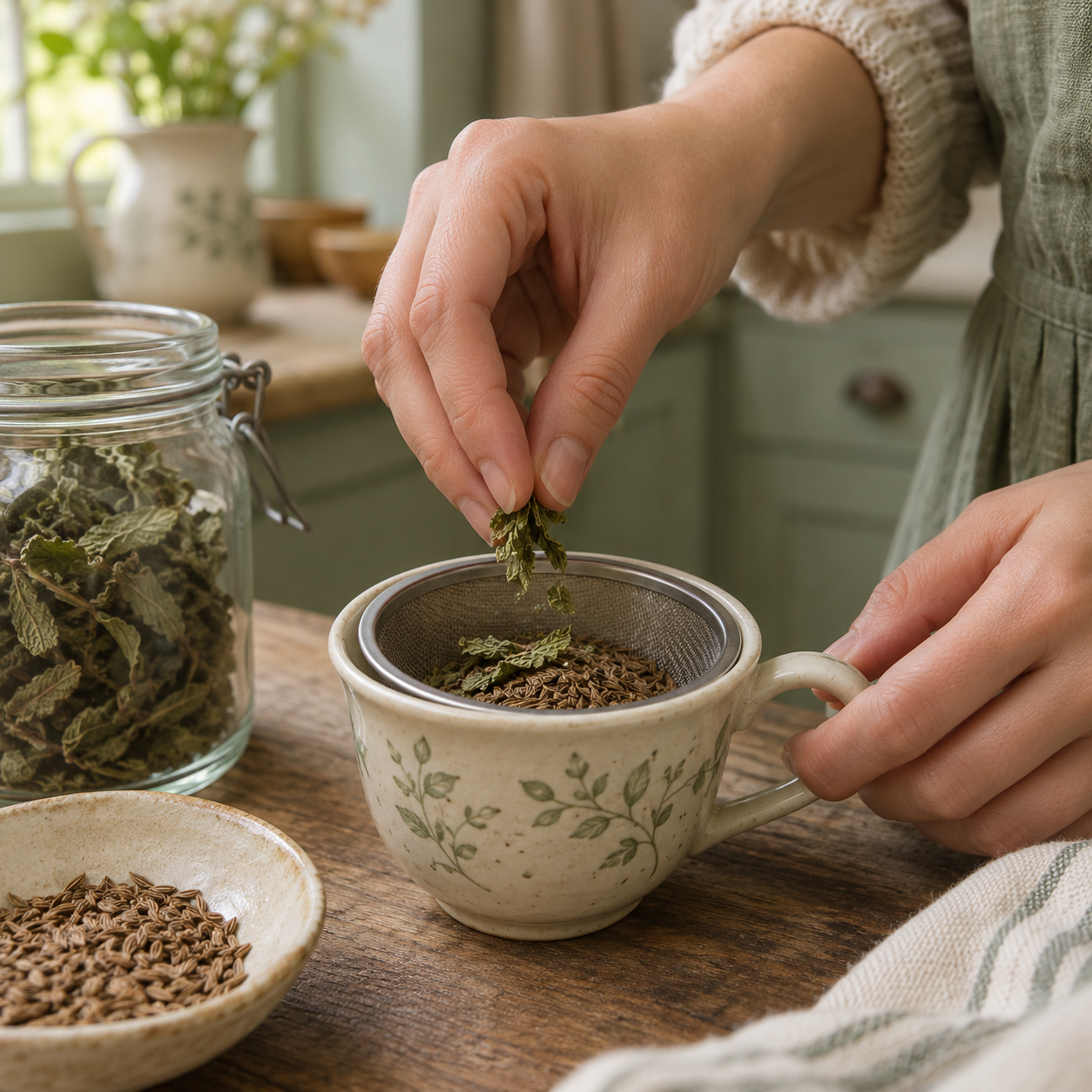 Add dried mint
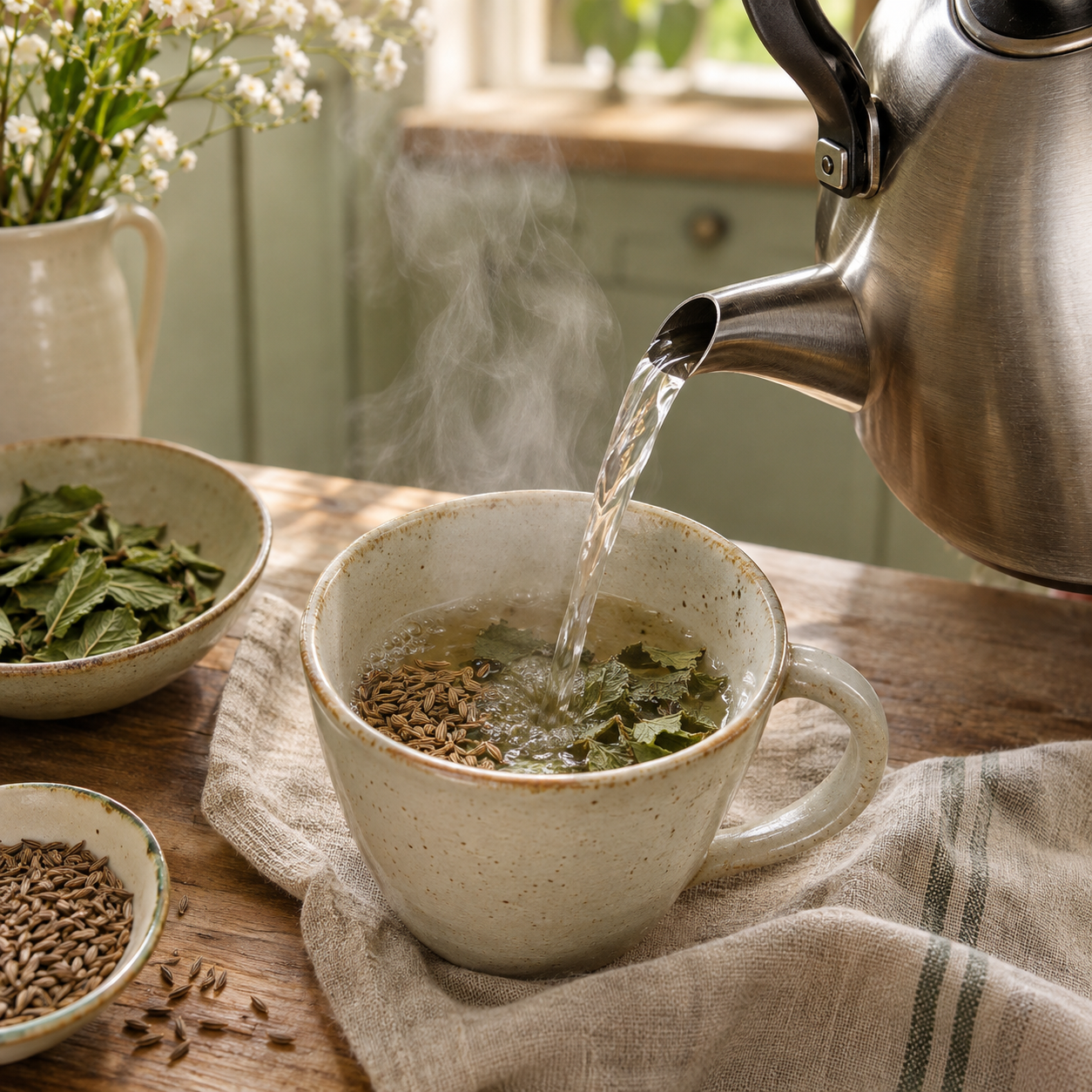 Pour and steep
This one's in the book because I couldn't leave it out.
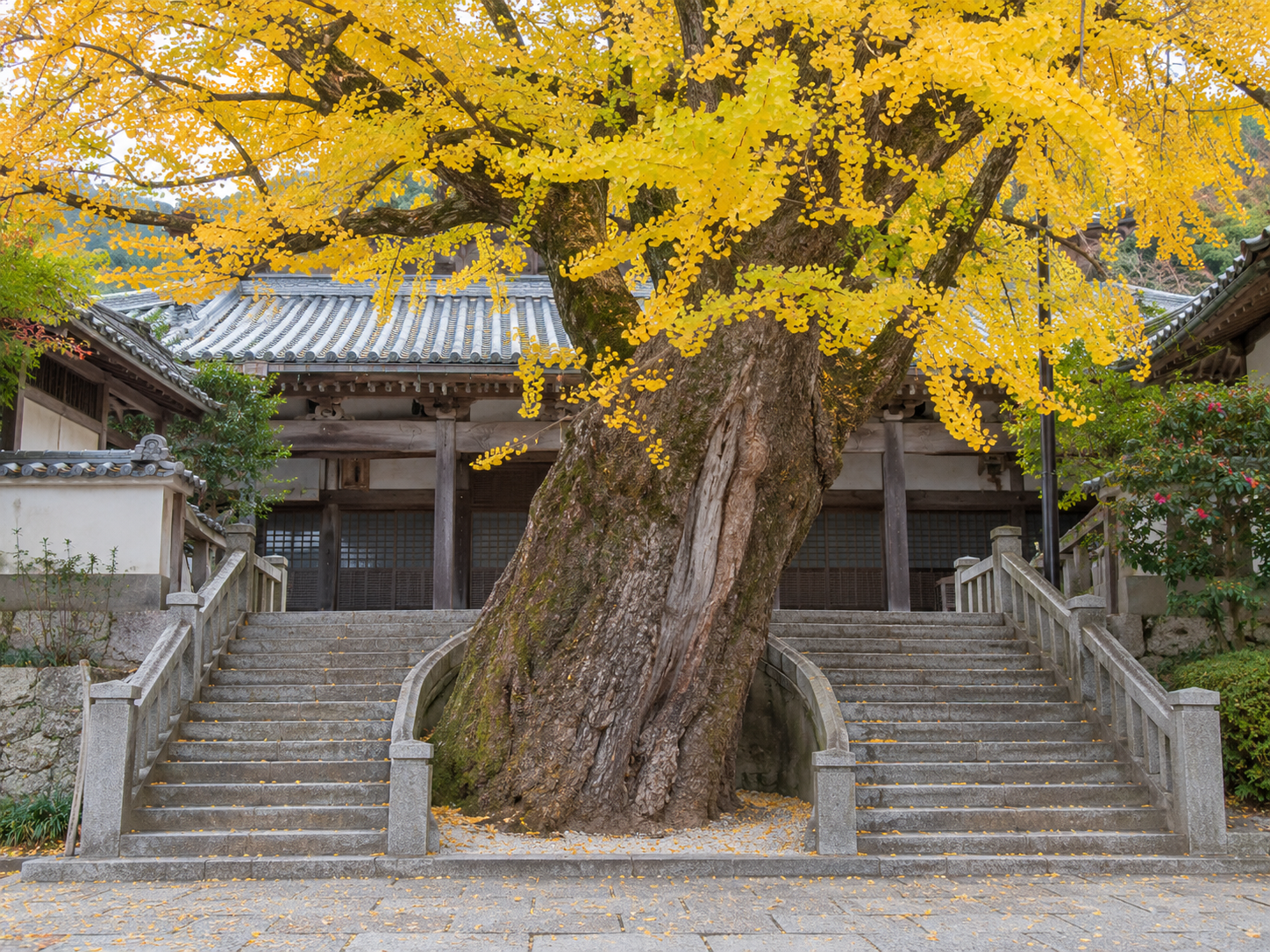
At Hosenbo Temple in Hiroshima, a ginkgo tree stood about 1,120 metres from the centre of the atomic bomb in 1945. It was badly burned, and it sprouted again years later. When the temple's new main hall was built in 1994, the tree wasn't cut down. The staircase was built around its trunk, with a large opening to let it breathe. [25]
It's the ginkgo that was paired with Korean ginseng in a trial completed by 256 people. After 12 weeks of the ginkgo-and-ginseng extract blend, they showed a 7.5% average improvement on a memory test. [25] It was about memory and concentration in otherwise healthy middle age, not about preventing dementia, and page 73 keeps that distinction clear.
I love that the plant and the study live on the same page. Pages 73 and 89.
I won't tell you a book fixed my life. I'll tell you what changed.
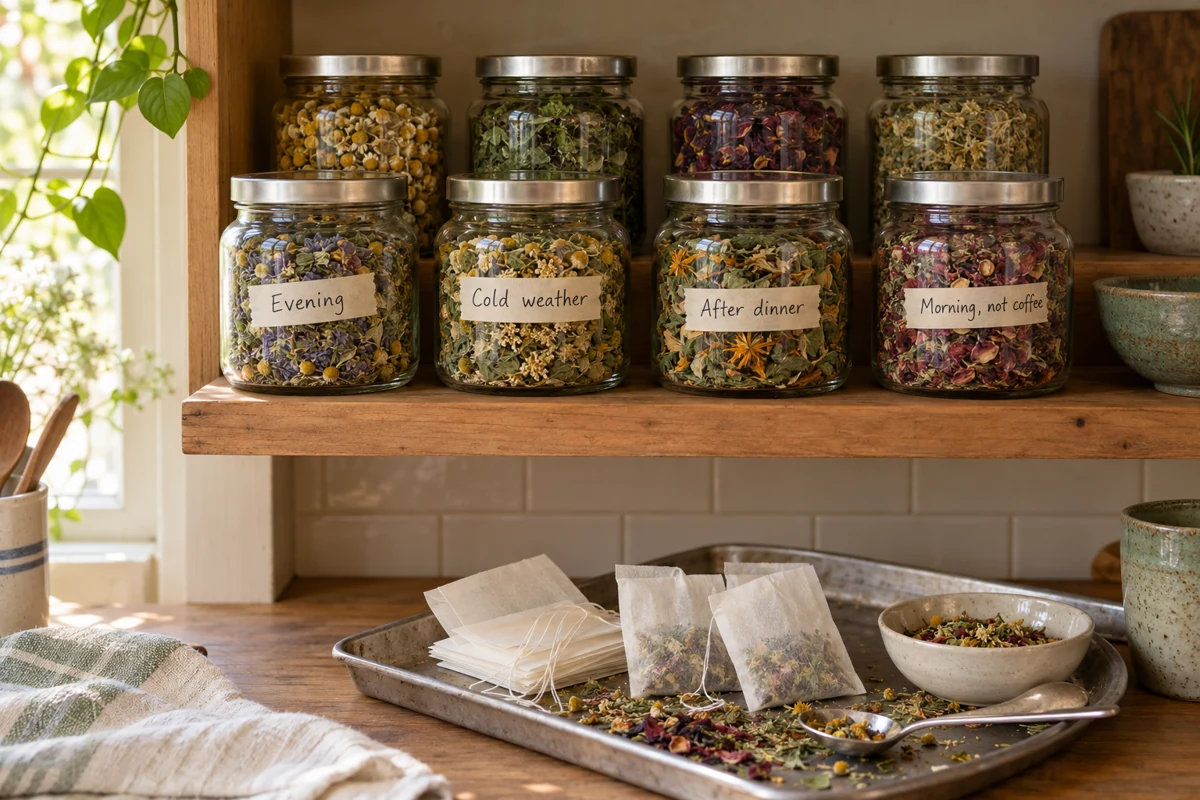
The drawer of half-used bottles went into a trash bag. It felt like exhaling. On the second shelf of the pantry there are now eight glass jars with masking-tape labels in my own handwriting: Evening. Cold weather. After dinner. Morning, but not coffee. On Sunday afternoons around two, with the kettle going and a cookie sheet to catch the spills, I mix a ten-bag batch, and the house smells like caraway and mint.
When my husband's cough comes back each winter, I open my notebook before I open my phone. When a friend asks me, "Wait, what's in that?" I can actually answer. I know the part of the plant, the amount, the study, the page.
And here's a small thing that's hard to explain until you've had it: the quiet. The 11 p.m. spiral stopped. I don't scroll for answers anymore, because I know where the answers are, and I know how to read them.
That's the thing nobody sells you. It isn't a result. It's the feeling of being the one who knows. I haven't bought a mystery bottle since, and I know exactly what's in everything on that shelf.
Here's what a day can look like. Not a rule. Just a day.
7:30 a.m., a foggy morning. One green-tea bag, water that's cooled a few minutes after boiling, two minutes of steeping. I set a timer, because green tea can turn bitter while you're busy with something else (page 84). I keep caffeine earlier in the day, since the book is clear that it can disturb sleep. [9]
3 p.m., the slump. This is the part of the day where I used to walk to the garage fridge. Now I reach for my notebook and see what I've marked for tired afternoons. Maybe it's a root drink I simmered over the weekend (ginseng, page 88). Maybe it's just a walk.
After dinner, the heavy-stomach hour. A cup of my mother's tea. Ten minutes, a cover on the cup (page 135).
9:30 p.m., tired but wired. The book has a line I read twice the first time: "I look at it when stress leaves you worn out but unable to settle at night." That's ashwagandha, page 14. For me it's usually lemon balm, 1½ teaspoons covered with boiling water for 10 minutes, with a saucer over the cup (page 16). Crush a leaf between your fingers and lemon balm makes its introduction. [12] [13]
Sunday, 2 p.m. The ten-bag batch. Kettle, spoons, a cookie sheet, the whole week mixed and labeled.
Small. Ordinary. And mine.
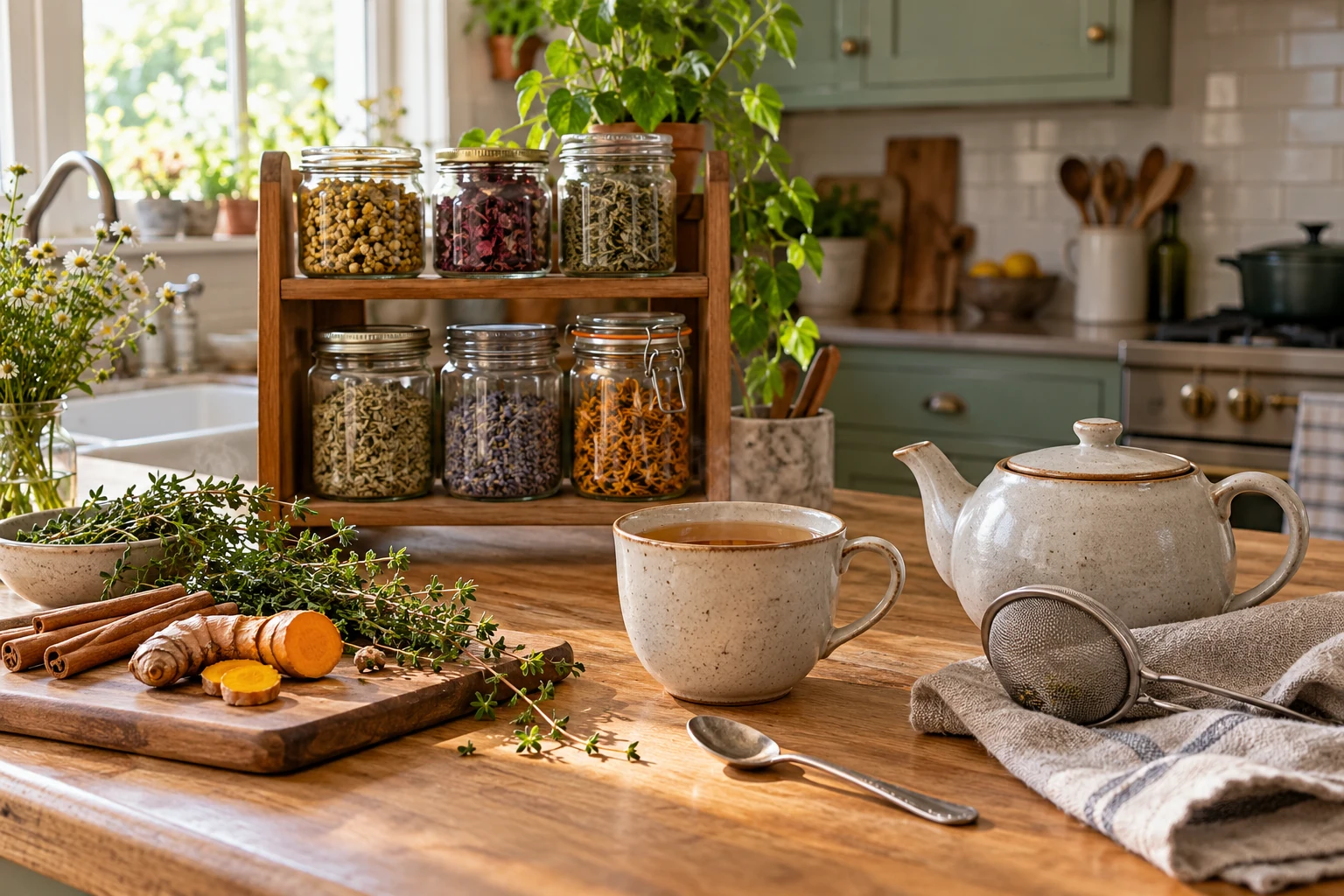
Here's the part I care about most: you can make these at home, and you don't have to be an herbalist.
Most of the remedies in the book are teas and kitchen preparations that run on the same simple rhythm. Lemon balm: cover 1½ teaspoons with freshly boiled water for 10 minutes. Passionflower: ½ teaspoon, 10 minutes. Tulsi: 10 minutes. Hibiscus: simmer 2 teaspoons in a cup of water for 10 minutes. [1]
Want to do it once and be done? Mix a ten-bag batch, fill ten paper tea filters, label the jar with the blend and the date, and brew one bag at a time (page 9). Start with a cup and a spoon, the book says. Fill the spoon to the rim, without a heap or pressing the herbs down. That's the whole skill.
And the cost? Dried herbs, a kettle and a set of measuring spoons. No monthly bottle. No refills. No subscription. **
Every profile also carries a short Vivian's Kitchen Note, the small things I learned by doing it wrong first. Why I crack only the caraway I need and keep the rest whole and sealed (page 134). How to spot fresh lemon balm by its lemon scent, and why a saucer goes over the cup (page 16). Why a timer saves you from a bitter cup of green tea (page 84).
Neither was I. Here's what I hear most, and what I'd say to you across the kitchen table.
"I don't have time." Ten minutes of steeping isn't ten minutes of work. You boil water, put a cover on the cup, and go do something else. And the ten-bag batch means you do the "work" once.
"I'll mess it up." You will. I did. That's why the book gives measures in spoons and grams, and why the Kitchen Notes exist. The first cup of green tea I made was so bitter I couldn't finish it. The second was fine.
"Where do I even buy this?" Many are grocery and pantry staples. For the rest, the book tells you which part of the plant to look for and what to check on the label, so you never end up with a "proprietary blend" you can't read. **
"I take medication." Then you're exactly who I wrote the safety notes for. Every profile tells you who should avoid it and what it can interact with, and I never start anything without my pharmacist looking at it. My husband takes a blood-pressure medicine, and that's the first thing we check, every time.
"My family will think I've lost it." Mine did, for about a week. My husband raised one eyebrow when the jars appeared. Then he asked for a cup. Then he asked what was in it. And I could tell him.
"But does it really work?" I can't promise you a result, and I'd be suspicious of anyone who does. What I can show you is what was tested, in whom, for how long, and in what form, so you can decide with your eyes open. That's the whole point.
I wrote it for the daughter who grew up next to the meter and the sugar bowl, and decided to understand her options early.
For the husband who asked "What's actually in this?" and was kind enough to say it gently.
For the person standing in a supplement aisle at 6 p.m. with a bottle in each hand, tired, and quietly afraid of picking wrong.
For the person whose cabinet is full of good intentions.
For the one who's done guessing.
If that's you, I built this for you, and I put the page numbers on it so you'd never have to hunt.
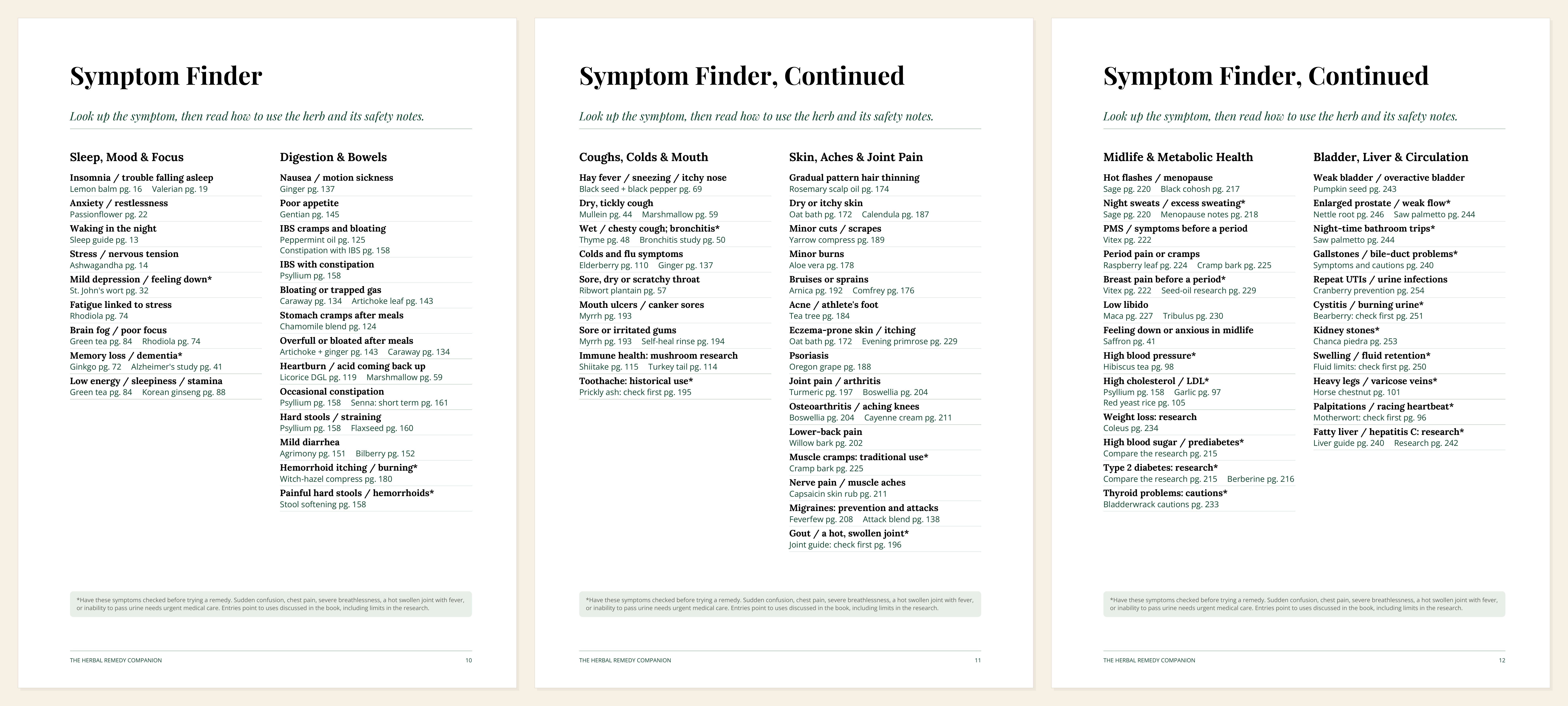
The Symptom Finder (pages 10–12) works like a menu: look up what's bothering you, and it sends you straight to the page. Here are some of the remedies waiting for you.
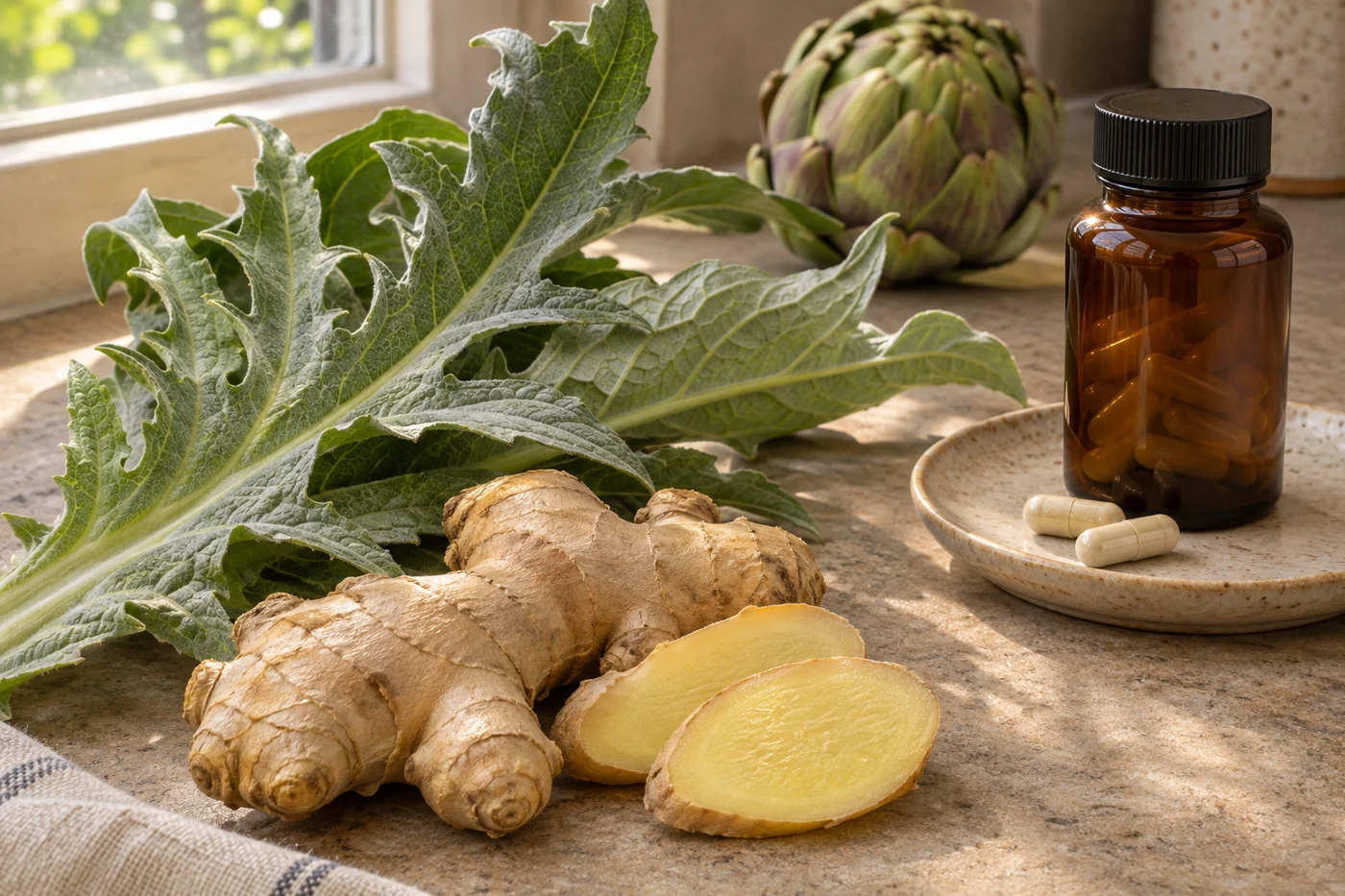
Find in the book: p. 135
Find in the book: pp. 9, 135
Find in the book: pp. 10, 118
Find in the book: p. 134
Find in the book: pp. 143–144
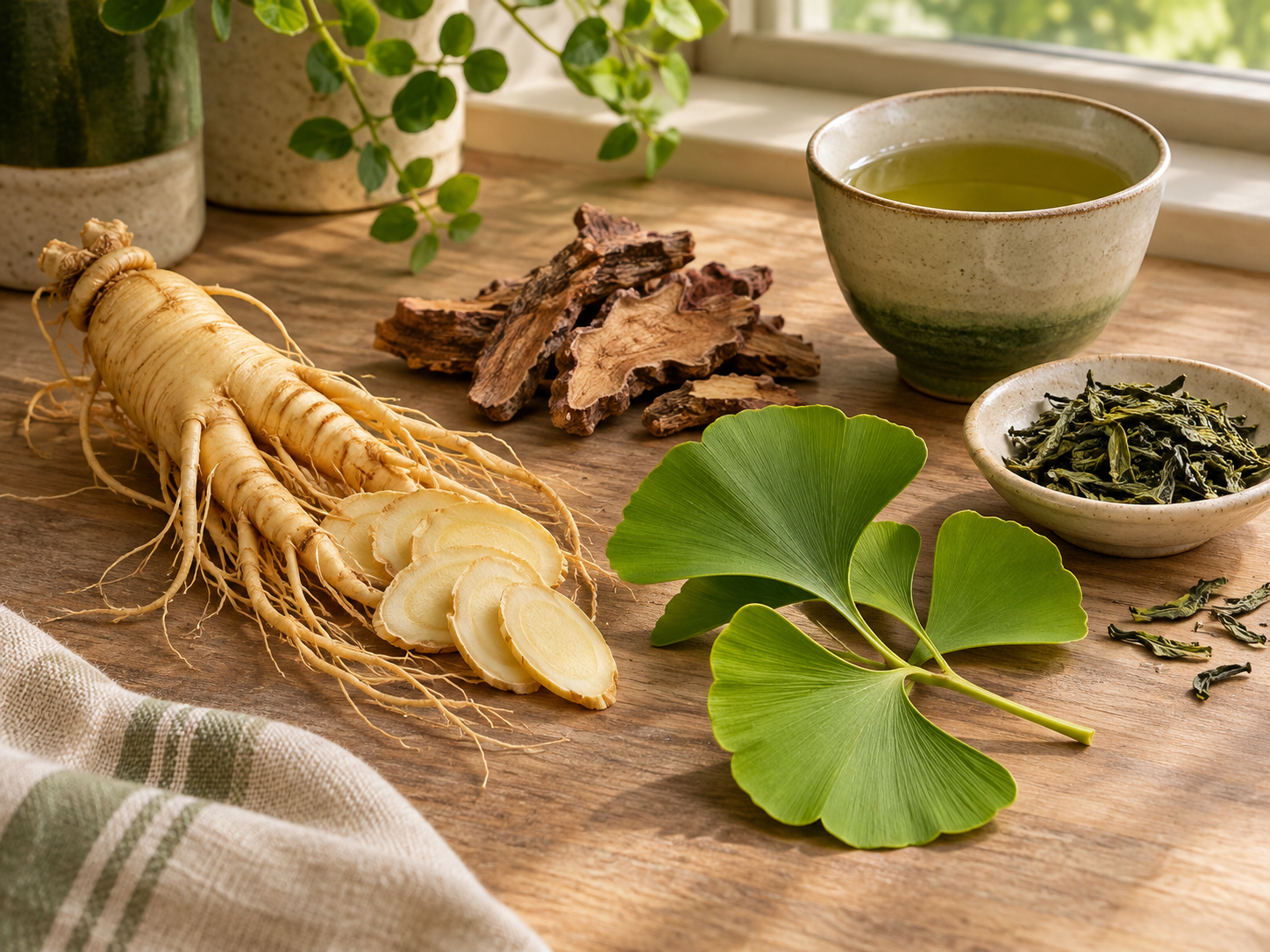
Find in the book: p. 84
Find in the book: p. 88
Find in the book: p. 74
Find in the book: pp. 72–73, 89
Find in the book: p. 16
Find in the book: p. 22
Find in the book: p. 19
Find in the book: p. 29
Find in the book: p. 14
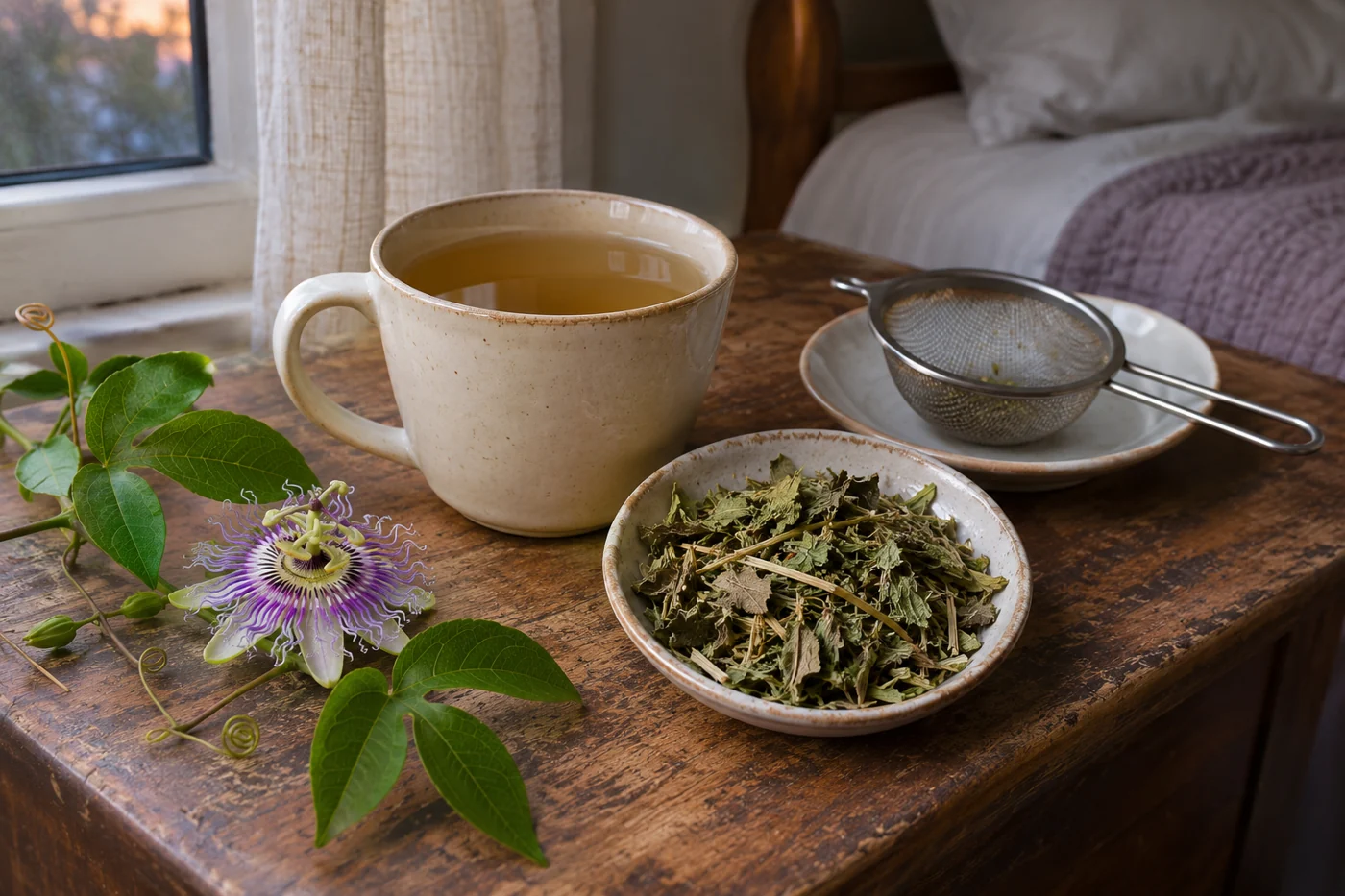
Find in the book: p. 202
Find in the book: pp. 204–205
Find in the book: p. 198
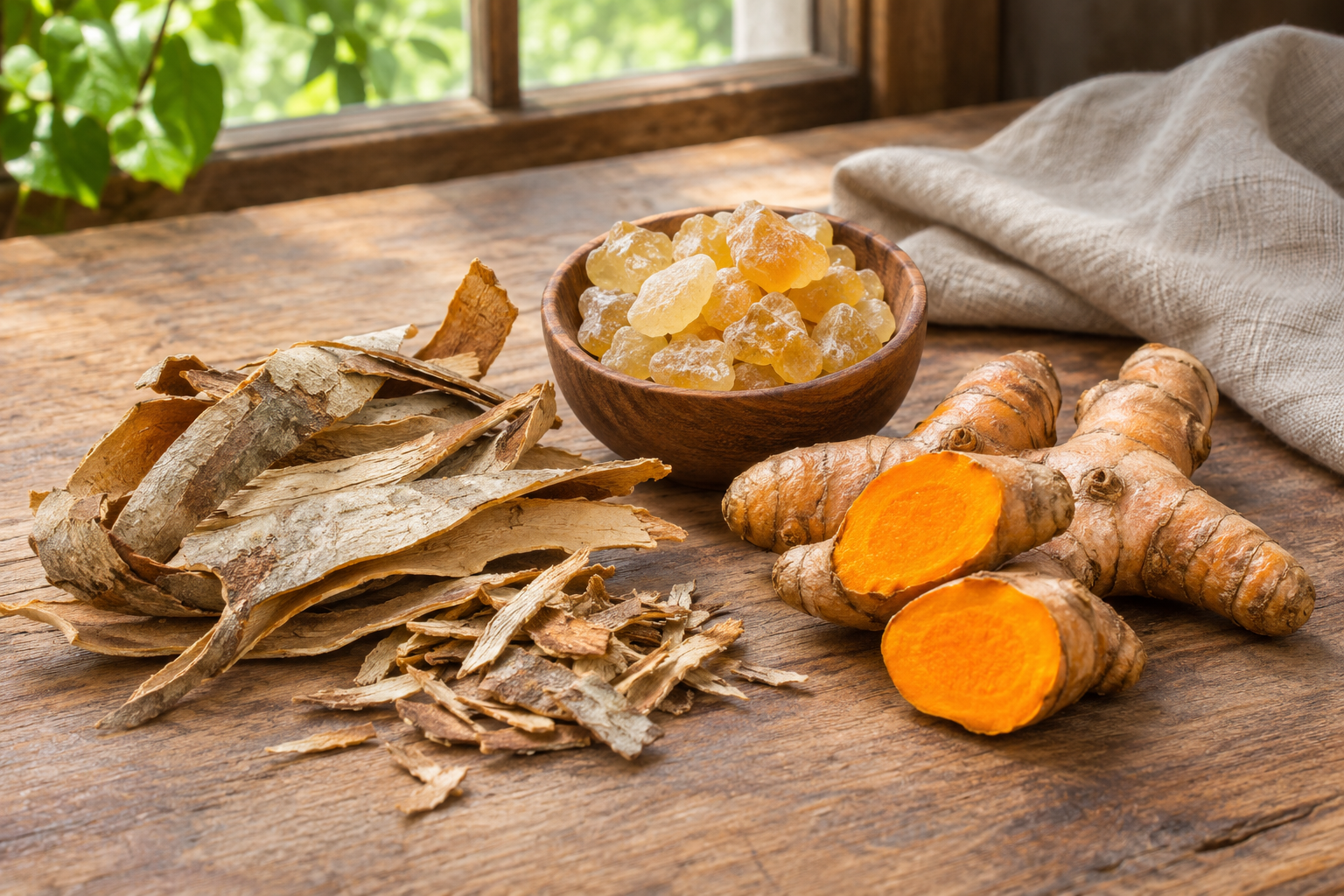
Find in the book: p. 215
Find in the book: p. 216
Find in the book: p. 236
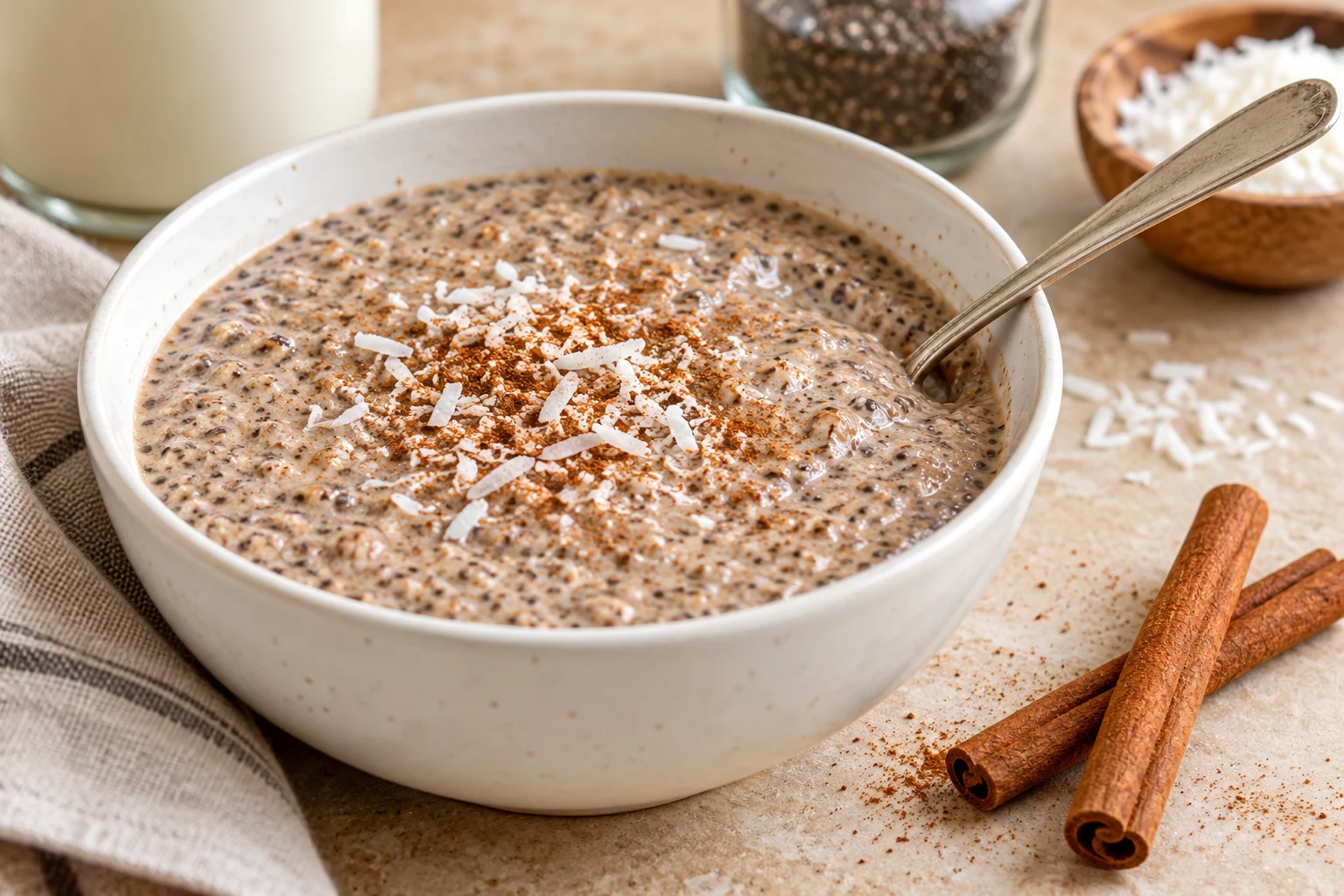
Find in the book: p. 44
Find in the book: p. 50
Find in the book: pp. 69–70
Find in the book: pp. 98–99
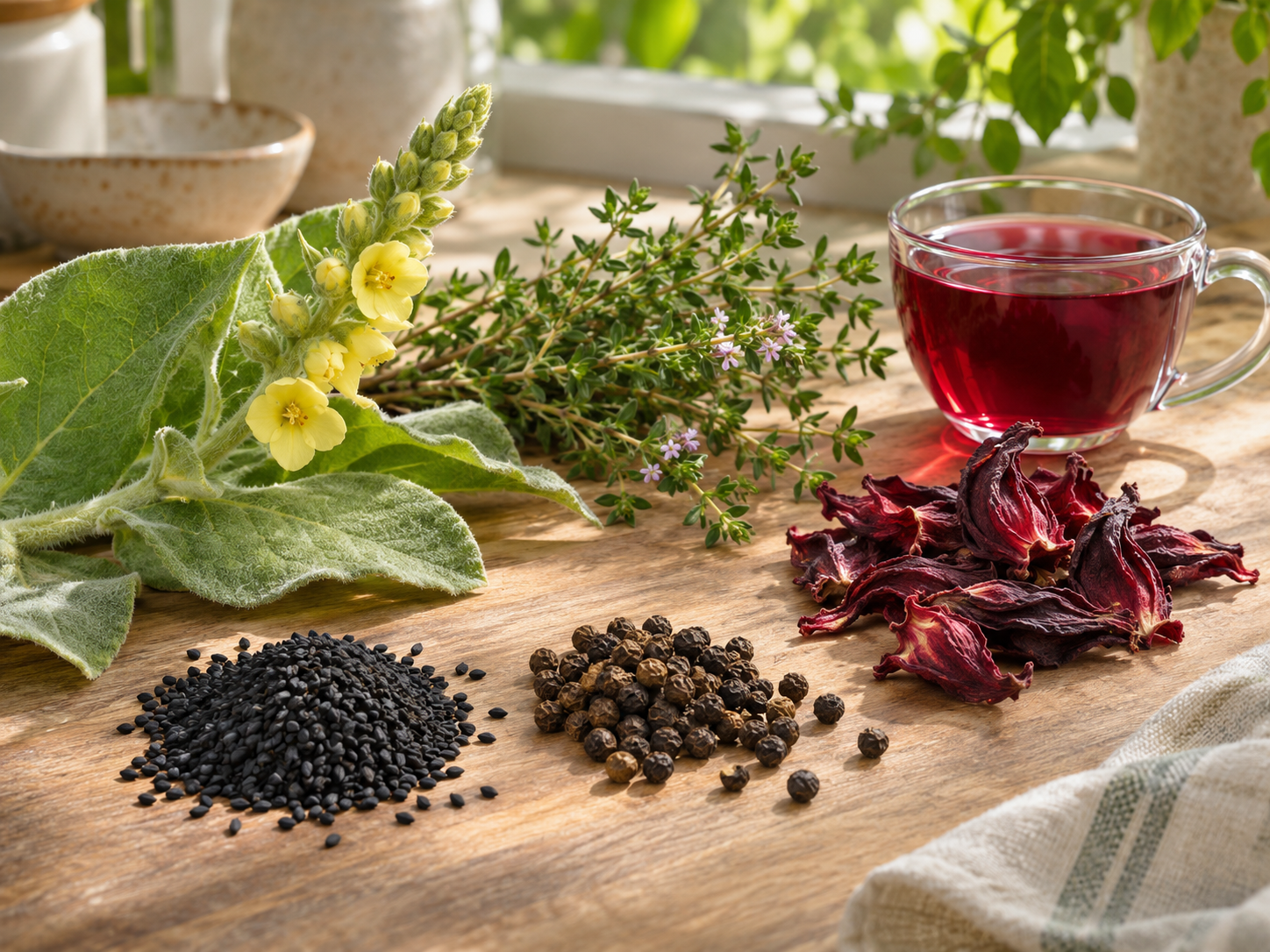
Find in the book: pp. 174–175
Find in the book: p. 185
Find in the book: p. 119
Find in the book: p. 180
---
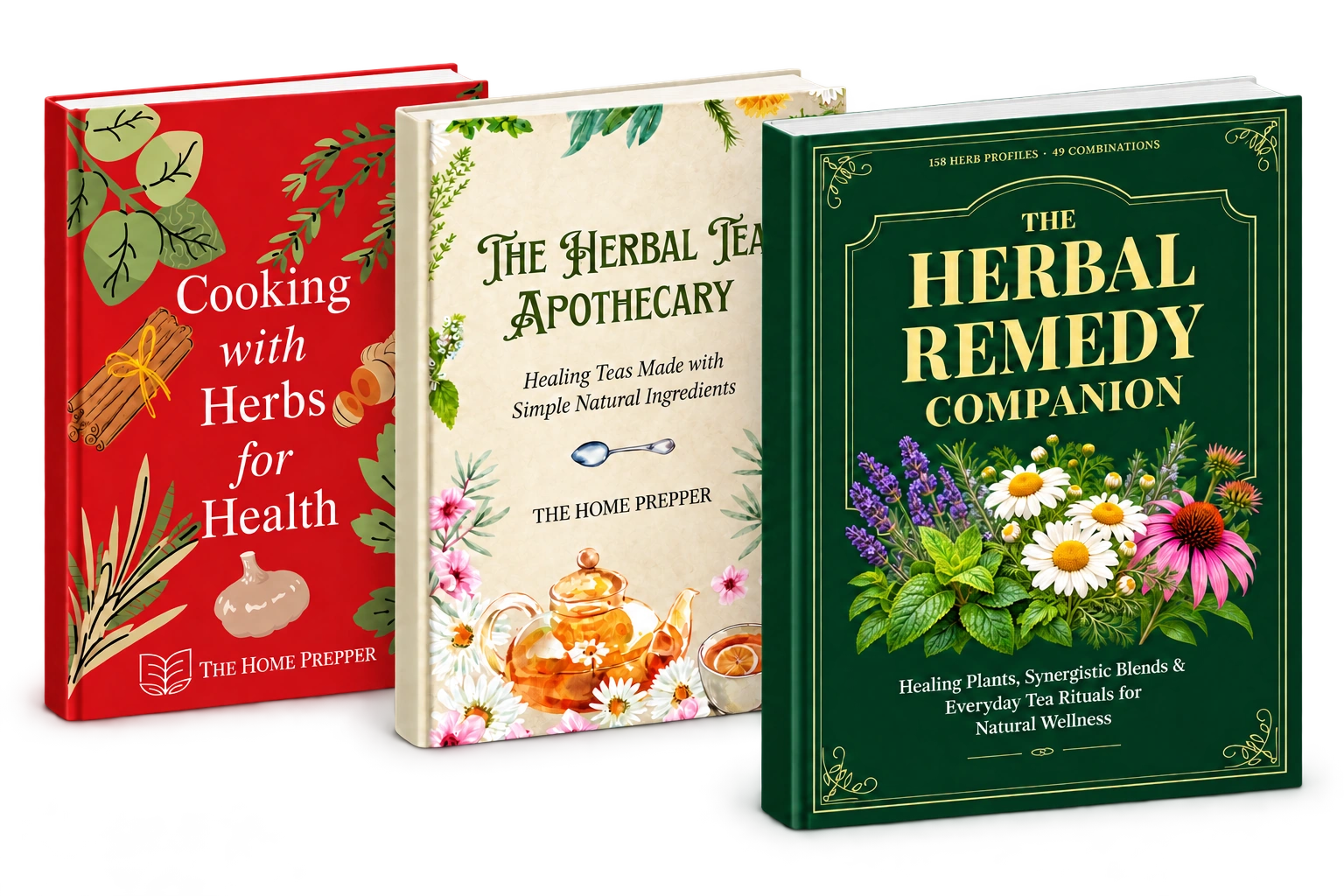
All three guides · Instant PDF access
Your price for all three digital guides:
One payment. No subscription.
One payment of $19.99 · 60-day money-back guarantee · Instant PDF access
Instant PDF download · Secure checkout through Digistore24 · Also available as a paperback on Amazon
Prefer the main book in print? See the separate paperback on Amazon →
Download the guides. Brew the first cup. Make the first batch. If it isn't for you, ask for a refund within 60 days and you'll get 100% of your money back. All the risk is on us.

“The handbook saved me so much time. Instead of Googling random remedies, I knew exactly which herbs to pair. My brain fog lifted, and I finally feel focused at work again.”
“I’ve struggled with blood sugar swings for years. The cinnamon porridge recipe was a game changer. Tastes great, and my levels have been more stable than they’ve been in ages.”
“Honestly, the teas are the easiest part of my routine now. A cup at night, and I sleep deeper without reaching for sleep aids.”
Choice one: keep doing what I did. Pay for the bill, then Google at 11 p.m., then pay for a guess.
Choice two: spend one afternoon learning the 3-Question Test, and never wonder again which remedies deserve your money.
Get The Self-Reliant Herbal PantryOne payment of $19.99 · 60-day money-back guarantee · Instant PDF access
P.S. One 12-minute visit cost me $215. This entire system, 158 herbs, 50+ teas and 73 recipes, costs $19.99.
P.P.S. You have 60 days to try it. If it isn't for you, you get 100% of your money back. The only thing you risk is another 11 p.m. guess.
These guides are for educational purposes only and are not a substitute for advice from a qualified healthcare professional. Vivian Greene is the author persona and pen name used in these guides; her story is told in her voice and is not a clinical case history. Always check herbs with your pharmacist if you take medication, and keep prescribed treatment in place unless your clinician changes it.