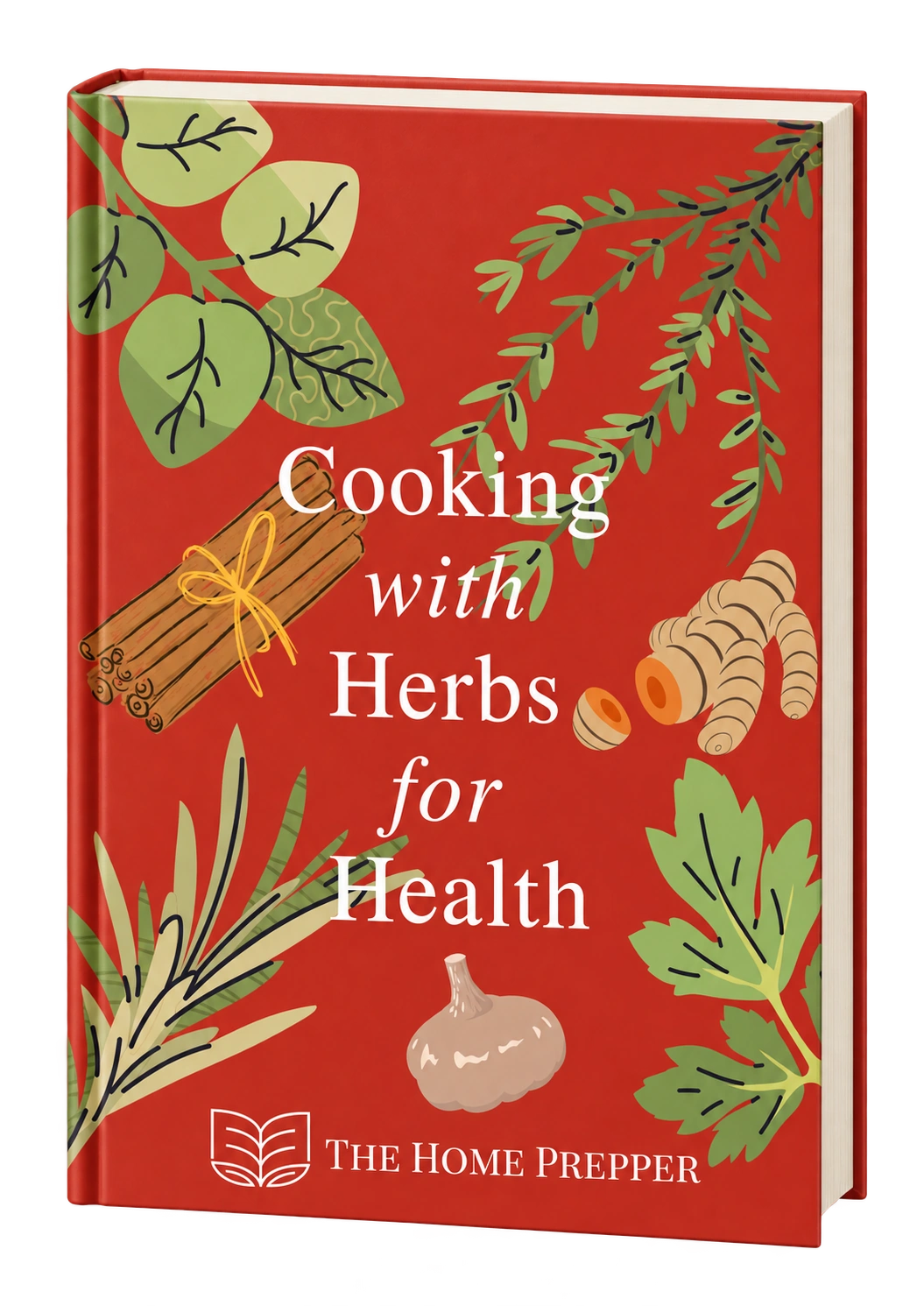
Cooking with Herbs for Health
73 recipes to bring herbs into the food you already make. Take what you’re learning into the kitchen, one meal at a time.
Skip the energy drinks and the supplement aisle. The herbs behind them are already in your kitchen, and this book shows you how to use them.
Measured recipes, plain-English safety notes and the studies behind each remedy, so you can take care of your own health from your own pantry.
3 PDF guides · $27.99 · 60-day money-back guarantee
You’re busy, you’re tired, and every quick fix you’ve tried has to be bought again tomorrow. This page is for you.
Work. Family. Errands. It never stops, so by mid-morning you’re reaching for coffee. Then an energy drink after lunch.
It works for an hour. Then comes the crash, the fog and the jitters, and for many people a night of restless sleep that leaves you more tired tomorrow.
That isn’t an energy plan. It’s a subscription.
It costs you every day, and the people selling it need you to keep paying. Coffee, energy drinks and supplement bottles all sell the same thing: a quick fix you have to buy again. There’s a better way, and it starts with a shelf you already own.
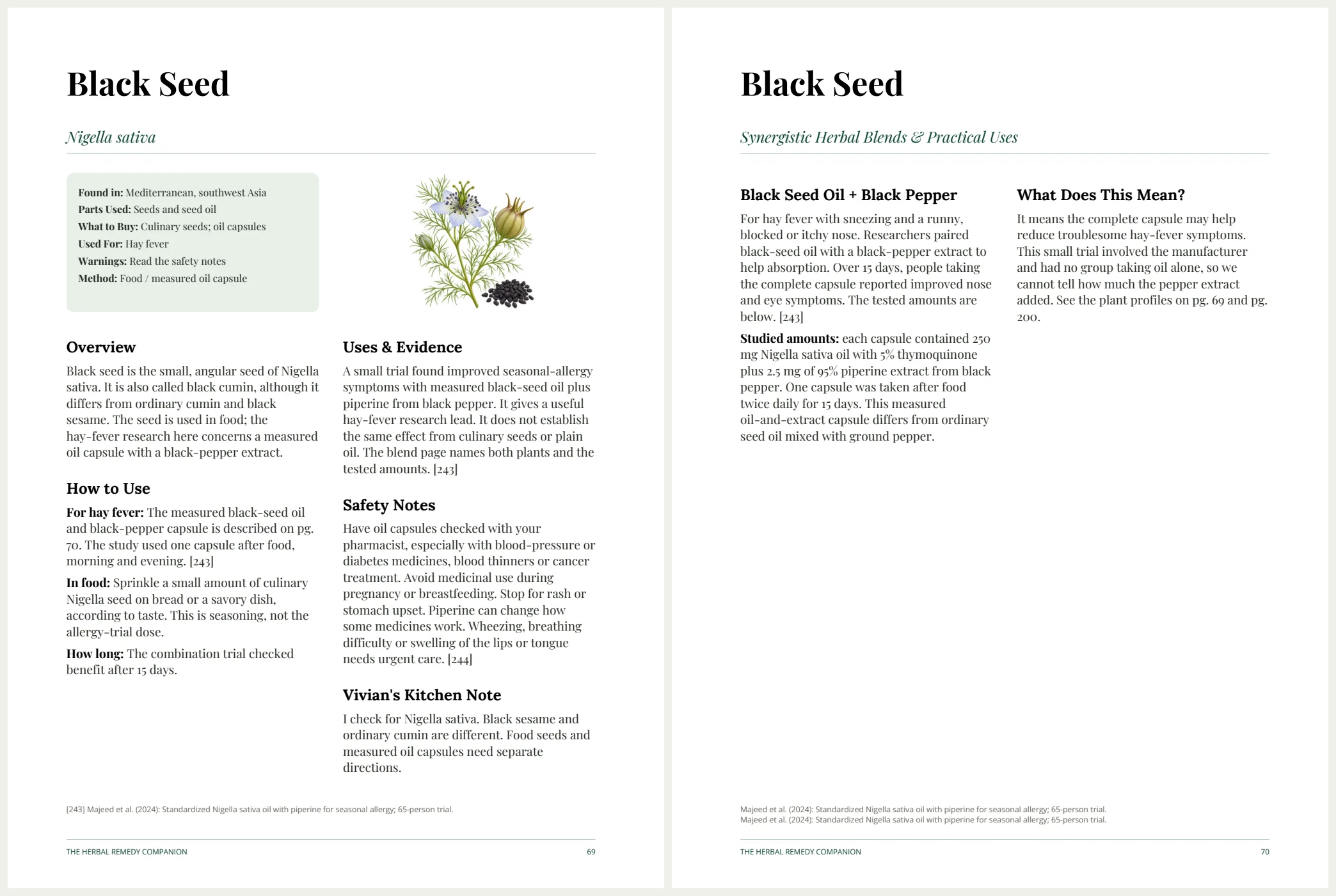
Many popular herbal formulas are combinations of herbs tested in studies years ago, studies you probably never heard about, until you go looking for them.
Take berberine, the compound in barberry and goldenseal. In 2008, researchers ran a small three-month pilot of it in people with type 2 diabetes. Seventeen years later, in 2025, a 113-person trial tested a new berberine-based investigational compound.1415
You may have seen black pepper listed beside turmeric on a label. That comes from a small 1998 human study: adding 20 mg of piperine to 2 g of curcumin raised absorption by 2,000%. That measures absorption, not pain relief, and the book is clear about the difference.2
Most people only hear about an idea like that once it has been packaged, branded and marketed to them. The research is public. What you keep paying for is the bottle.
You’ve probably tried. You found a study, a blog post or a bottle, and the questions piled up:
A label can’t answer those, and the studies are scattered across journals written for researchers. That gap between a study and your kitchen is what this book closes.
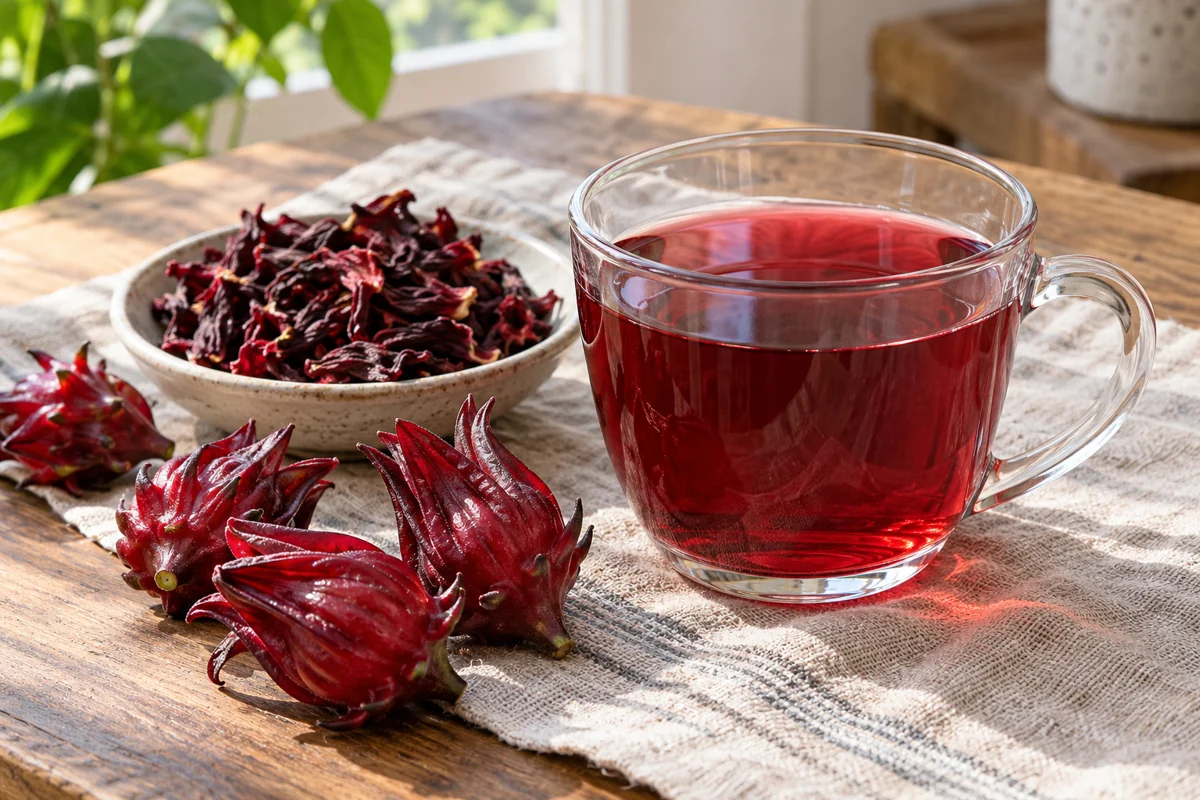
Appointments and refills already stretch a household budget. A shelf of supplements on top of that adds up, month after month. The herbs in those bottles aren’t secret. What you pay for each month is the bottle.
A REAL INGREDIENT-COST COMPARISON
A 1.5 g portion of loose hibiscus costs about 5¢, compared with about 44¢ in a ready-filled tea bag.
Listed prices: $16.28 for 1 lb of loose hibiscus; $7.95 for 18 tea bags. Ingredient-only example, checked 29 October 2026. Shipping, tax, equipment and preparation time excluded. This is a cost comparison, not a treatment instruction. Prices and calculation →
I won’t pretend a cup of tea is identical to a lab-made extract. Where a study used one, I tell you.
I’m not a doctor, and I don’t pretend to be. I’m a researcher with a kitchen. With a small team of herbalists, I’ve spent years reading the trials, the reviews and the safety guidance, then testing how to make each remedy on the stovetop.
I did it because I was tired of two kinds of advice: vague tips that couldn’t be used, and expensive products with no explanation. I wanted a clear answer, not a marketing line, and more say in how I look after my family, with choices I understood. This book is what I built to get there.
Vivian Greene
I built this book so you can check my work:
Behind it all are 158 herb profiles and 254 cited sources, including European Medicines Agency herbal assessments and guidance from the NIH’s National Center for Complementary and Integrative Health.
1. Find your remedy. Start with the Symptom Finder, or browse 158 profiles across ten everyday areas.
2. Understand why it’s paired. Learn what each herb is there for and what the studies tested, with a plain-English “What Does This Mean?” summary.
3. Make it, with real measurements. Recipes are in spoons and grams, and many tea blends are ten-bag batches: mix once, brew one cup at a time.
4. Use it safely. Every profile has a Safety Notes box: who should avoid it, what it can interact with, and when to stop and get advice.
See some of the remedies inside →If you’ve started checking your blood pressure at home, you know how much those two numbers can weigh on you. Inside: which dried, cup-shaped parts to buy, how to measure them, and how to simmer and strain a tart red cup, plus the medicine checks to make before drinking it regularly.
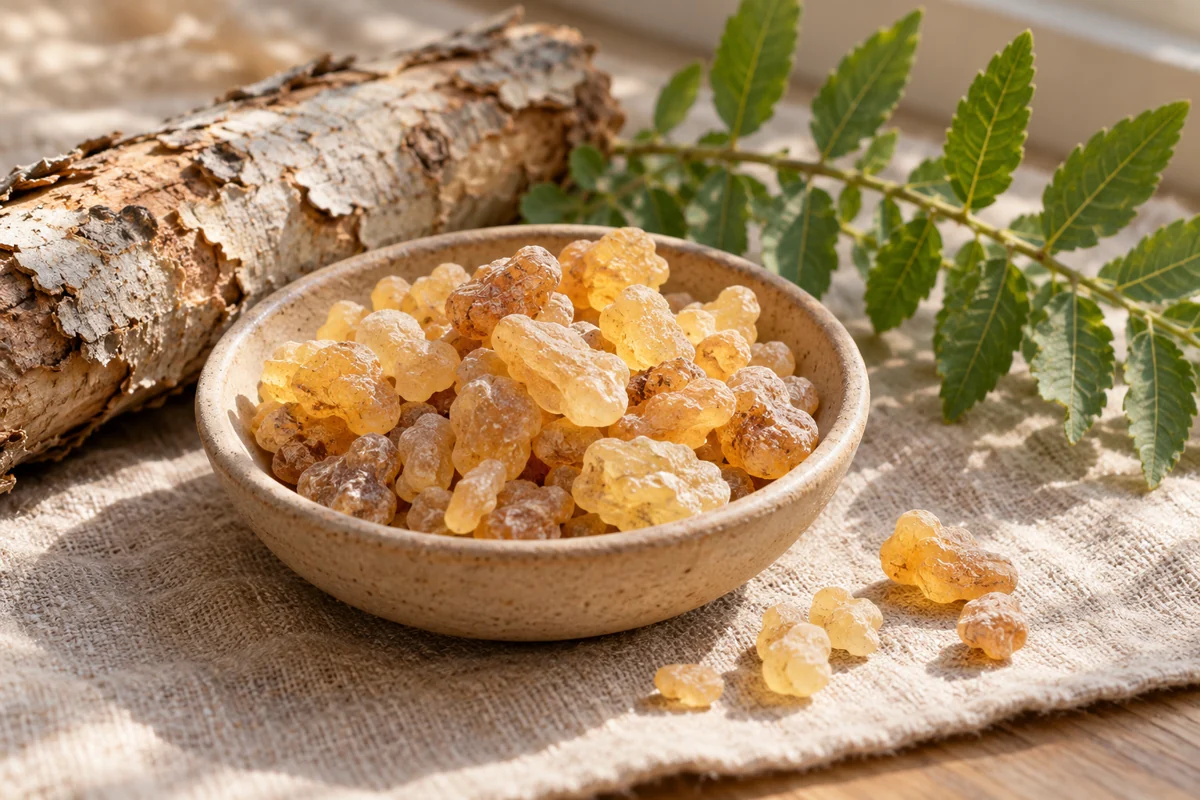
Getting out of a chair, taking the stairs: aching knees make you think twice. The book explains why a fragrant plant resin is used beside the golden root, and walks you through a 201-person study of the two measured extracts, with the amounts and trial length.
You’ll understand the reasoning behind the blend before choosing a preparation for yourself.4
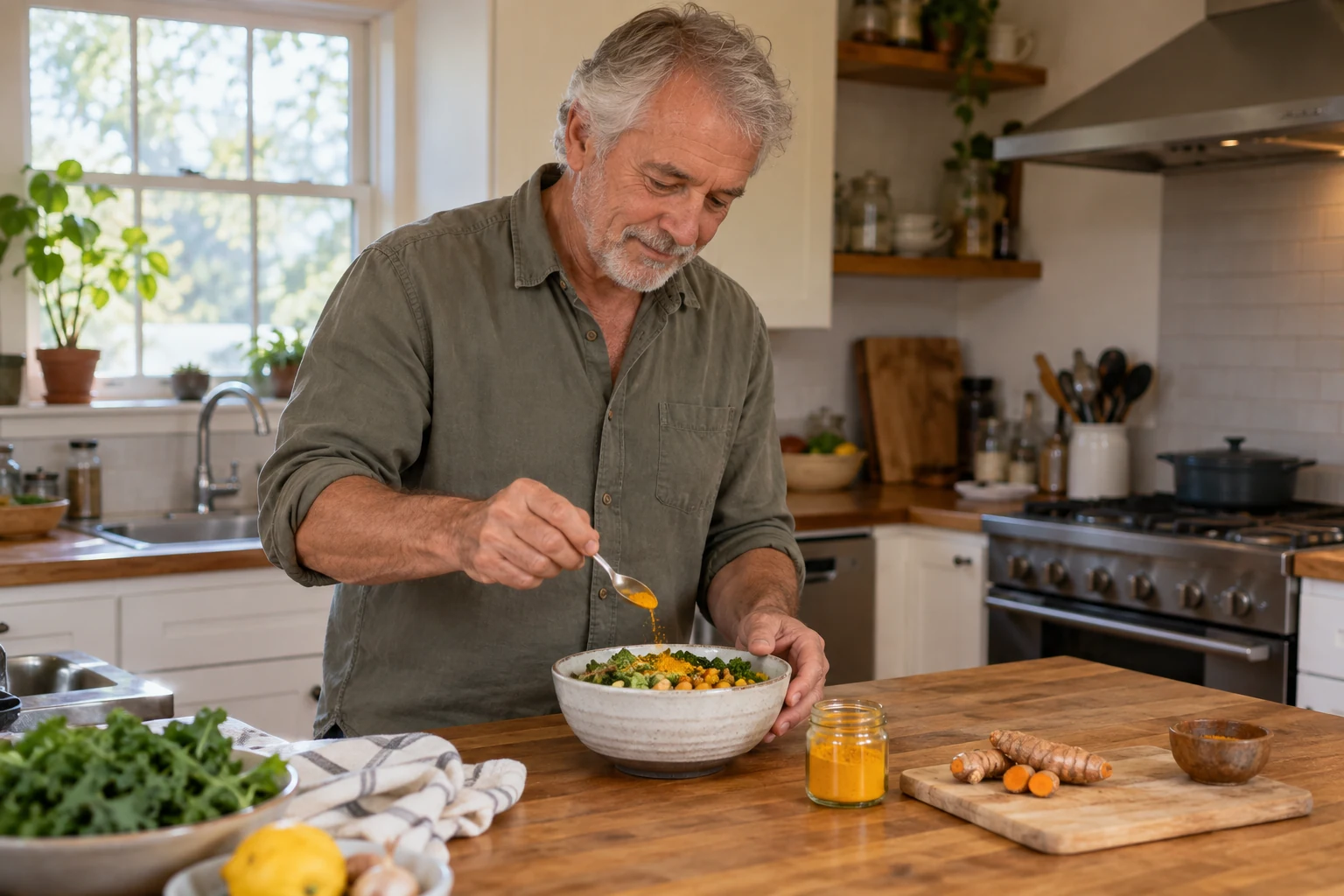
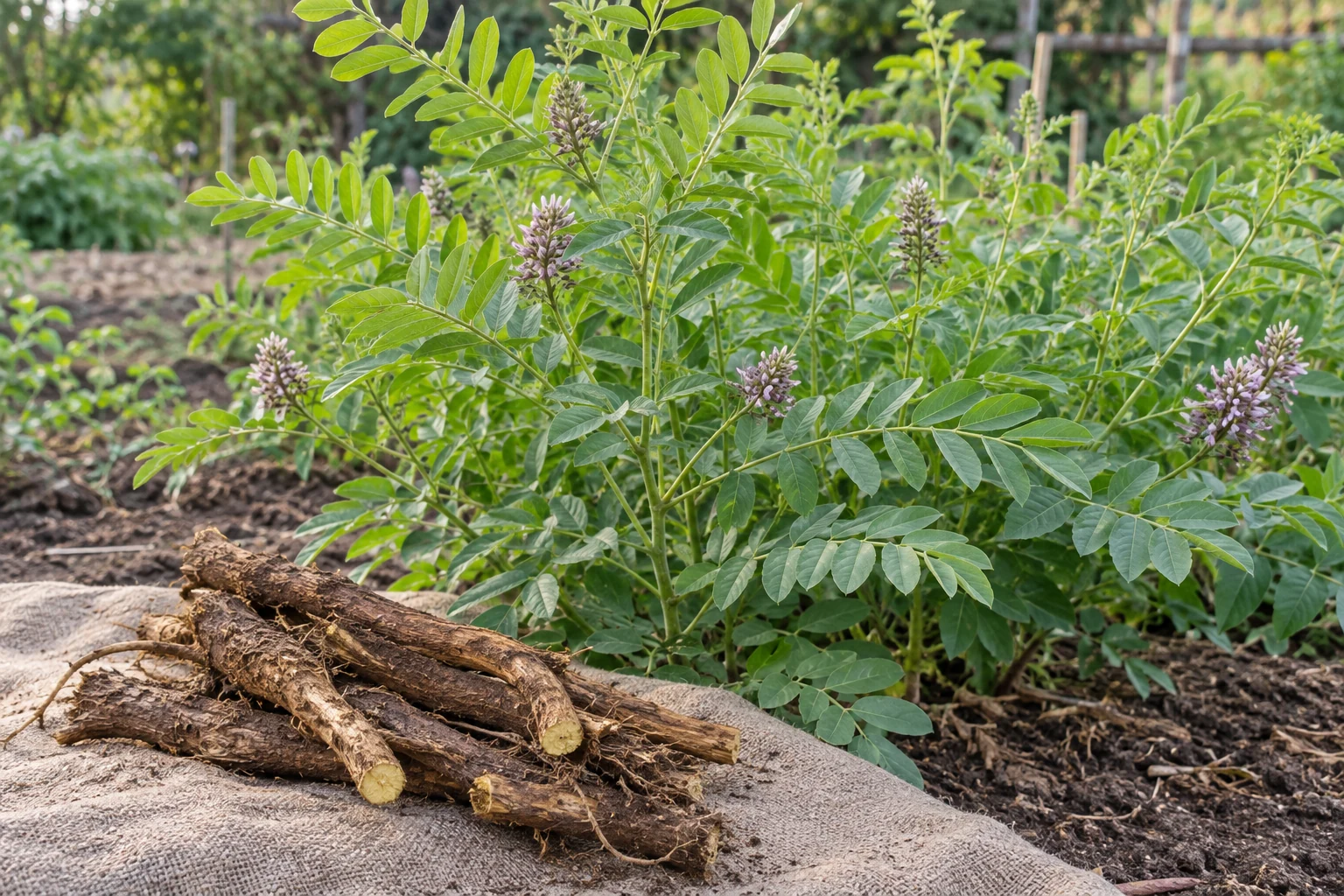
The preparation matters. The book explains the DGL form used in heartburn research, what those letters mean, and what to check on the label before you buy.
You can go shopping with a clearer idea of what you are looking for, rather than relying on the root’s familiar name.12
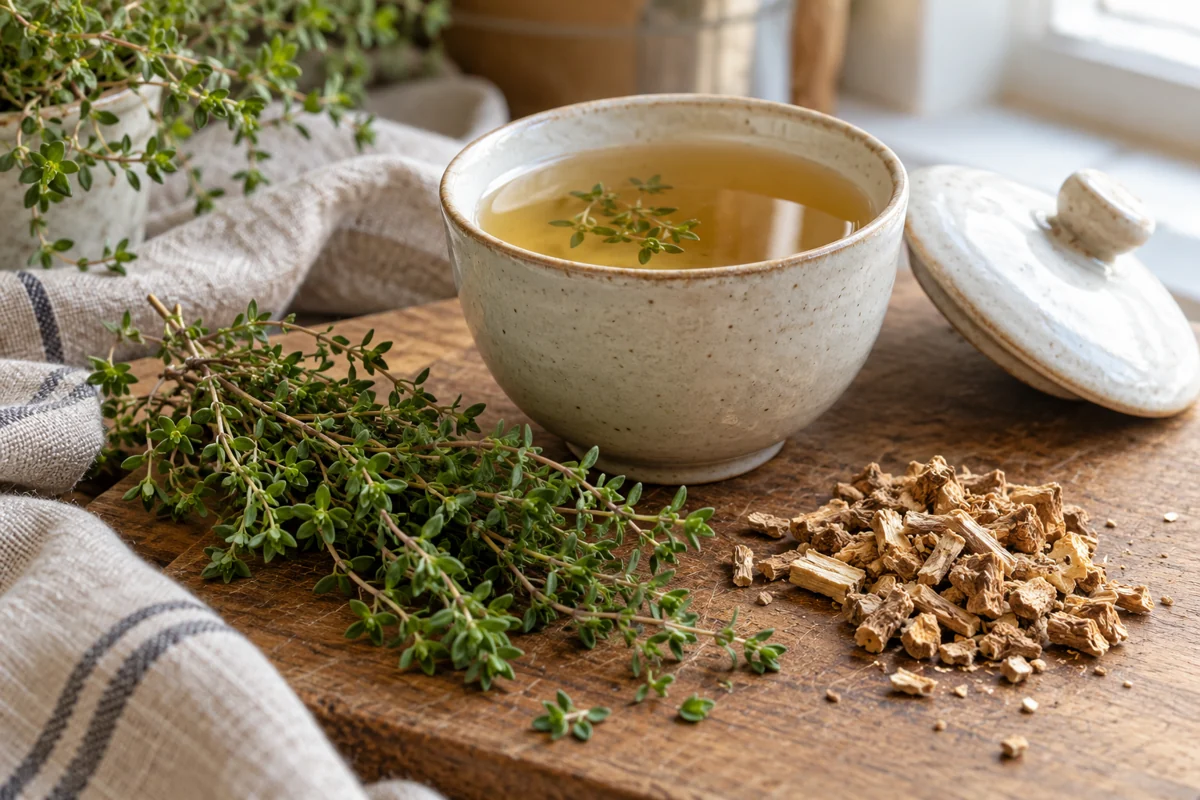
A covered leaf tea, measured ten-bag cough blends, and why a spring-flowering plant’s root appears beside the herb. Also inside: mullein, a gentle North American herb with a long history in traditional lung support, and the one detail that keeps your first cup smooth instead of scratchy.
How the cut leaf is measured for a cup, how long to leave it covered, and how to keep a simple count of hot flashes so you have something clearer than memory.
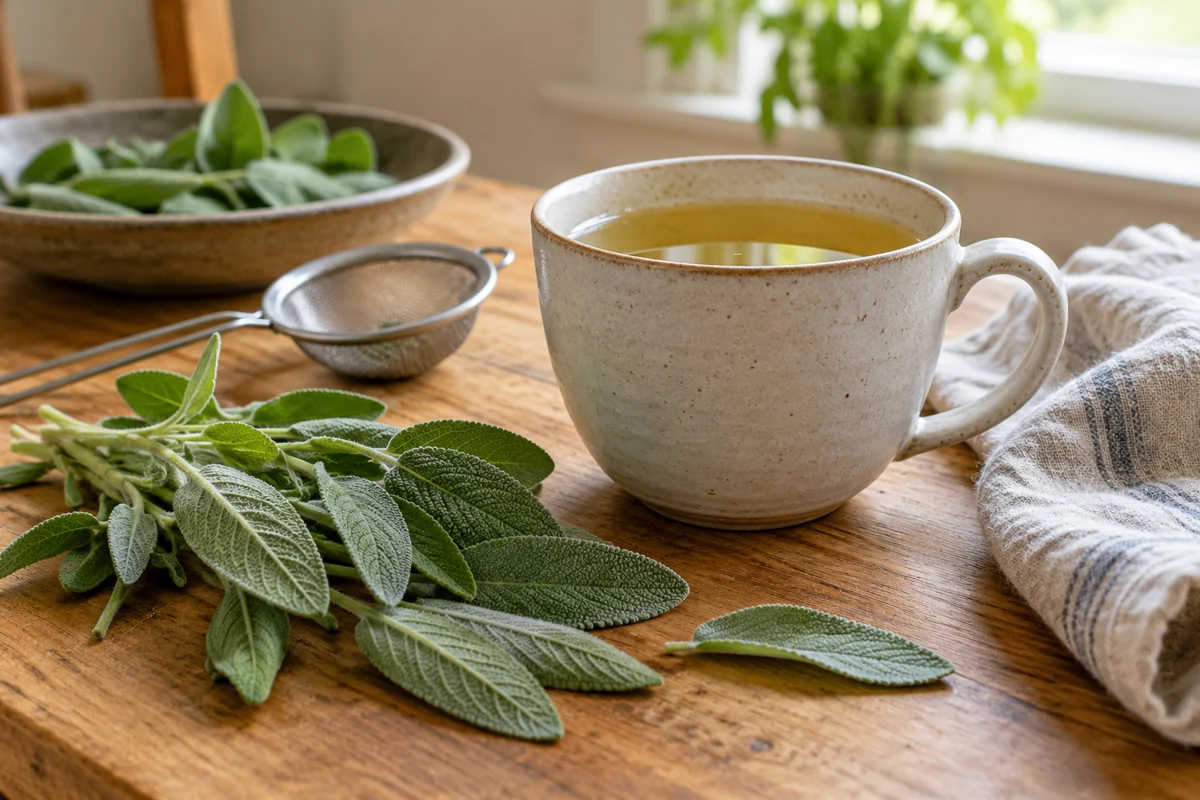
Not a soda. The rounded leaf mentioned in the video appears in the Focus Flow blend in The Herbal Tea Apothecary, alongside a lemon-scented leaf and a familiar kitchen herb.
Inside, the three ingredients, cup size, covered steeping time and straining method are together on one page. The main book also explains this plant’s separate use in measured extracts for heavy legs, with the medicine and liver cautions to check first.
This is a traditional tea blend, rather than proof that a cup improves memory or replaces caffeine.
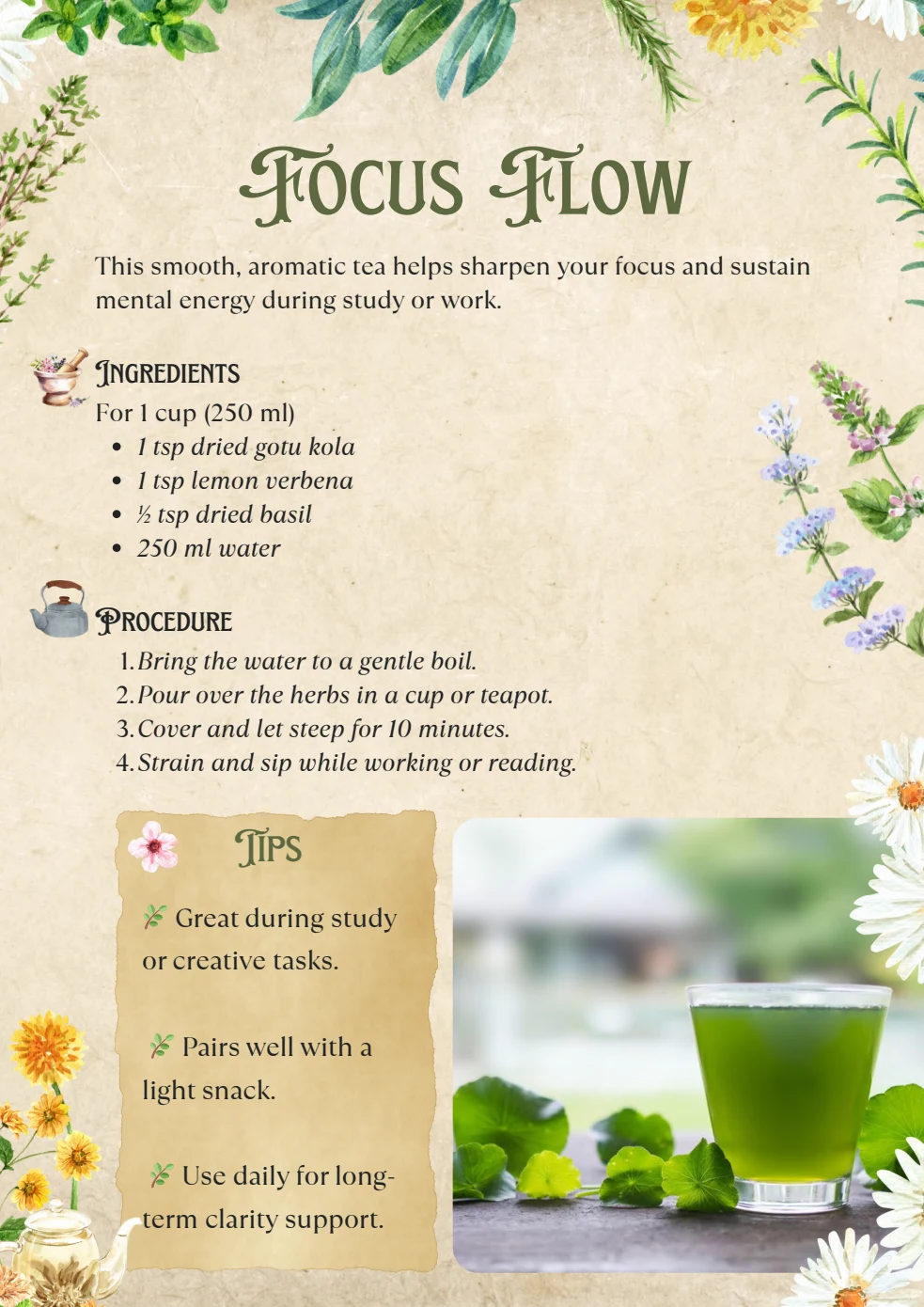
Make the Sweet Sleep blend so your last cup of the day isn’t another stimulant. The Herbal Tea Apothecary gives the ingredients and brewing steps together, with the reasons for choosing the herbs.
A practical evening recipe you can return to whenever you put the kettle on.
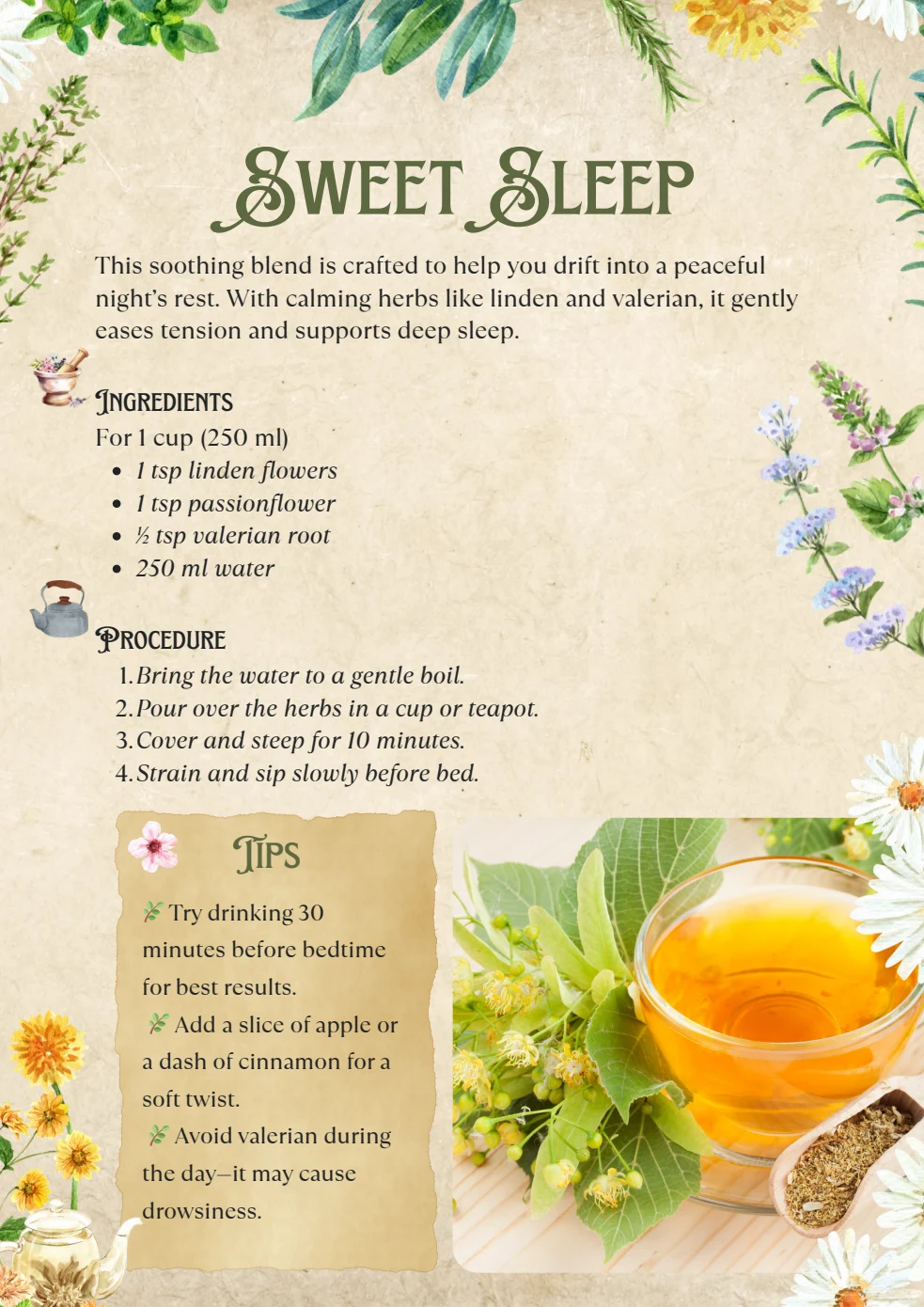
Swap sugary cereal for the warm cinnamon keto porridge in Cooking with Herbs for Health, one of the bonus cookbook’s 73 recipes.
The recipe brings the ingredients, amounts, cooking steps and serving information together. You can see what goes into the bowl before deciding whether it fits your breakfast.
The recipe is a breakfast option. It is separate from the book’s discussion of the mixed findings on cinnamon and blood sugar.
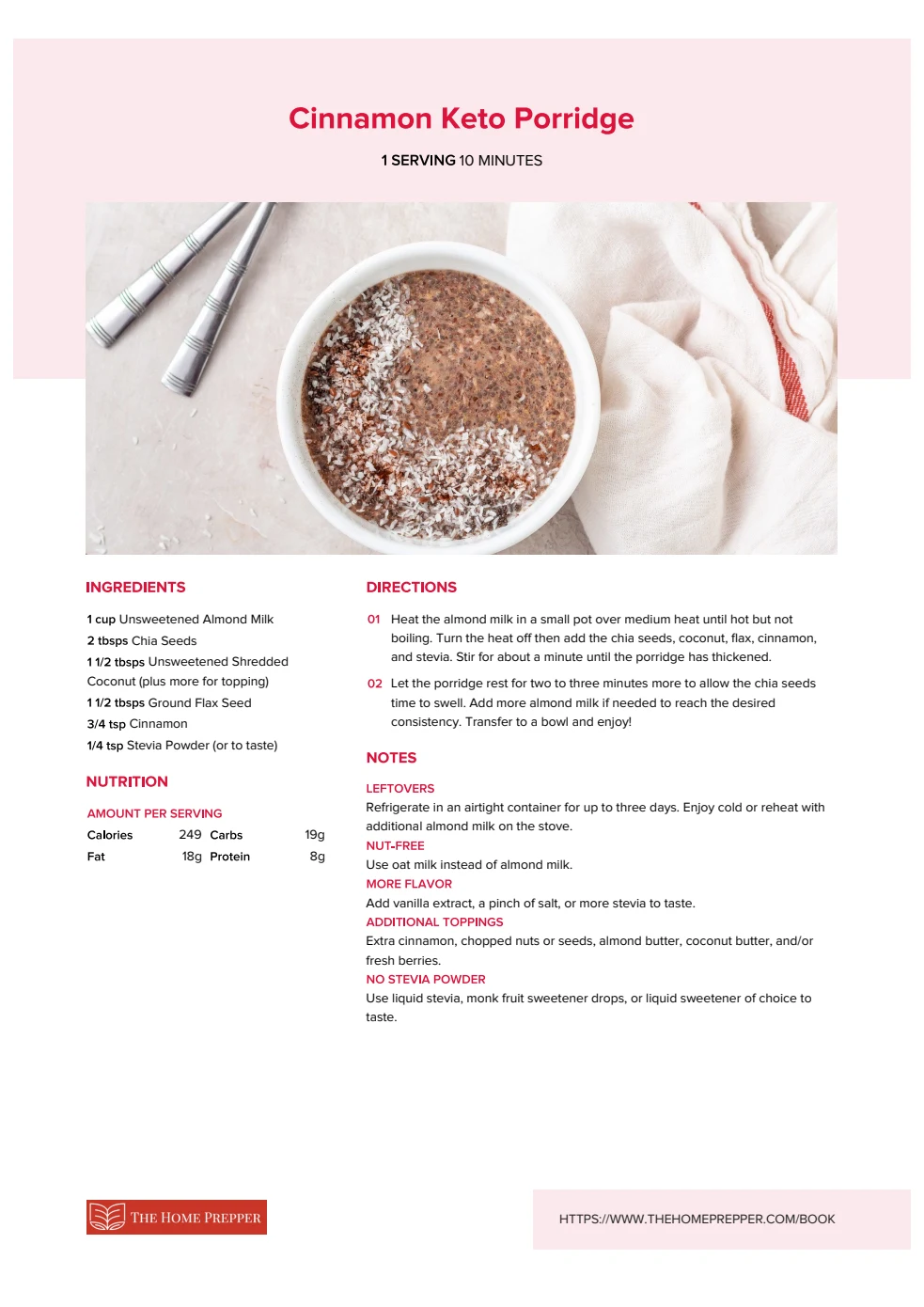
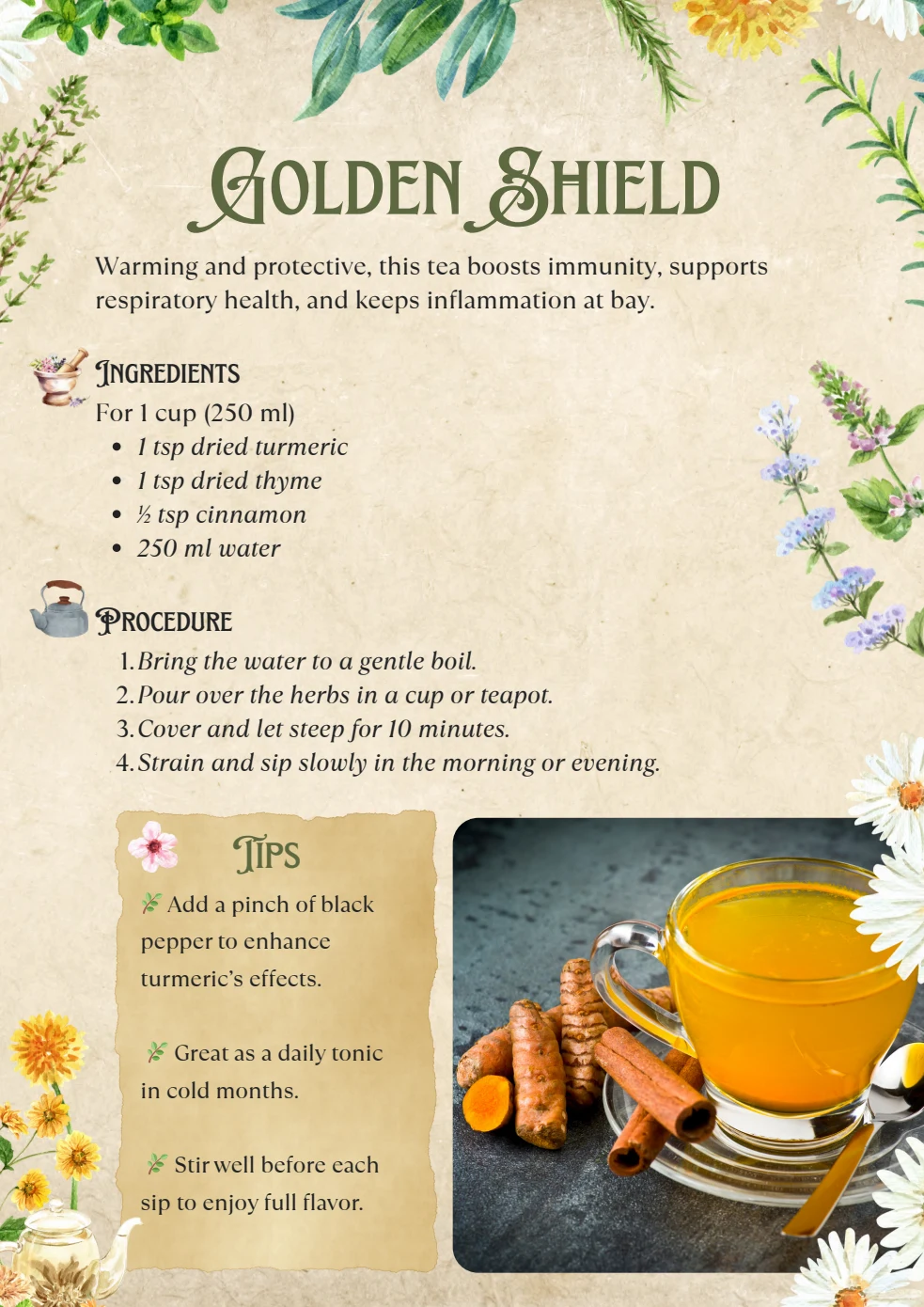
The Golden Shield blend brings a golden root, a fragrant kitchen herb and a warming bark spice into one cup. It is one of more than 50 blends in The Herbal Tea Apothecary.
Inside, you’ll find the amount of each ingredient, the water quantity, the covered steeping time and the straining method. The recipe keeps the preparation steps on the same page as the blend.
A measured kitchen blend, with its traditional uses kept separate from studies of concentrated extracts.
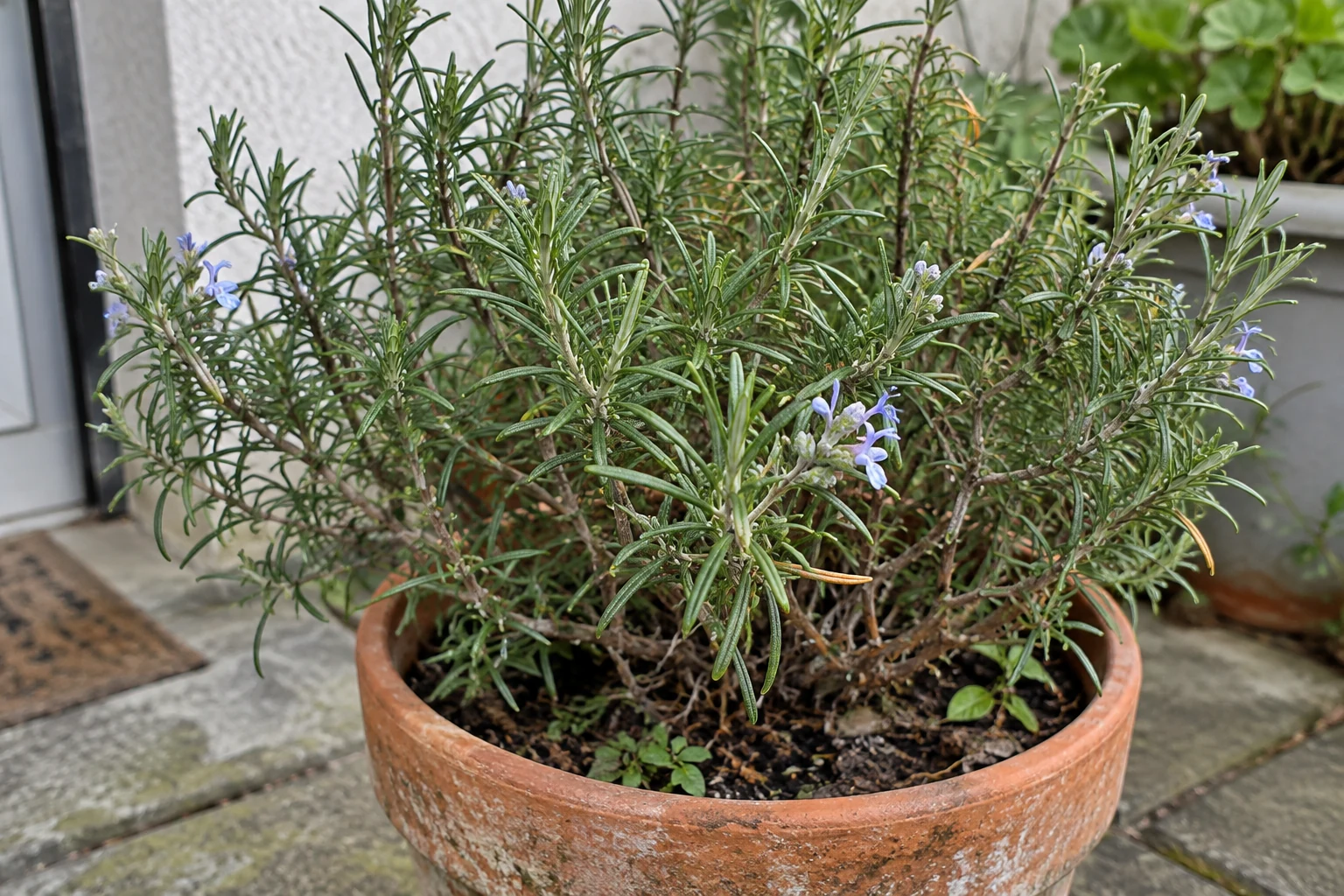
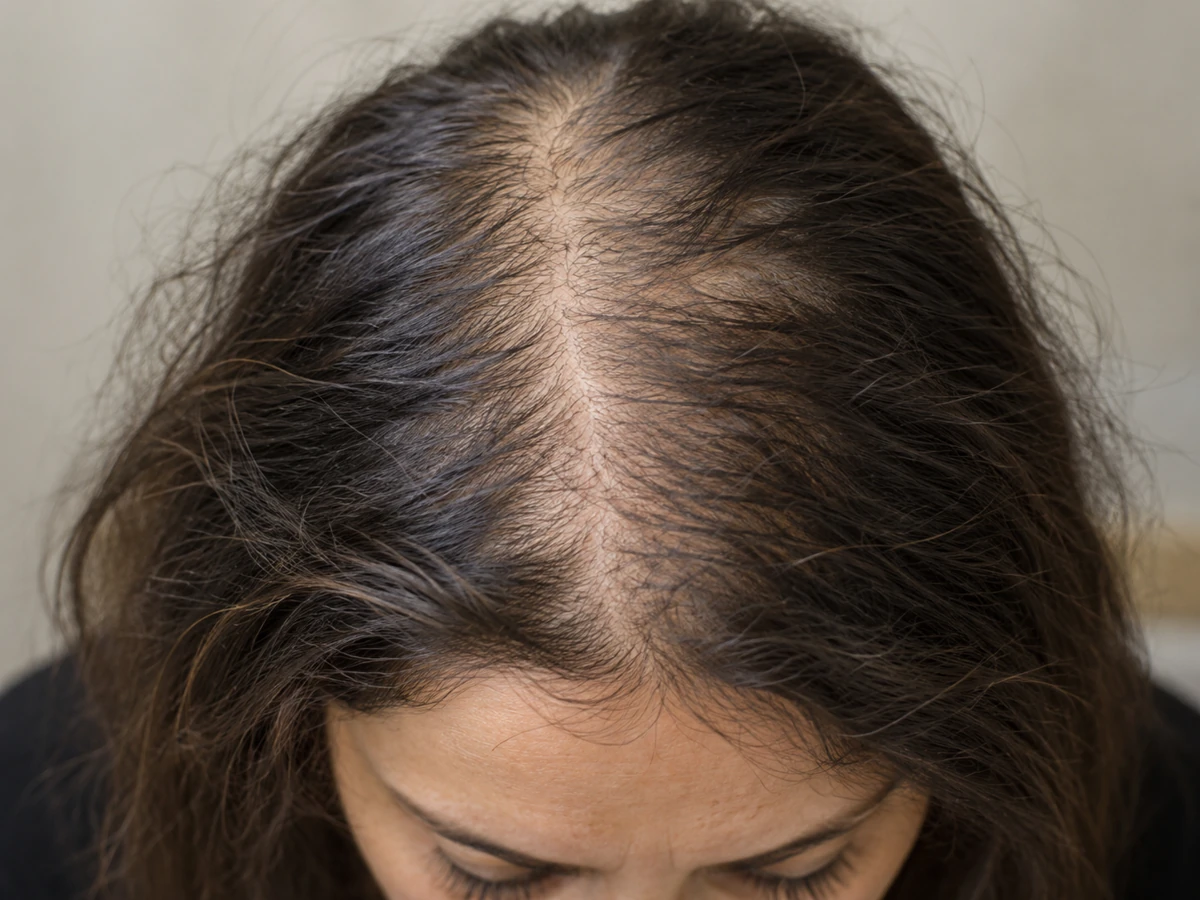
You notice it in the mirror, then find yourself checking again under a different light. When your hair starts looking thinner, it is easy to spend a lot of money trying to find an answer.
This familiar Mediterranean shrub supplies an essential oil used in scalp preparations. The book shows you how a measured blend is made with a carrier oil, how to part the hair to reach the scalp and how to keep the small bottle stored properly.
The directions and the research are there to read together, so you know which preparation each explanation is about.9
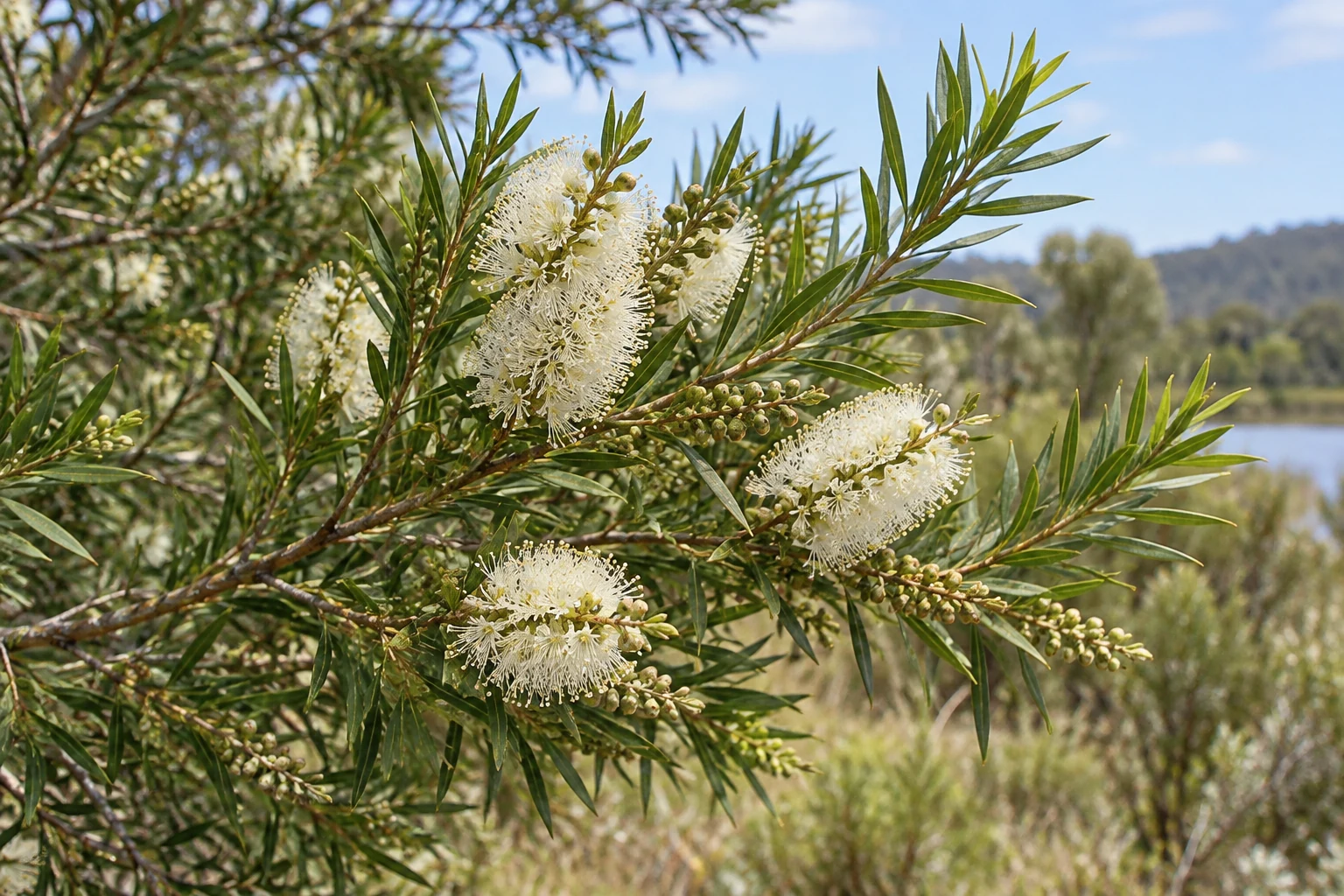
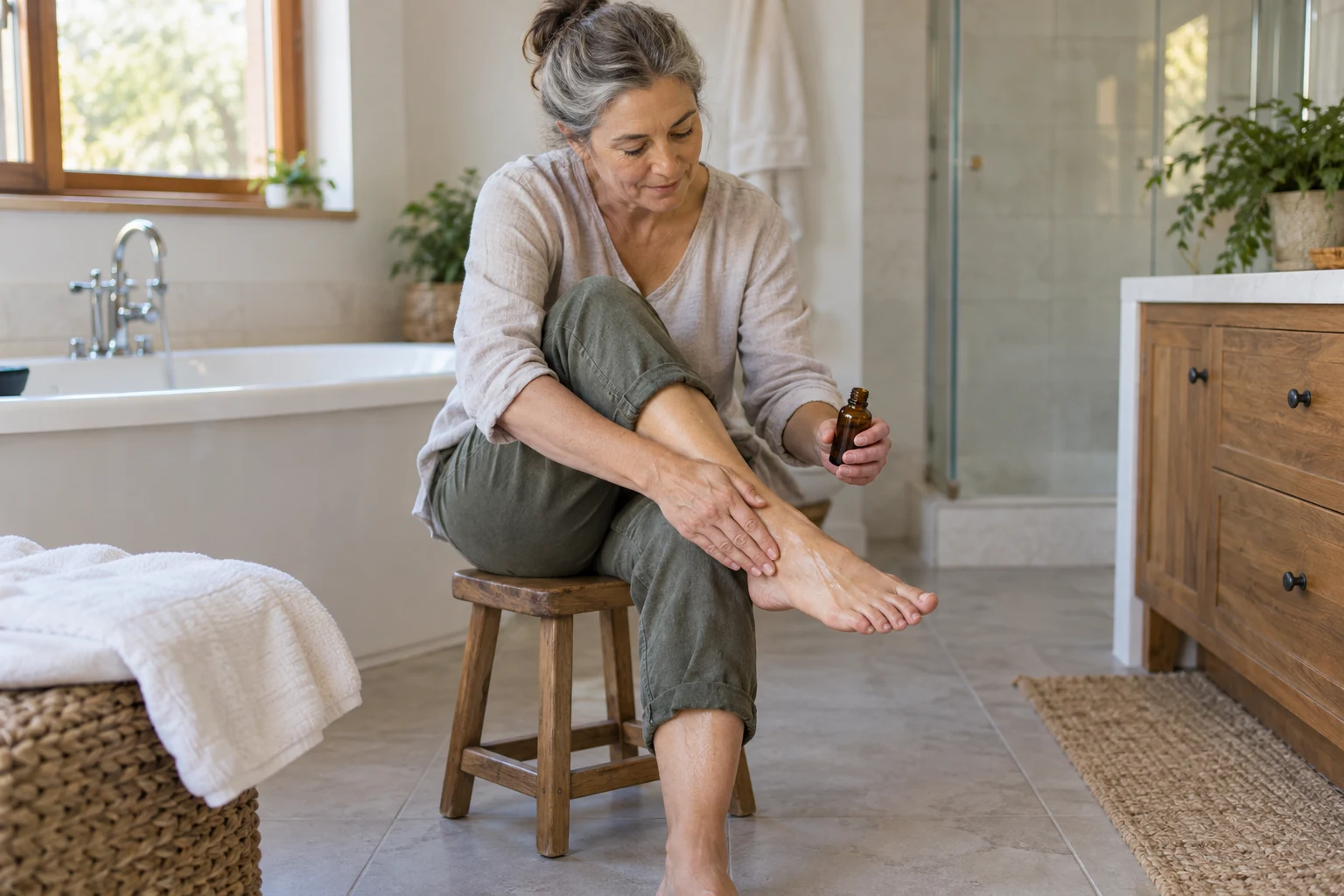
You clean your feet, change your socks and still find yourself thinking about the itching. This is the sort of awkward little problem that sends people searching for something they can use at home.
The book takes you through a measured oil blend made from the leaf oil of a narrow-leaved Australian plant and a plain carrier oil. You’ll see the mixing directions, the first small-area test, where to apply it and how to store it.
You can follow a preparation instead of guessing how much essential oil belongs in the bottle.11
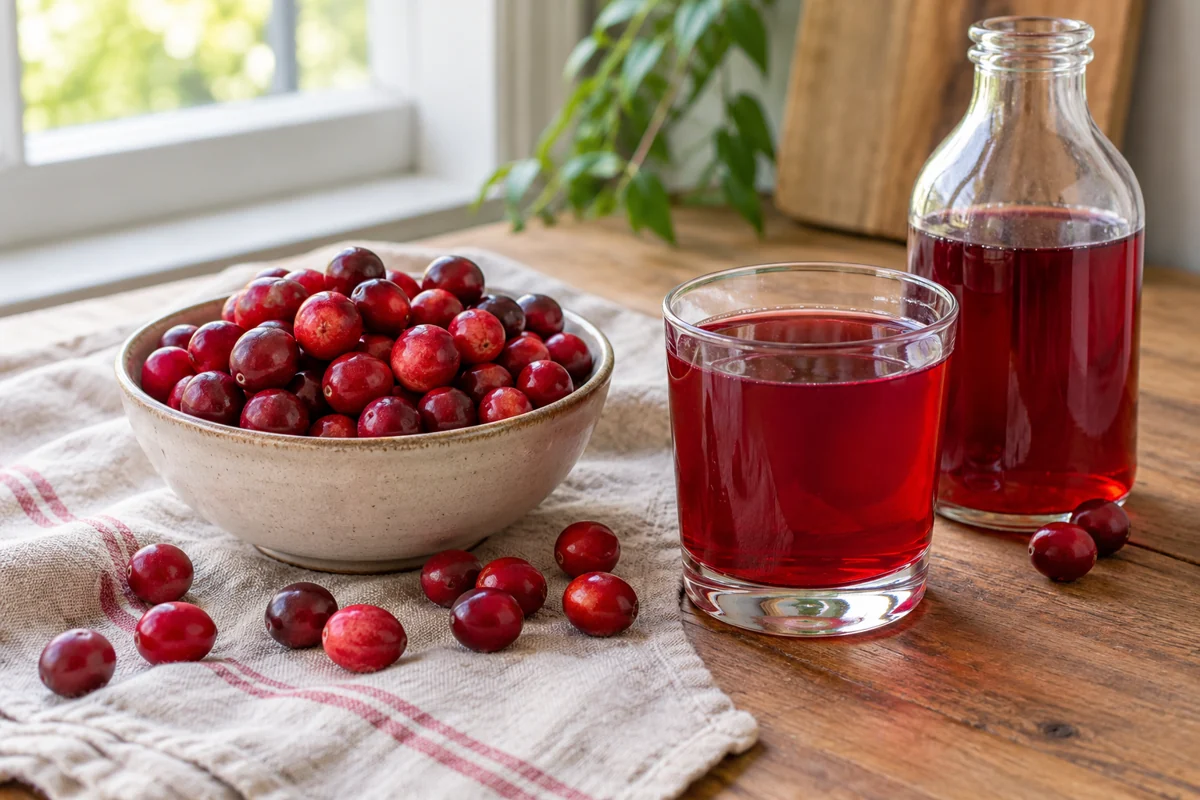
When urinary infections keep coming back, “drink some juice” is frustratingly vague advice. Which drink? How much? And what should you look for before you buy it?
The book shows you how to choose a ready-to-drink product, check how much of the actual berry juice it contains and measure a serving in your usual glass. You’ll know what to check when two red bottles on the shelf look much the same.
Research found fewer repeat infections in some women using products made from this berry. Its role is prevention; an infection you already have needs treatment. The book helps you understand where the berry fits.20
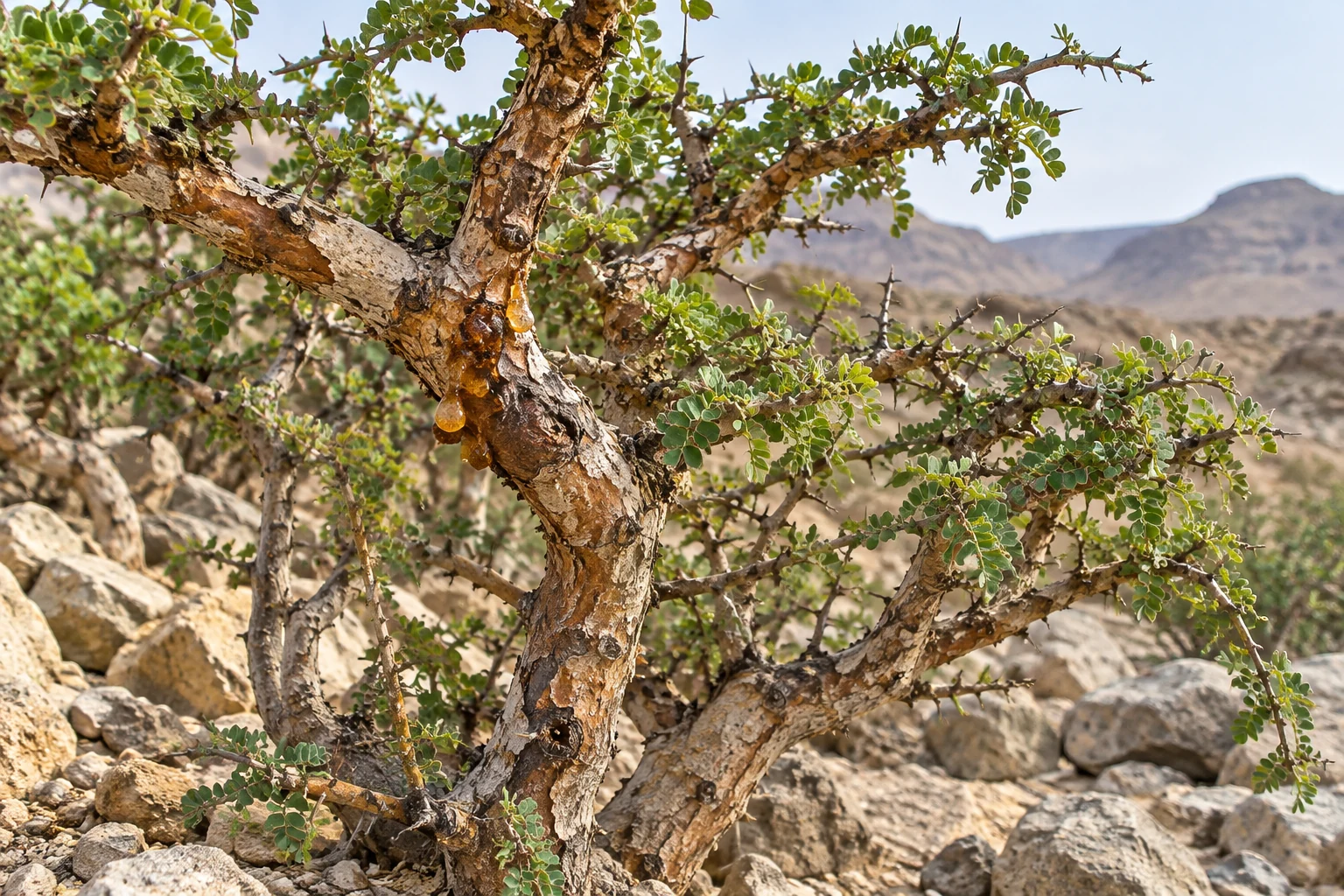
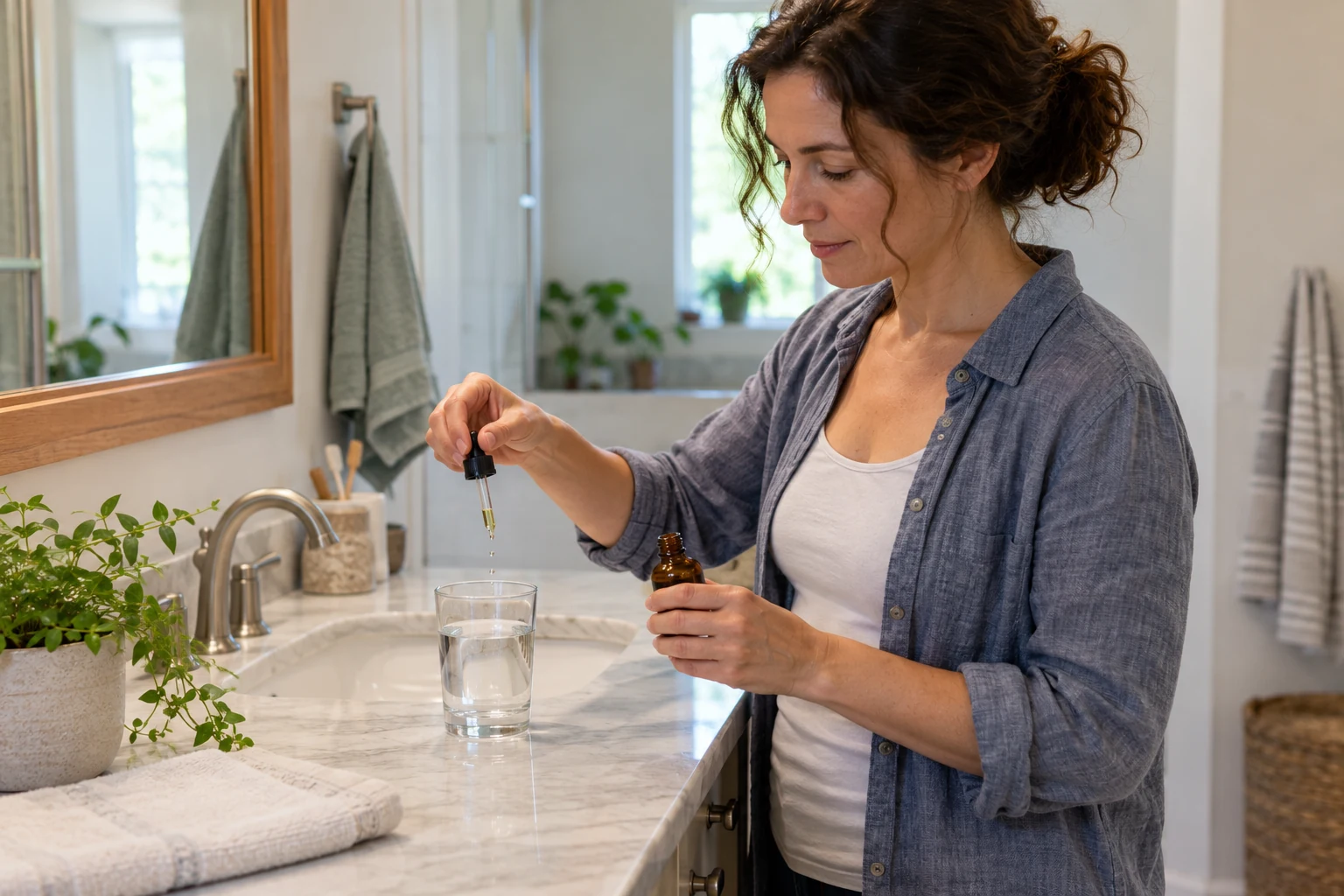
A tiny sore can make a sip of tea or a bite of lunch unexpectedly unpleasant. Here is a traditional preparation you can look up without searching through pages of conflicting advice.
The guide explains how a medicinal tincture made from an aromatic resin is diluted into a fresh mouth rinse. You get the amount, the water and the directions together, including how it is used and when to stop.
A clear method matters when the preparation is going into your mouth.8
When dry skin keeps itching, even getting into the bath can leave you wondering whether you’ll feel better or worse afterwards. This familiar grain has a finely milled form made for the skin.
Inside, I’ll show you which plain, finely milled product to buy, how to mix a milky bath and what to do after soaking. The same plant’s green herb appears elsewhere as a traditional drink for mild stress. You’ll learn which packet belongs in the bath and which belongs in the cup.
The FDA recognises the finely milled grain preparation as a skin protectant. It can help ease dryness and itching, including on eczema-prone skin. The green-herb drink has its own separate directions.21
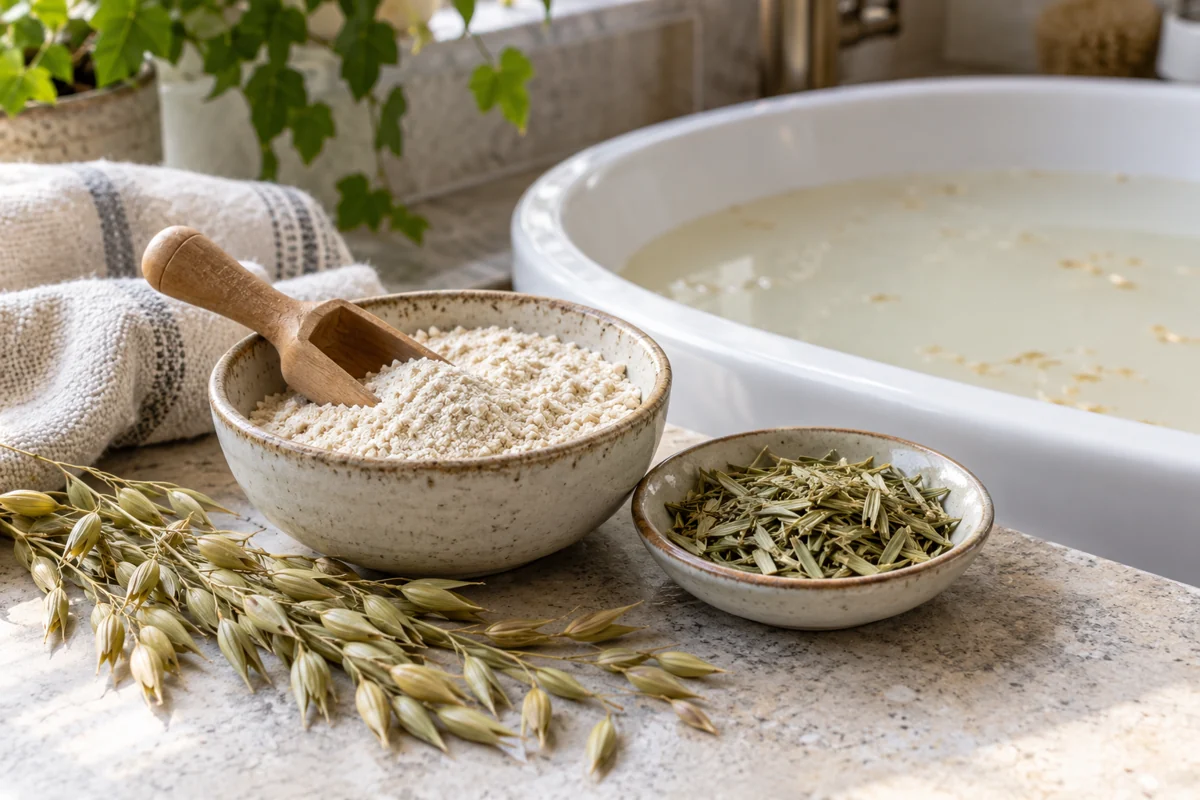
An awkward problem still deserves a straightforward explanation. You should be able to find the preparation and its directions without wading through vague advice.
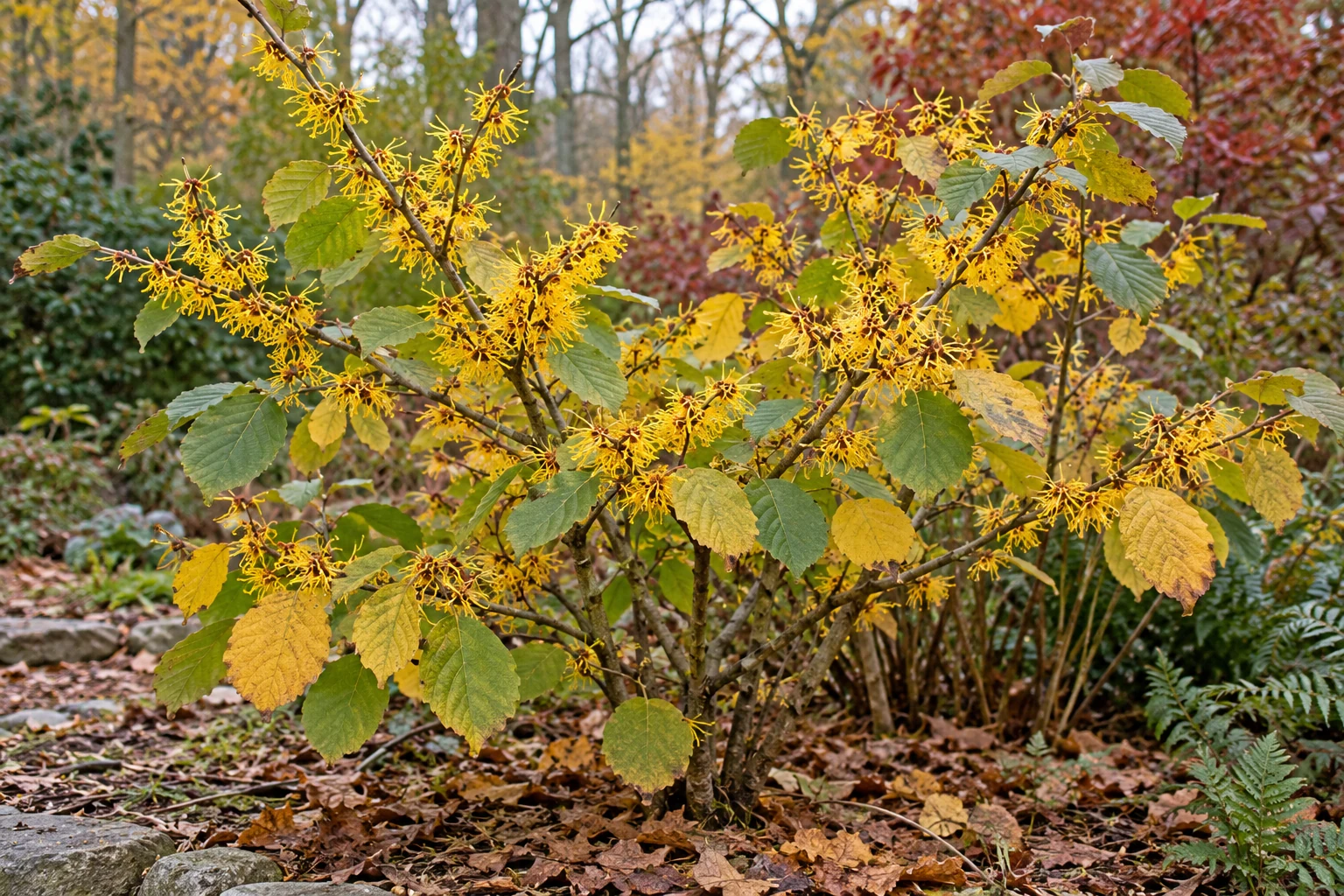
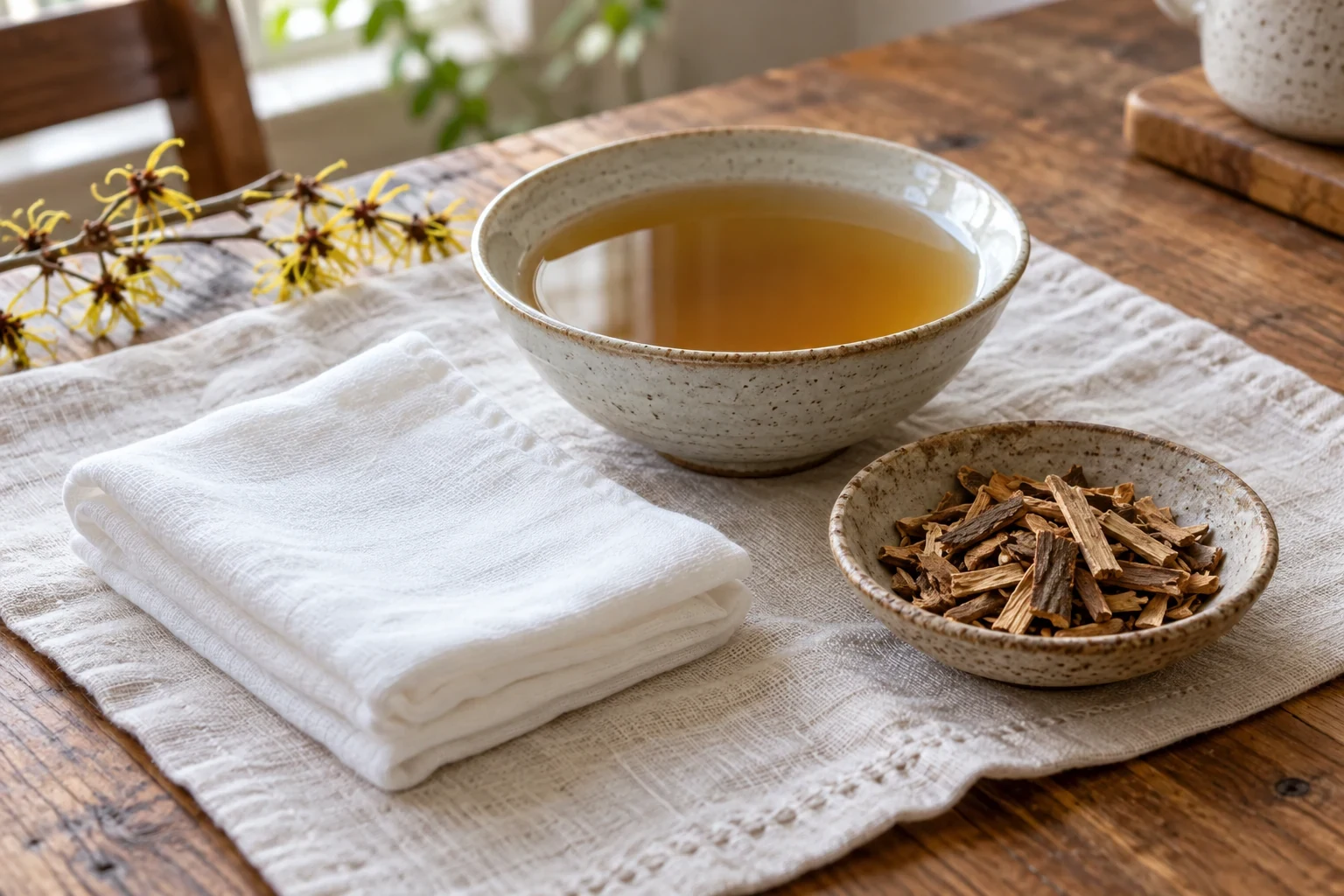
This flowering shrub provides a bark traditionally used in external care. The guide explains how to prepare and cool the liquid, soak a clean cloth and use the compress for hemorrhoid itching and burning.
Two different preparations, with the purpose of each explained in ordinary words.13
You hear a familiar herb described as good for the liver. Then you find teas, capsules, extracts and a shelf of products with very different labels. Where do you begin?
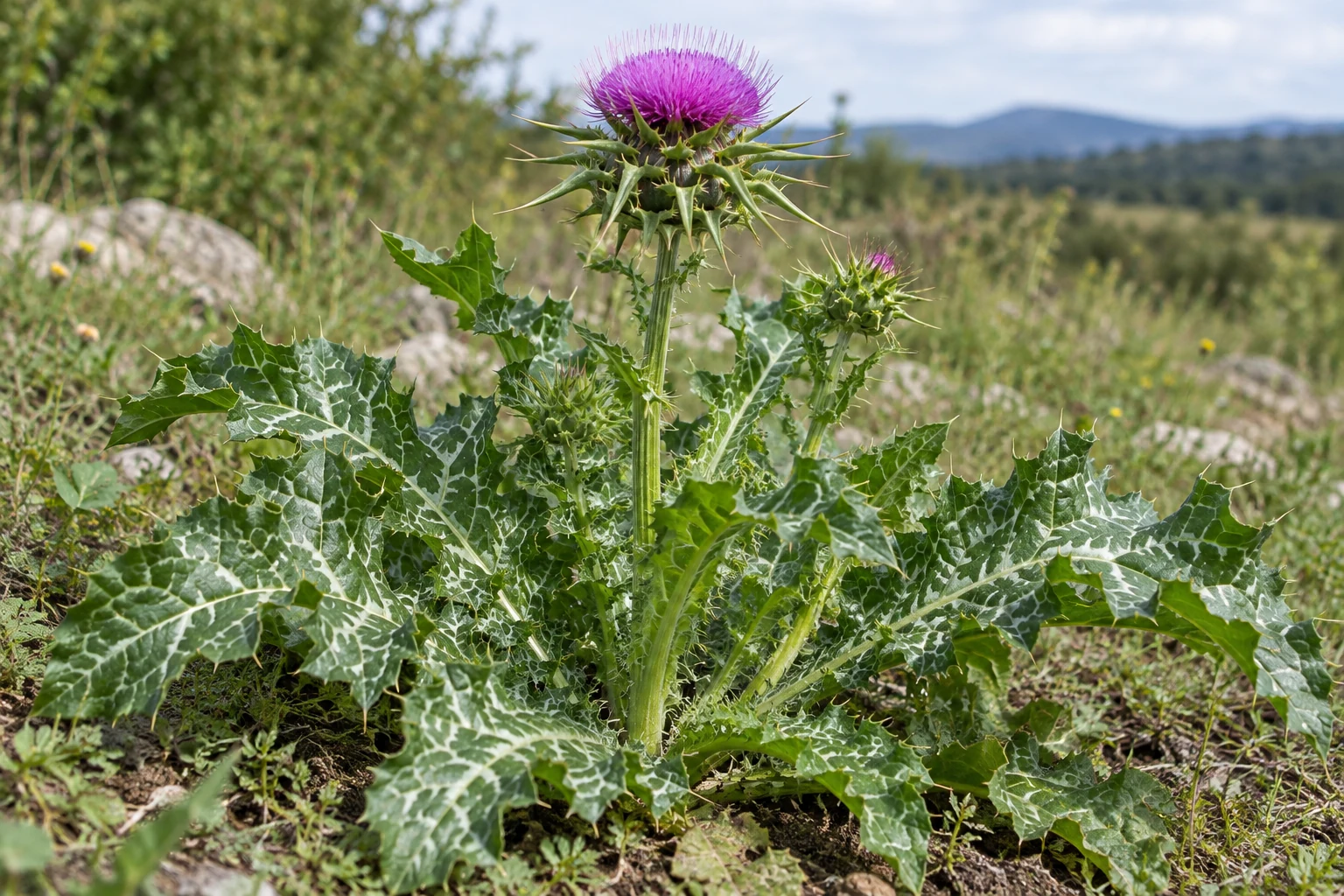
This plant’s white-marked, spiny leaves are distinctive. The guide takes you through its traditional digestive seed tea, then explains the separate research on concentrated preparations for liver conditions.
The tea is presented for its digestive use. Keeping that separate from liver-treatment claims helps you understand what you are choosing.10
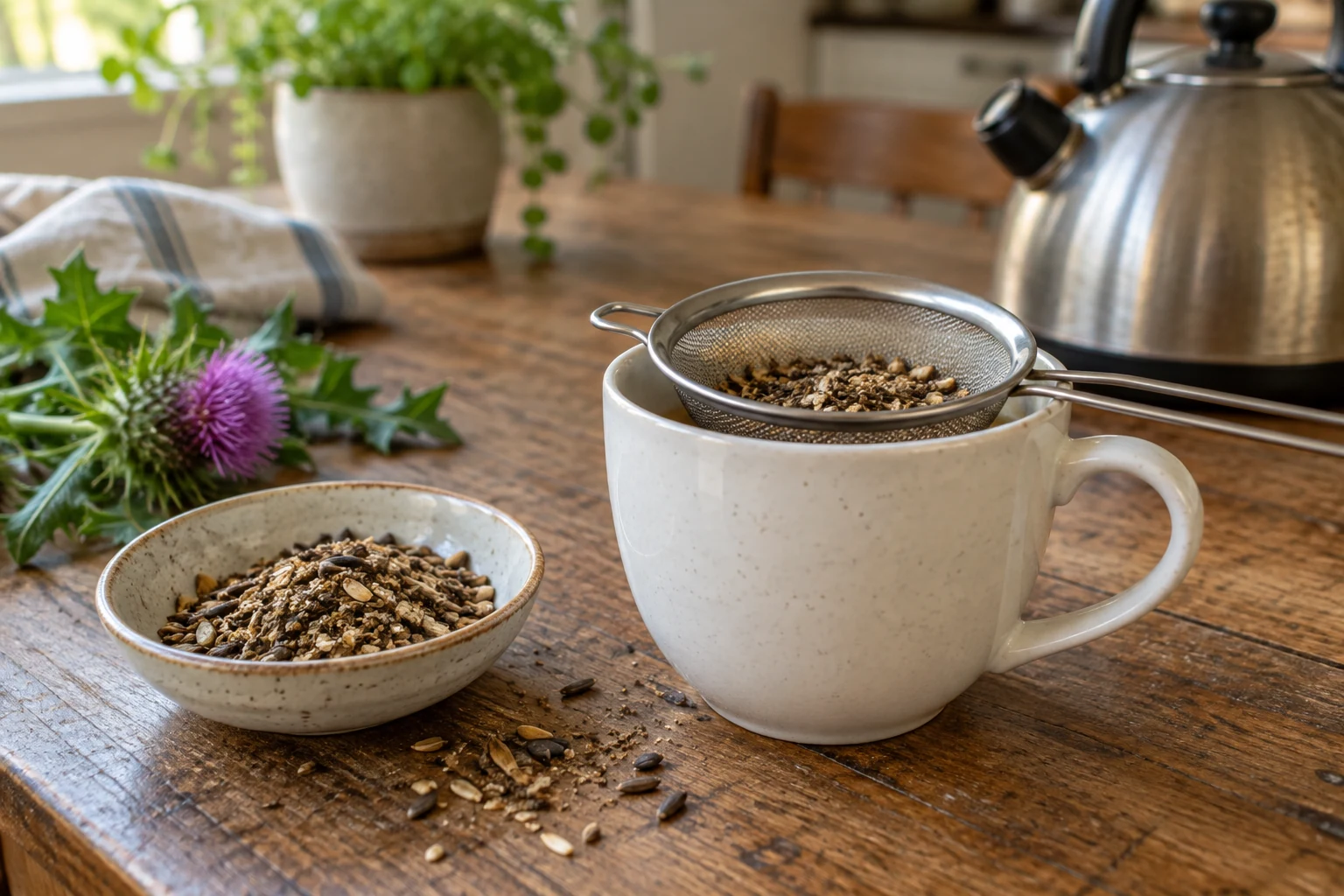
These are just some of the preparations inside — with 158 herb profiles, 49 combinations and two bonus recipe guides to explore.
Get The Book Now →The Home Prepper is built on one idea: a remedy should come with its evidence. A study is not a promise, and this book never pretends it is.
Where the research is solid, I tell you. Where it’s early, tested only in a lab, or rooted in tradition, I tell you that too. You’ll always know which kind of evidence you’re reading, so you can decide for yourself.
It isn’t for anyone looking for a miracle or a replacement for medical care. This book promises neither.
These are individual experiences. Results vary from person to person.
73 recipes to bring herbs into the food you already make. Take what you’re learning into the kitchen, one meal at a time.
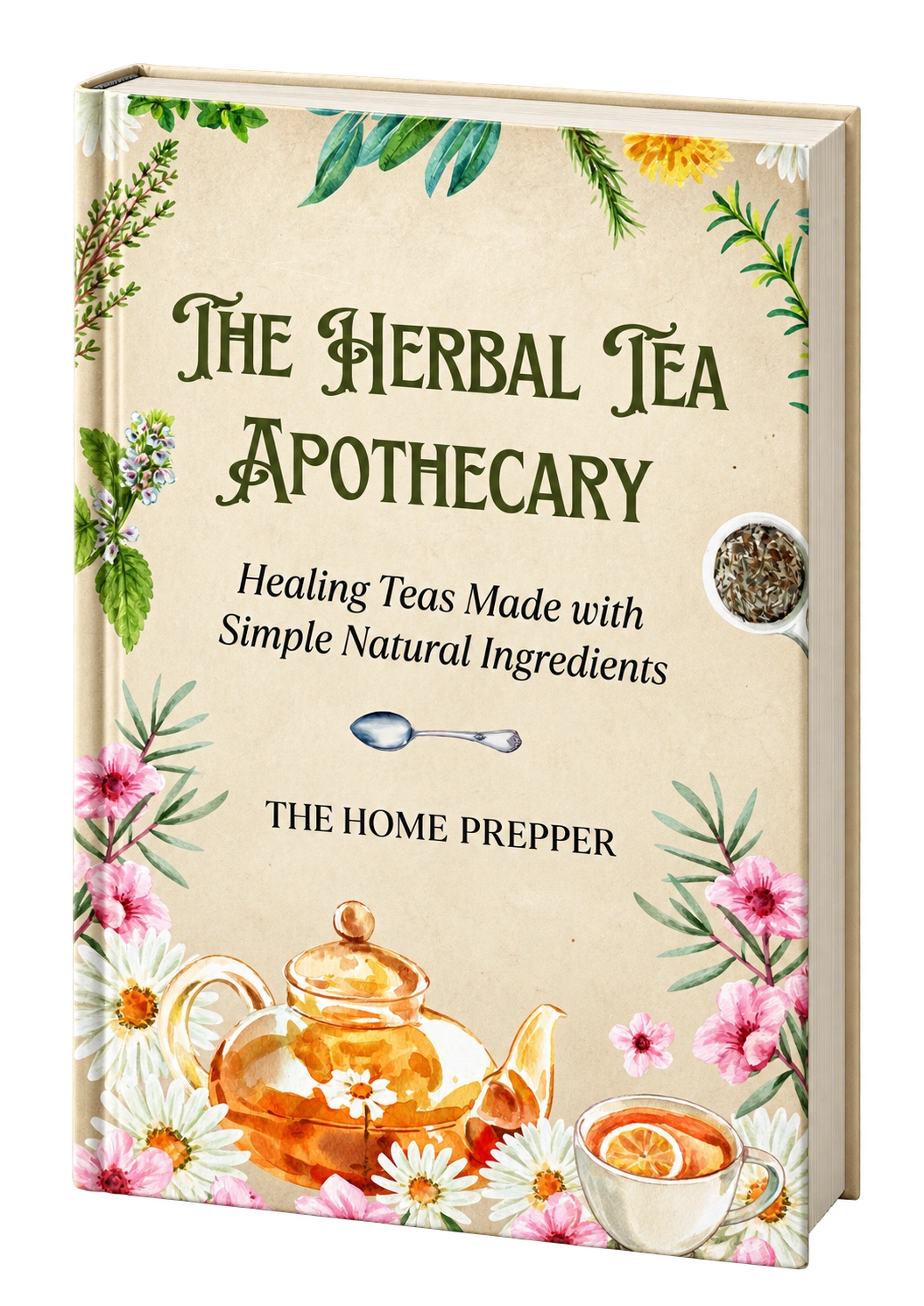
More than 50 blends, with the ingredients and preparation steps together. Choose a blend, put the kettle on and follow along.
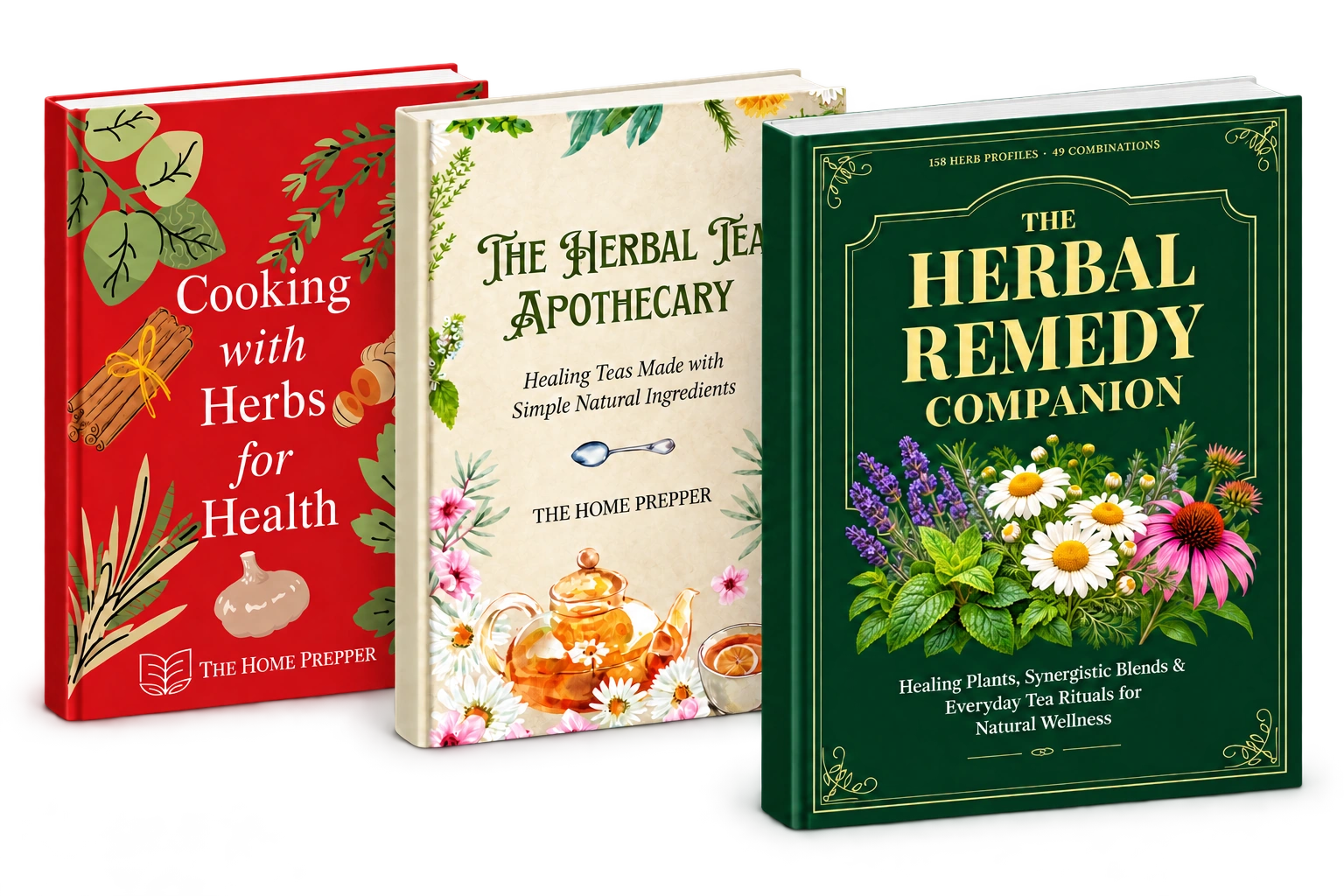
$27.99
Three PDF guides. One payment. No subscription. You keep the knowledge for good.
Digital PDF bundle · Instant download after payment
Prefer a printed copy? The full-color, 8.25 × 11-inch paperback is $27.99 on Amazon. It includes the printed main book; the bonus PDFs belong to the separate digital bundle. Buy the paperback on Amazon →
Amazon confirms the current price, shipping and return options.
Open the guides, look up your concerns and see whether the instructions are useful to you. If you’re not satisfied, request a 100% refund within 60 days. Email [email protected] or use the support link in your order confirmation.
Is it really cheaper than buying supplements?
Many of the herbs are inexpensive dried herbs and kitchen ingredients, and many recipes make a ten-bag batch. The hibiscus comparison works out to about 5¢ per 1.5 g of loose herb versus about 44¢ in a ready-filled bag. Savings vary with the preparation and where you shop.
Does this replace my doctor?
No. The book is educational, and every profile has safety notes. Check any herb with your pharmacist, especially if you take medications, are pregnant or breastfeeding, or are managing a chronic condition.
Do the studies prove these remedies work?
A study is not a promise. Each profile tells you what was tested, how strong the evidence is and what it can’t tell you.
Do I need experience with herbs?
No. Start with Your First Herb Cupboard: six easy herbs with clear, measured methods.
Every morning you can reach for another quick fix and start the loop again. Or you can put the research, and the know-how to use it, in your own hands right now.
Get The Herbal Remedy Companion →P.S. Some of the studies in this book were published decades ago. You can start learning from them now, with the preparation and explanation beside you.
Majeed et al. (2024), Medicine, 103(32), e39243. A 65-person, 15-day trial compared a measured black-seed oil and piperine capsule with placebo. It enrolled people aged 18–60, used a specific concentrated formula and had manufacturer-associated authors. Without an oil-only comparison, it cannot establish the added clinical benefit of the pepper extract. Read the original study.
Shoba et al. (1998), Planta Medica, 64(4), 353–356. The small human study used 2 g curcumin with 20 mg piperine and reported a 2,000% increase in bioavailability. That finding concerns the tested compounds and amounts, rather than the health effects of a household spice blend. Read the original study.
McKay et al. (2010), Journal of Nutrition, 140(2), 298–303. In a six-week trial with 65 adults who were not taking blood-pressure medicines, the top reading fell more with hibiscus tea than with the comparison drink. This was a study of hibiscus alone. Read the original study.
Haroyan et al. (2018), BMC Complementary and Alternative Medicine. A 12-week trial in 201 adults compared concentrated curcumin and curcumin–boswellia formulas with placebo. The combination improved pain and movement measures, but the different formulas do not isolate each ingredient’s added benefit. This was an extract study, not a home spice recipe. Read the original study.
Koetter et al. (2007), Phytotherapy Research. A small four-week trial compared valerian extract, the same valerian amount with hop extract, and placebo. The combination shortened time to sleep compared with placebo; valerian alone did not show a clear difference. This does not mean a tea gives the same result, and findings across sleep studies are mixed. Read the original study.
The traditional pairing examples follow the uses and sources discussed in the guide. Further reading: EMA summaries for mullein flower, marshmallow root and sweet fennel. The book includes 254 references.
Satchell et al. (2002) compared 25% and 50% tea-tree solutions with a comparison solution for four weeks. Symptoms improved more in the tea-tree groups. The tested preparations and the athlete’s-foot use are separate from the acne combination on the book’s next page. Read the source
Godard et al. (2005) studied a forskolin-rich extract for 12 weeks in 30 overweight or obese men. Body-fat measures improved, without a clear body-weight reduction. The book discusses weight management with mixed evidence, rather than promising a particular amount of weight loss. Read the source
The European Medicines Agency recognises a traditional use of medicinal myrrh preparations for small mouth ulcers and minor mouth inflammation. This recognition is based on longstanding use; the book gives instructions for a diluted medicinal tincture rinse. Read the source
Panahi et al. (2015) followed 100 men with pattern hair loss for six months. Hair counts increased in both groups at six months, with no statistically significant difference between groups. There was no untreated group. This was not proof of treatment equivalence or a test against 5% minoxidil. Read the source
NCCIH describes conflicting or limited findings for milk-thistle extracts in liver disease. A funded trial in non-alcoholic steatohepatitis, a form of fatty liver disease, did not find a benefit. The book separates traditional digestive tea from research on silymarin extracts. Read the source
Raj et al. (2025) tested a specific DGL licorice-root extract against placebo in 200 adults over four weeks. Heartburn and regurgitation improved more with the extract. This trial does not establish the same result for ordinary root tea or every DGL product. Read the source
The European Medicines Agency documents traditional use of witch-hazel bark preparations for relief of hemorrhoid itching and burning. This is based on longstanding use. The guide gives an external bark-compress preparation and keeps psyllium’s separate stool-softening directions distinct. Read the source
Yin et al. (2008), Metabolism. An early three-month comparison in 36 adults with newly diagnosed type 2 diabetes reported similar blood-sugar reductions with berberine and metformin. This pilot does not establish treatment interchangeability. Read the original study.
Ji et al. (2025), JAMA Network Open. A 113-person phase 2 trial investigated berberine ursodeoxycholate, a specific compound. It is distinct from ordinary berberine supplements and from a homemade herbal preparation. Read the original trial.
Prices checked 29 October 2026: Buddha Teas hibiscus, $7.95 for 27 g, supplied as 18 bags of 1.5 g; Bulk Apothecary / Starwest dried hibiscus, $16.28 for 1 lb (about 453.6 g). Calculation: $7.95 ÷ 18 = $0.442 per bag. $16.28 ÷ (453.6 ÷ 1.5) = $0.054 per 1.5 g loose-herb portion. Rounded headline: about 44¢ versus 5¢. These are different suppliers and formats; the comparison does not establish identical product quality, preparation or therapeutic results. It excludes shipping, tax, equipment and preparation time. Prices may change.
The 2007 randomized, double-blind trial compared a fixed tablet containing thyme-herb and primrose-root dry extracts with placebo in 361 adults over 11 days. The result concerns that extract tablet; the household tea is a separate preparation. Read the original trial.
The randomized, double-blind study assigned 80 menopausal women to fresh Salvia officinalis extract tablets or placebo for four weeks. Menopause symptom scores improved with the studied extract. The trial did not test a household leaf tea. Read the original trial.
The November 2023 Cochrane review found that cranberry products probably reduce symptomatic, culture-verified urinary infections in women with recurrent infections. It studied prevention, not treatment of an existing infection, and does not establish that every juice has the same effect. Read the systematic review.
The FDA’s OTC monograph M016 recognizes colloidal oatmeal as a skin-protectant ingredient. That recognition concerns the specified processed ingredient, not every coarsely ground kitchen grain. Read the FDA monograph.
The European Medicines Agency separately describes oat herb for mild mental stress and sleep on the basis of traditional use. This is the green herb rather than the colloidal grain preparation. Read the EMA assessment.