Aching Joints. Restless Nights. Learn What You Can Do at Home.
Discover herbal remedies for aching joints, sleepless nights, heartburn and more. Learn what to buy and what to do — even if you’ve never used herbs before.
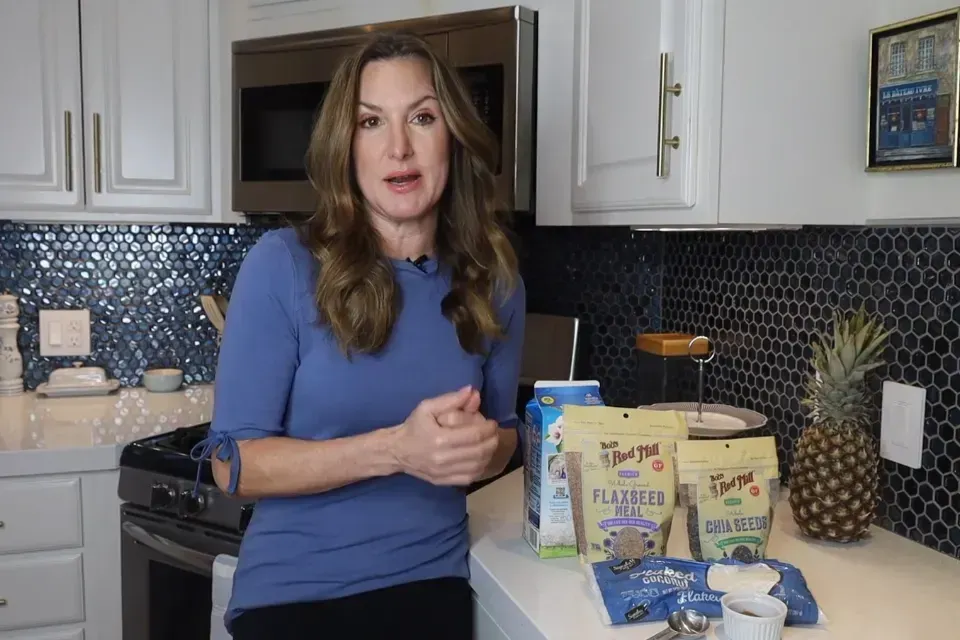
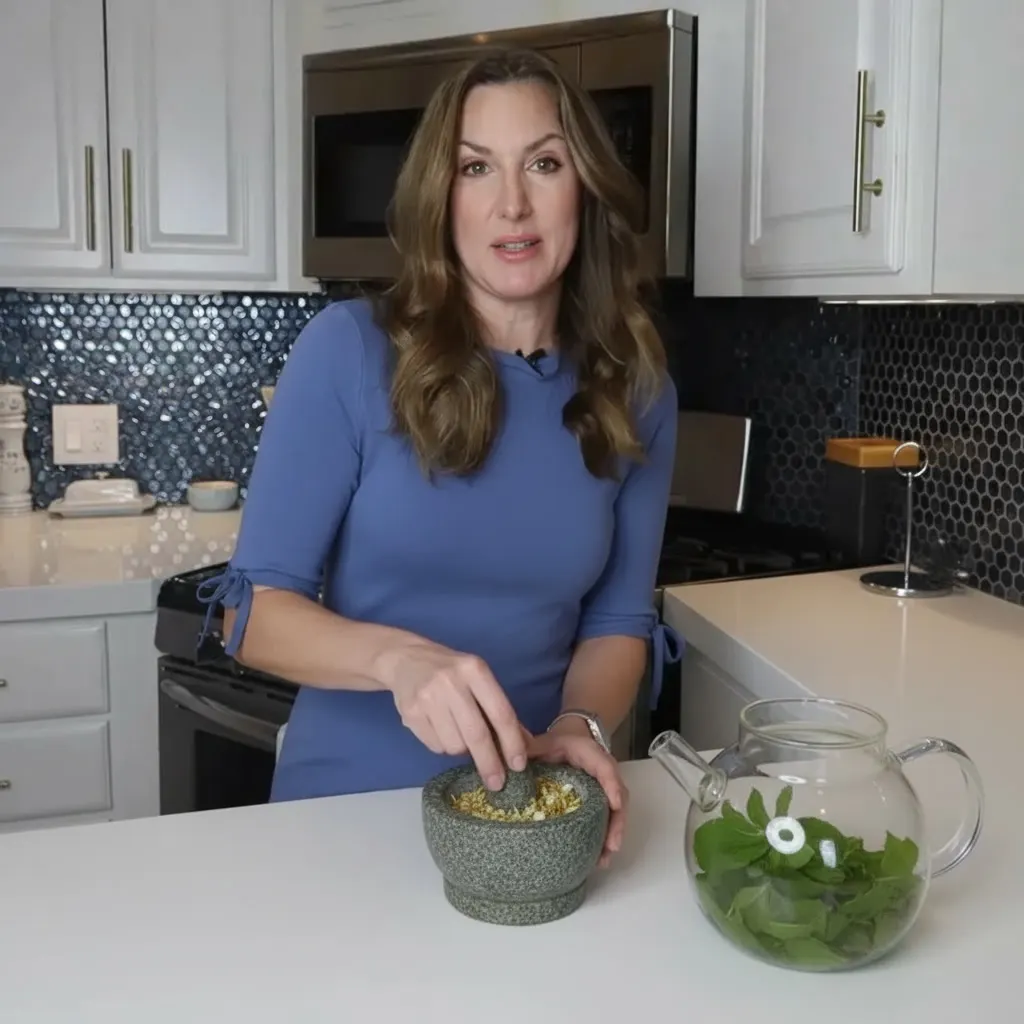
Watch Vivian introduce the remedies you can start learning today.
When an ailment keeps getting in the way, you want something you can do about it. This guide shows you where to start, with simple recipes and clear directions you can follow at home.
You want help with an ailment. This book gives you somewhere to start.
OPEN THE BOOK BEFORE YOU BUY
Real remedies. Clear instructions.
You do not need to recognise the herbs or know how to mix them. I show you what each herb is used for, what to buy and how to use it. When herbs are used together, I explain why.
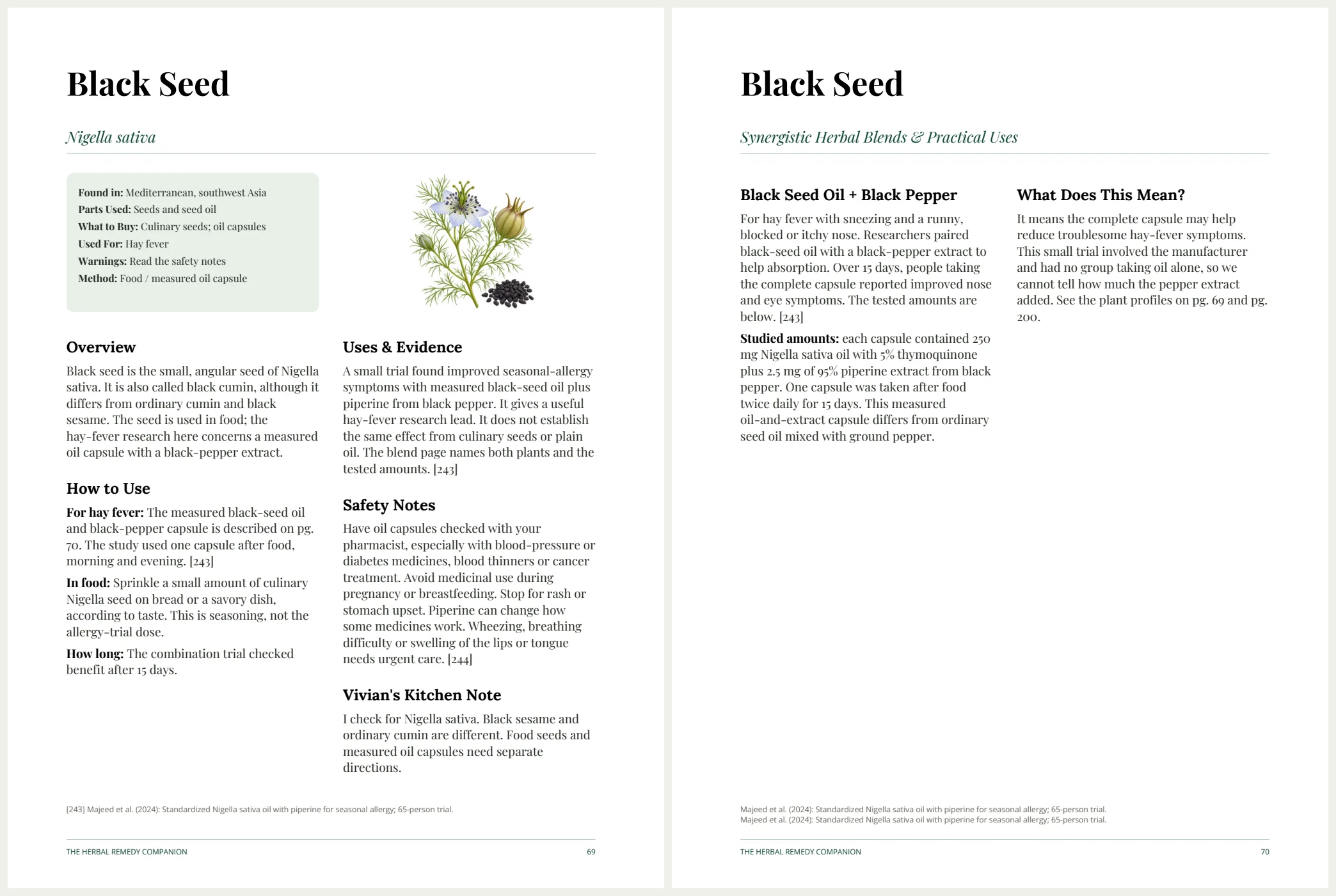
These are two real pages from the book. Take a look at the recipes, the warnings and the explanations. This is the kind of help you can keep beside you instead of trying to remember something you saw online.
FROM THE BOOK Black Seed · pg. 69–70 · Tap to enlargeThe herb. The partner. The reason.
02
WHEN AN AILMENT STARTS RUNNING THE DAY
You want to get on with life. You’re tired of feeling held back.
Simple help starts with knowing what to do.
THE QUESTION AFTER THE HERB NAME
A sore knee can change the walk you had planned. Heartburn can spoil a meal you were looking forward to. A bad night’s sleep can follow you through the whole next day.
You want to feel better. But every search seems to lead to another bottle, another promise or a long list of things you have never heard of. Where are you supposed to start?
V.
That is why I put this guide together: to give you a clear place to start with herbal remedies for everyday ailments.
You should not have to become an herbalist before you can make a cup of tea, mix a skin oil or understand which remedy is worth looking at.
Inside, I take you through what the herbs are used for, what to buy and how to make the remedies. The recipes tell you how much to use, how long to leave it and what to watch out for.
Start with the health problem that brought you here. Find the remedy, follow the steps and learn why the herbs in a blend have been put together.
The next time the same ailment comes up, you can open the book and find the help you came for. That is a better place to begin than another afternoon spent searching.
Vivian Greene
The voice behind The Herbal Remedy Companion.
03
START WITH THE AILMENT THAT BROUGHT YOU HERE
What’s been bothering you? See some of the remedies inside.
JUST A FEW OF THE REMEDIES IN THE GUIDES
Find your health problem. See where you can start.
Aching knees on the stairs. Heartburn after dinner. Another night spent watching the clock. These are the things that make you want an answer you can use.You do not need to know a single herb to begin. Choose an ailment from the list. I’ll show you a remedy from the guides, what goes into it and what you’ll learn to do.These are just some of the remedies. There are over 100 more inside, along with easy recipes, everyday food ideas and tea blends.You can keep trying to piece the answers together from different places. Or you can keep them in one book, ready when you need them.
THE HERB · HOW IT’S USED · THE REASON01 — 16
START WITH AN EVENING CUP
Two flowers, a root and a method you can follow.
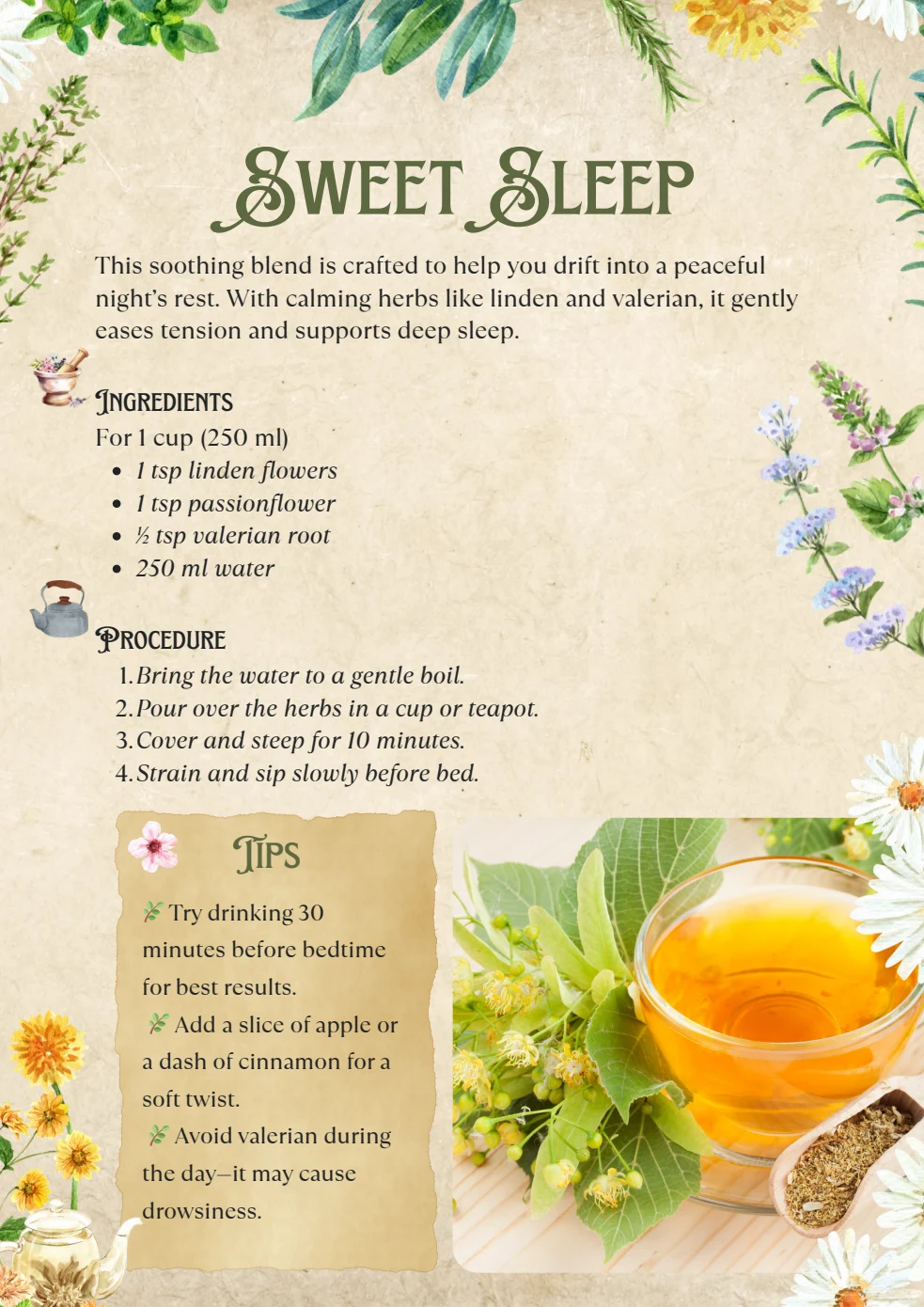
The Sweet Sleep recipe brings two flowers and a root into one evening blend. Look over the ingredients and cautions first, then follow the water, covered steeping and straining instructions.
What you’ll make
A one-cup tea from the bonus guide, with the ingredient amounts and method together on the recipe page.
The detail to check
The recipe includes a drowsiness caution. Read the relevant plant notes and check your medicines before choosing the blend.
That preview could not load.
The Sweet Sleep recipe in The Herbal Tea Apothecary.
Applying the prepared foot-care blend
These are just some of the remedies you’ll find inside. The guides include over 100 more, with the full recipes, directions and safety notes.
YOUR NEXT STEP
Get the remedies, not just another list of herbs.
The digital bundle gives you the main book and both bonus guides for $19.99. One payment. Keep all three.
You know what is bothering you. You should be able to open a book and find the remedy without learning a whole new subject first.
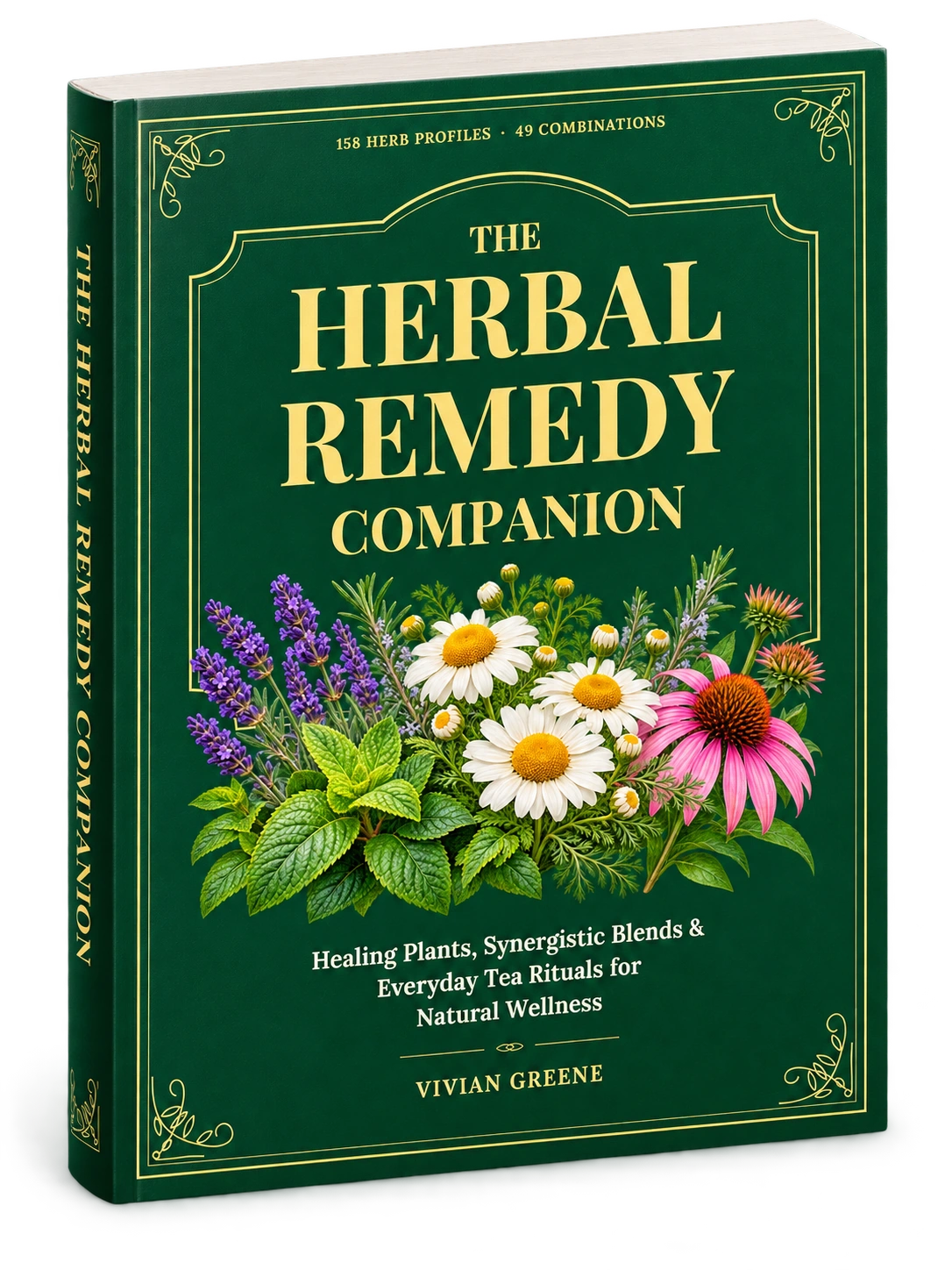
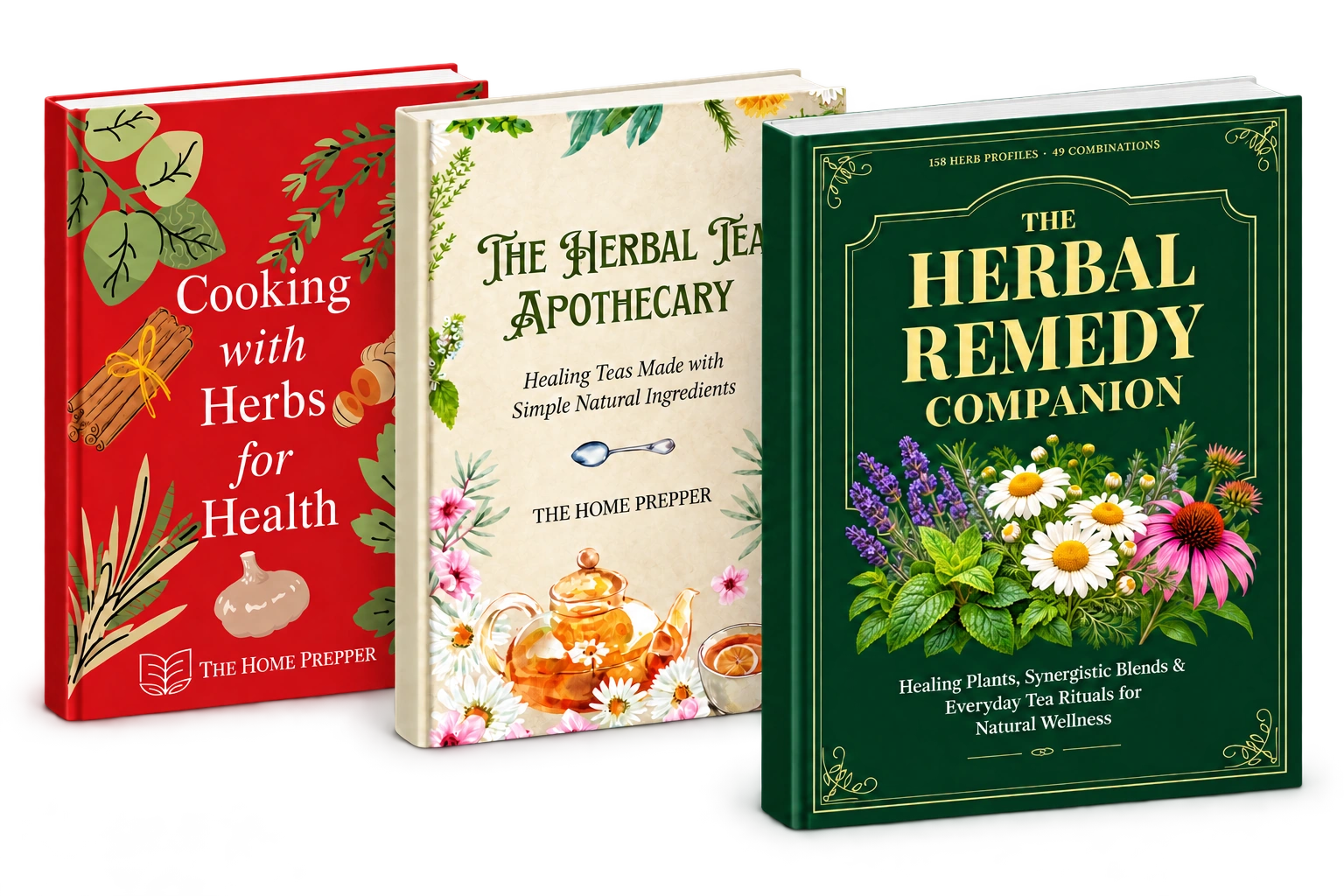
THE CURRENT EDITION158 herb profiles · 49 combinationsBook mockup for illustration
THE HERBAL REMEDY COMPANION
What it’s for. How to make it. How to use it.
Inside, I show you herbs used for everyday ailments, from aching joints and poor sleep to heartburn and itchy skin. You’ll find teas, rinses, oils and more, with directions written for someone who is starting from scratch.
You’ll know what to put on the shopping list and what to do when you get it home. When a remedy uses more than one herb, I explain what each one is there for.
You do not have to read the book from cover to cover before it becomes useful. Start with your health problem, turn to the right page and follow the remedy.
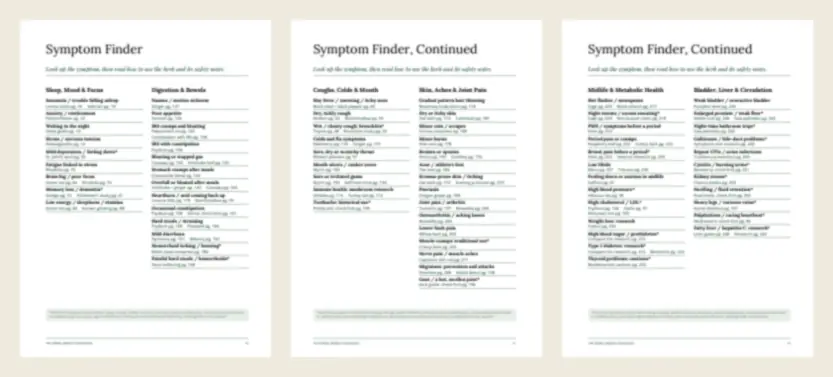
START HERE Symptom Finder · 3 pages · pg. 10–12 · Layout preview
LOOK UP YOUR HEALTH PROBLEM
“Which page do I find this on?”
You should not have to know a herb’s name before you can find help for a sleepless night or an aching joint.
The Symptom Finder lists 70 health problems and tells you which pages to turn to. Look up what is bothering you, then go straight to the herbs and remedies in the book.
Joint pain / arthritisSleepBrain fog / focusBloatingHot flashesHay fever
Find your health problem, turn to the page and read the remedy.
01
Find your health problem
Look it up in the Symptom Finder and turn to the right page.
02
Read the remedy
See what you need, how to make it and how to use it.
03
Understand the blend
Find out why the herbs are used together.
04
Make your first remedy
Follow the recipe and keep the book beside you.
05
WHY THE HERBS GO TOGETHER
There’s a reason these herbs are used in a blend.
COMBINATIONS EXPLAINED49
The partner’s job. The remedy. The amounts.
Explore the combination pages in the guide.
You’ll know why each herb is there.
A list of ingredients cannot tell you why a remedy uses them together. I explain that part too, in plain English.
Inside, you’ll find 49 herbal blends and combinations. You’ll learn what each herb is used for and why it has been chosen for that blend.
You get the recipes and the explanation together. So when you put something on the shopping list, you know what it is there to do.
The little tips that help when you make a remedy.
VIVIAN’S KITCHEN NOTES
A little help from my kitchen to yours.
Inside I added my own little kitchen notes to help you make the remedies, especially when you are trying one for the first time.
I point out the small things that are easy to miss: what to buy, when to cover the cup, how to strain the tea and how to keep what you have made. You can find the tips right beside the recipe.
FROM VIVIAN’S NOTEBOOK
The sort of help you want when the kettle is already on: slice it thinly, use a finer strainer, or check the name on the packet before you buy. Little tips that make the recipe easier to follow.
A few thoughtful details can make a page much easier to use.
06
TWO BONUS GUIDES COME WITH YOUR DIGITAL BUNDLE
Put the remedies to work in your kitchen.
BONUS 01
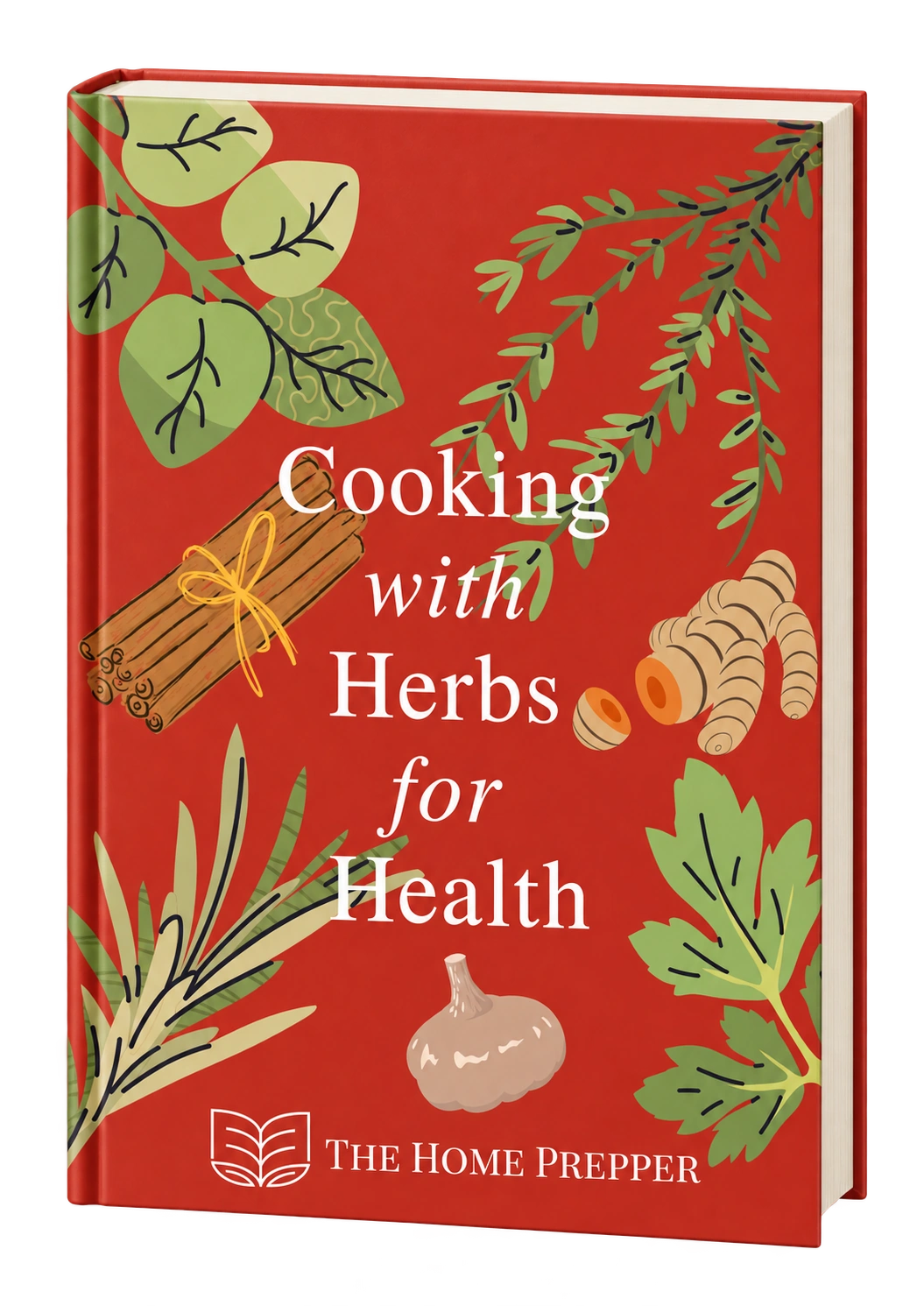
73 RECIPES FOR YOUR KITCHEN
Cooking with Herbs for Health
You already have to make breakfast, lunch and dinner. These 73 recipes help you bring herbs into the meals you make, from a warm spiced breakfast to soups and simple everyday food.
BONUS 02
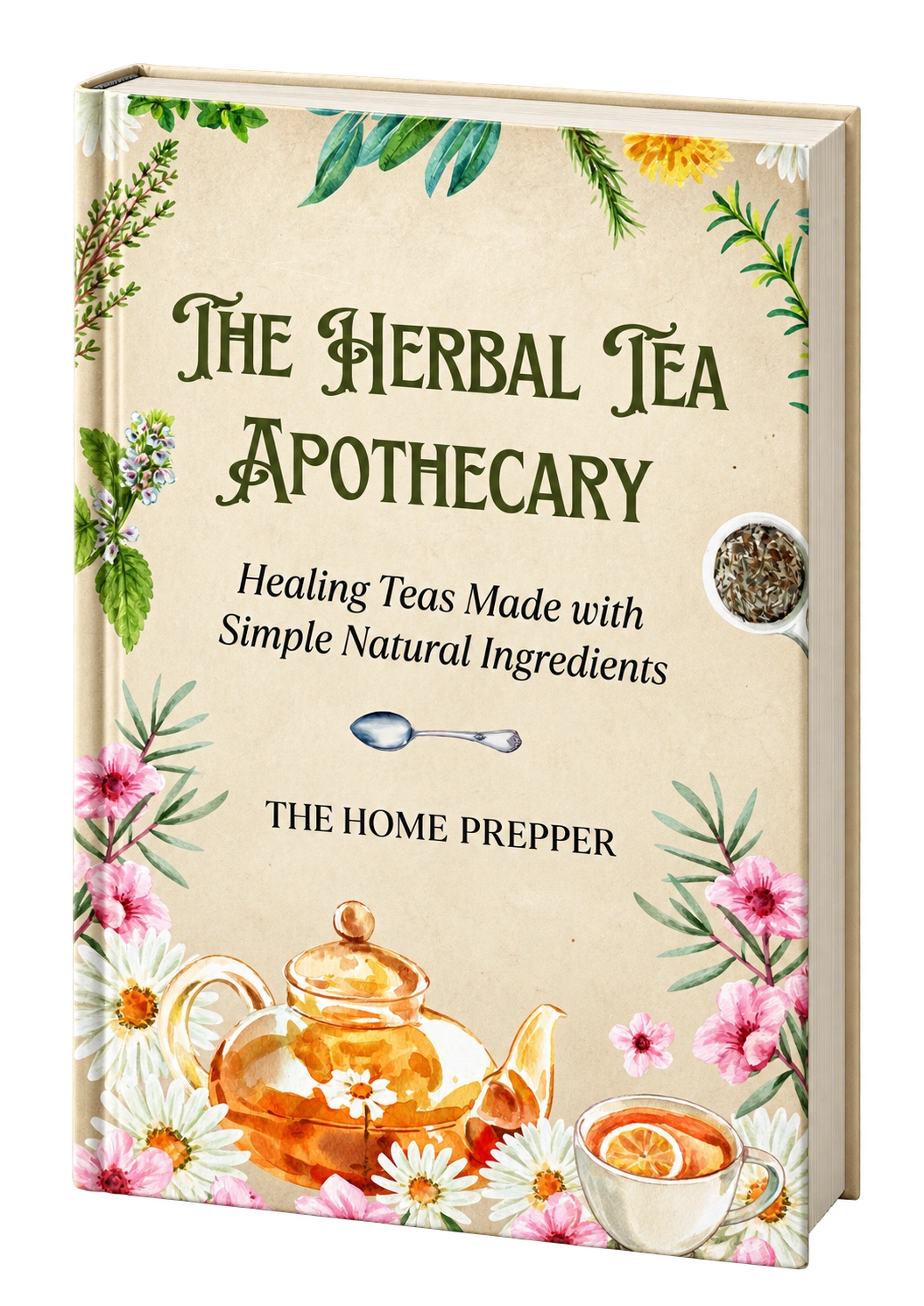
MORE THAN 50 HERBAL BLENDS
The Herbal Tea Apothecary
Put the kettle on and choose from more than 50 tea blends. Each recipe tells you what goes in the cup and how to brew it. Start with an evening tea or try one of the warming blends.
READER EXPERIENCES
What readers have shared.
“The handbook saved me so much time. Instead of Googling random remedies, I knew exactly which herbs to pair. My brain fog lifted, and I finally feel focused at work again.”
Daniel P.IT Specialist
“I’ve struggled with blood sugar swings for years. The cinnamon porridge recipe was a game changer. Tastes great, and my levels have been more stable than they’ve been in ages.”
Sandra L.52
“Honestly, the teas are the easiest part of my routine now. A cup at night, and I sleep deeper without reaching for sleep aids.”
Mike H.38
These are individual experiences. Results vary from person to person.
THREE DIGITAL GUIDES. ONE PAYMENT.
Get the herbal remedies and the help to make them.
The main book, the cooking guide and the tea guide are yours for $19.99. Open them today and start with the ailment that brought you here.
264 pages158 herb profiles49 combinations3-page Symptom Finder
THREE DIGITAL GUIDESInstant access
The digital bundle
All three PDF guides for $19.99.
The Herbal Remedy CompanionYour 264-page PDF guide, with remedy directions, amounts, routines and combination notes.
Cooking with Herbs for HealthIncluded bonus PDF · 73 recipes.
The Herbal Tea ApothecaryIncluded bonus PDF · 50+ blends.
Open the guides. Look up the ailment that has been bothering you. Read the remedies and try the recipes that fit your life. You have 60 days to decide whether these books are useful to you.
If you are not satisfied, request a 100% refund within 60 days. Email [email protected] or use the support link in your order confirmation.
For a paperback order, use Amazon’s order support and return options.
Choose the digital bundle for the main book and both bonus guides as downloadable PDFs, with instant access after payment. Choose the paperback for the printed main book, ordered through Amazon. The bonus PDFs are included with the digital bundle.
Do I have to learn all 158 herbs before I begin?
No. Look up your health problem in the Symptom Finder, or start with the six herbs in Your First Herb Cupboard. The recipes tell you what you need and what to do. Read the safety notes before using a remedy.
Can I make every combination as a tea?
No. The method depends on the herb and the use. Some pages describe teas, rinses or poultices. Others explain research on oils or extracts. The guide tells you which form is being discussed.
Will I be able to find the herbs?
Many are familiar ingredients such as ginger, garlic, rosemary, turmeric and common tea herbs. Others may need to come from a specialist herb supplier. Check the plant name and the part used before you buy.
What if I take prescription medicines?
Some herbs and extracts can interact with medicines. Read the relevant safety notes and ask your pharmacist or doctor to check the combination against your medicines before using it. Do not stop or change a prescription on your own.
Is this a one-time payment?
Yes. All three guides are included for one payment of $19.99, with no subscription. The final total, including any applicable tax, appears at the Digistore24 checkout.
What if the guides are not right for me?
The digital bundle includes a 60-day, 100% money-back guarantee. Contact support or use the order-support link in your confirmation within 60 days of purchase. For a paperback bought through Amazon, use the return options in your Amazon order.
GIVE YOURSELF A CLEAR PLACE TO START
The next time an ailment comes up, have the remedies close by.
Get all three digital guides for $19.99. Learn what the herbs are for, how to make the remedies and how to use them — starting with the health problem you want help with today.
Digital bundle: three PDFs · Paperback: one printed main book
Check the source behind the explanation.
1. Black-seed oil with piperine: the seasonal-allergy study
Majeed et al. (2024), Medicine, 103(32), e39243. A 65-person, 15-day trial compared a black-seed oil and piperine capsule with placebo. It enrolled people aged 18–60, used a specific concentrated formula and had manufacturer-associated authors. Without an oil-only comparison, it cannot establish the added clinical benefit of the pepper extract. Read the original study.
2. Turmeric and black pepper: the absorption study
Shoba et al. (1998), Planta Medica, 64(4), 353–356. The small human study used 2 g curcumin with 20 mg piperine and reported a 2,000% increase in bioavailability. That finding concerns the tested compounds and amounts, rather than the health effects of a household spice blend. Read the original study.
3. Hibiscus tea and blood pressure
McKay et al. (2010), Journal of Nutrition, 140(2), 298–303. In a six-week trial with 65 adults who were not taking blood-pressure medicines, the top reading fell more with hibiscus tea than with the comparison drink. This was a study of hibiscus alone. Read the original study.
4. Turmeric with boswellia for knee arthritis
Haroyan et al. (2018), BMC Complementary and Alternative Medicine. A 12-week trial in 201 adults compared concentrated curcumin and curcumin–boswellia formulas with placebo. The combination improved pain and movement measures, but the different formulas do not isolate each ingredient’s added benefit. This was an extract study, not a home spice recipe. Read the original study.
5. Valerian with hops: trouble falling asleep
Koetter et al. (2007), Phytotherapy Research. A small four-week trial compared valerian extract, the same valerian amount with hop extract, and placebo. The combination shortened time to sleep compared with placebo; valerian alone did not show a clear difference. This does not mean a tea gives the same result, and findings across sleep studies are mixed. Read the original study.
The traditional pairing examples follow the uses and sources discussed in the guide. Further reading: EMA summaries for mullein flower, marshmallow root and sweet fennel. The book includes 254 references.
6. Tea tree and athlete’s foot
Satchell et al. (2002) compared 25% and 50% tea-tree solutions with a comparison solution for four weeks. Symptoms improved more in the tea-tree groups. The tested remedies and the athlete’s-foot use are separate from the acne combination on the book’s next page. Read the source
7. Coleus, forskolin and body composition
Godard et al. (2005) studied a forskolin-rich extract for 12 weeks in 30 overweight or obese men. Body-fat measures improved, without a clear body-weight reduction. The book discusses weight management with mixed evidence, rather than promising a particular amount of weight loss. Read the source
8. Myrrh for minor mouth ulcers
The European Medicines Agency recognises a traditional use of medicinal myrrh remedies for small mouth ulcers and minor mouth inflammation. This recognition is based on longstanding use; the book gives instructions for a diluted medicinal tincture rinse. Read the source
9. Rosemary lotion compared with 2% minoxidil
Panahi et al. (2015) followed 100 men with pattern hair loss for six months. Hair counts increased in both groups at six months, with no statistically significant difference between groups. There was no untreated group. This was not proof of treatment equivalence or a test against 5% minoxidil. Read the source
10. Milk thistle and fatty liver
NCCIH describes conflicting or limited findings for milk-thistle extracts in liver disease. A funded trial in non-alcoholic steatohepatitis, a form of fatty liver disease, did not find a benefit. The book separates traditional digestive tea from research on silymarin extracts. Read the source
Raj et al. (2025) tested a specific DGL licorice-root extract against placebo in 200 adults over four weeks. Heartburn and regurgitation improved more with the extract. This trial does not establish the same result for ordinary root tea or every DGL product. Read the source
13. Witch-hazel bark for hemorrhoid itching and burning
The European Medicines Agency documents traditional use of witch-hazel bark remedies for relief of hemorrhoid itching and burning. This is based on longstanding use. The guide gives an external bark-compress remedy and keeps psyllium’s separate stool-softening directions distinct. Read the source
14. Berberine: the 2008 pilot trial
Yin et al. (2008), Metabolism. An early three-month comparison in 36 adults with newly diagnosed type 2 diabetes reported similar blood-sugar reductions with berberine and metformin. This pilot does not establish treatment interchangeability. Read the original study.
15. The 2025 berberine-based investigational compound
Ji et al. (2025), JAMA Network Open. A 113-person phase 2 trial investigated berberine ursodeoxycholate, a specific compound. It is distinct from ordinary berberine supplements and from a homemade herbal remedy. Read the original trial.
17. The hibiscus ingredient-cost example
Prices checked 29 October 2026: Buddha Teas hibiscus, $7.95 for 27 g, supplied as 18 bags of 1.5 g; Bulk Apothecary / Starwest dried hibiscus, $16.28 for 1 lb (about 453.6 g). Calculation: $7.95 ÷ 18 = $0.442 per bag. $16.28 ÷ (453.6 ÷ 1.5) = $0.054 per 1.5 g loose-herb portion. Rounded headline: about 44¢ versus 5¢. These are different suppliers and formats; the comparison does not establish identical product quality, remedy or therapeutic results. It excludes shipping, tax, equipment and remedy time. Prices may change.
18. The chesty-cough pairing: the 361-person trial
The 2007 randomized, double-blind trial compared a fixed tablet containing thyme-herb and primrose-root dry extracts with placebo in 361 adults over 11 days. The result concerns that extract tablet; the household tea is a separate remedy. Read the original trial.
19. The silvery-green leaf: menopause trial
The randomized, double-blind study assigned 80 menopausal women to fresh Salvia officinalis extract tablets or placebo for four weeks. Menopause symptom scores improved with the studied extract. The trial did not test a household leaf tea. Read the original trial.
20. The tart red berry: preventing repeat urinary infections
The November 2023 Cochrane review found that cranberry products probably reduce symptomatic, culture-verified urinary infections in women with recurrent infections. It studied prevention, not treatment of an existing infection, and does not establish that every juice has the same effect. Read the systematic review.
21. One grain, two remedies: skin protection and a traditional drink
The FDA’s OTC monograph M016 recognizes colloidal oatmeal as a skin-protectant ingredient. That recognition concerns the specified processed ingredient, not every coarsely ground kitchen grain. Read the FDA monograph.
The European Medicines Agency separately describes oat herb for mild mental stress and sleep on the basis of traditional use. This is the green herb rather than the colloidal grain remedy. Read the EMA assessment.