The 2-Minute Green Tea Trick For A Foggy Morning
One bag, water that's cooled a few minutes after boiling, two minutes of steeping. Caffeine can begin increasing alertness in about 15 to 30 minutes. Page 84. [9]
For energy, focus, sleep, back pain and 70 everyday concerns: see what was studied, the form used and where to find it—plus plain-language safety notes to help you check before use. [1]
The meter lived next to the sugar bowl.
That's the first thing I remember about my father's kitchen: a small gray glucose meter, a lancet and a spiral notebook where he wrote down his morning number. My mother kept a pill organizer with the days of the week on the lids. Family dinners came with a quiet negotiation. A little less rice. No pie for him. Plates with rules.
So when my own doctor looked up from my lab results and said the word prediabetic, I didn't hear a diagnosis. I heard the meter next to the sugar bowl.
I started the medication she prescribed. The metallic taste and the stomach upset were hard to live with, and I started wondering what else might sit alongside it. So I did what you probably did. I went looking for natural remedies.
And I hit a wall.
Every aisle had a bottle with "blood sugar support" on the front and a "proprietary blend" on the back. Every blog said cinnamon was a miracle, and the next one said it did nothing. Videos sold me capsules I couldn't verify. I spent money. I lost evenings. And I still couldn't tell which of these remedies had ever been tested on a real human being, in what form, at what dose.
What I wanted was simple, and I couldn't find it anywhere:
Remedies tested in clinical studies, not just testimonials
Clear safety notes and directions, so you know what to check before trying a remedy
Remedies that don't cost a fortune, and don't eat your whole evening
So I built it myself. Late nights, a pot of tea, a yellow legal pad, the clinical trials on PubMed, and the herbal guidance from the NIH, Health Canada and the European Medicines Agency. I filled notebook after notebook. And I made one rule: nothing goes into my body that my pharmacist and I haven't looked at together.
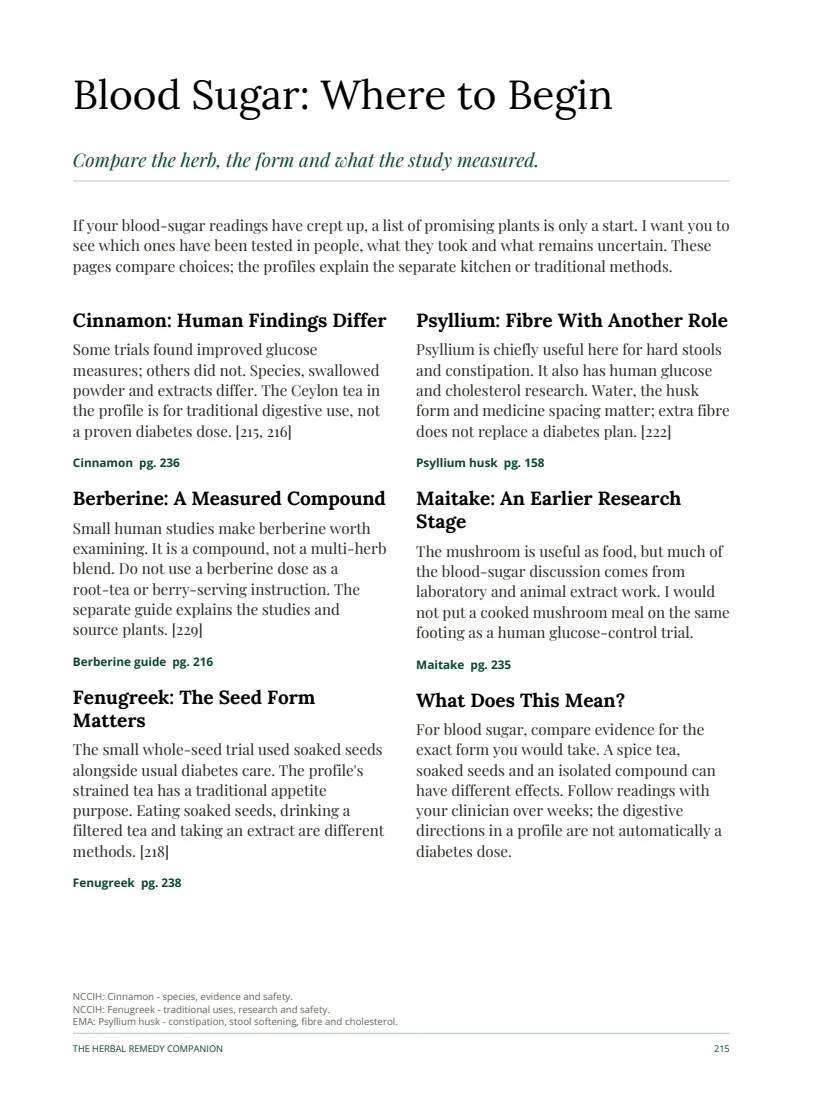
I made a chart, just for me, of every blood-sugar herb I could find, sorted by a single question: has it been tested in people, and in what form?
Cinnamon had human trials, with differing results. Berberine had small human studies, and a long road to a medicine trial. Fenugreek had a small whole-seed trial. Psyllium was fibre with another job. [8] [6] [7]
It was the first time the noise went quiet. That chart is on page 215, and it became a book. Then the book grew until it held every remedy I wished I'd had on day one: 158 herbs, each one checked, each one on a page you can find in seconds.
Somewhere in my second notebook, I noticed a pattern. The most interesting remedies weren't working alone. Researchers had paired them on purpose.
They call it synergy. It's simple: two ingredients, paired for a reason. Sometimes one helps your body absorb the other. Sometimes the pair was tested together as a formula, against a placebo.
Black pepper + turmeric. In a small 1998 human study, adding piperine, the compound in black pepper, to curcumin from turmeric raised curcumin absorption by 2,000%. [2] Page 198 shows exactly what was tested.
Turmeric + boswellia. In a 12-week trial of 201 people with knee osteoarthritis, the combined extracts brought benefits for aching, stiff knees. [4]
Five herbs in one formula. Rhodiola, tulsi, schisandra, ashwagandha and milky oat seed were tested together for 60 days, and the complete formula improved stress and sleep measures. [5]
Two herbs, five herbs, one pinch of pepper. When a pairing has a reason behind it, you can see it in the research.
Of every pairing I found, this is the one that stopped me.
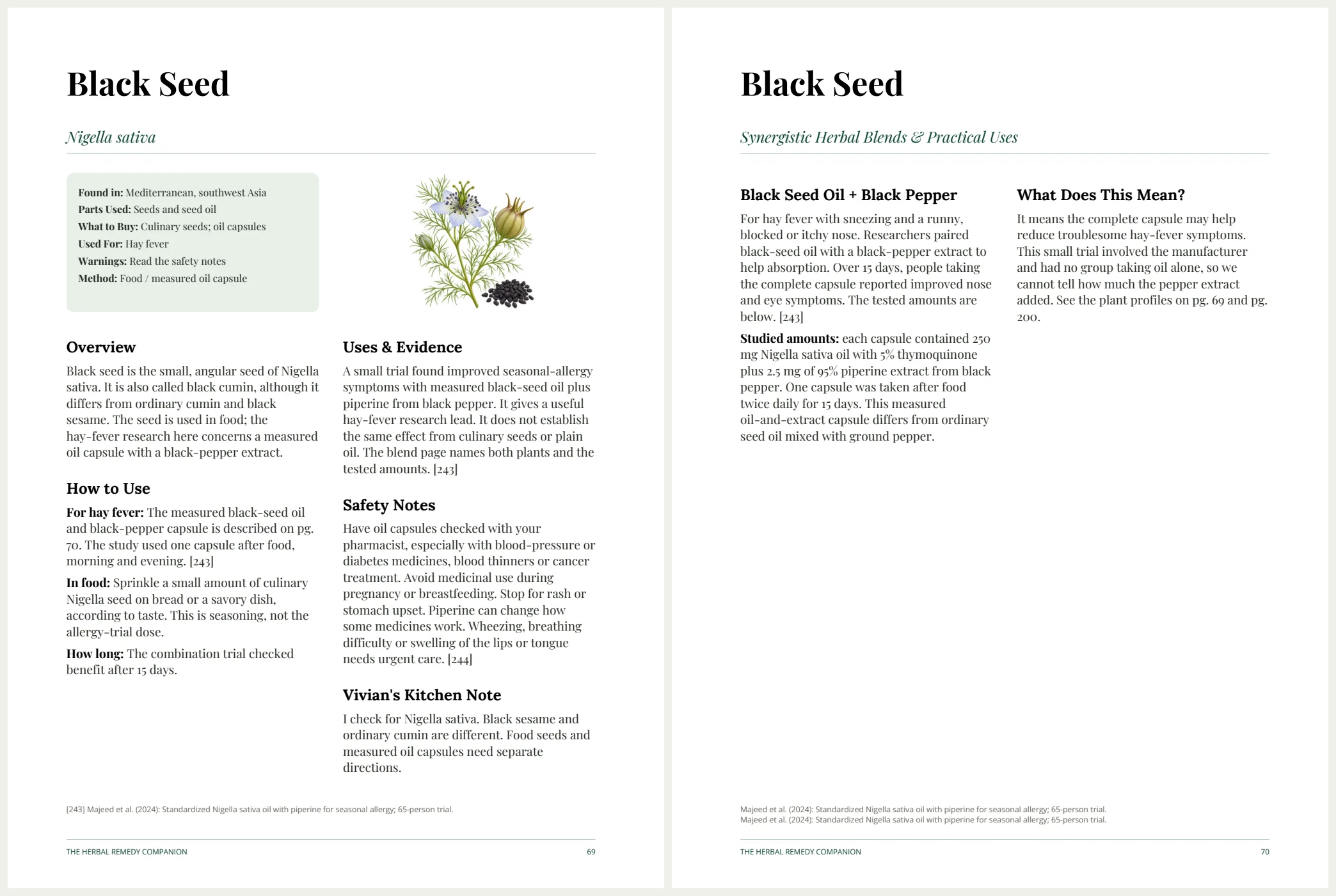
Researchers paired black-seed oil with a black-pepper extract, with the pepper there to help absorption. Over 15 days, in a 65-person trial, people taking the complete capsule reported improved nose and eye symptoms during seasonal allergy season. [3]
That's it. No hype, no miracle language. Just a pairing with a reason, a trial with a number on it, and the exact studied amounts so you can see what was tested. You'll find it on page 69, with the full blend on page 70.
Here's the part I care about most: you can make these at home, and you don't need to be an herbalist.
Most of the remedies in the book are teas and kitchen preparations that run on the same simple rhythm.
Lemon balm: cover 1½ teaspoons with freshly boiled water for 10 minutes.
Passionflower: ½ teaspoon, 10 minutes.
Tulsi: 10 minutes.
Hibiscus: simmer 2 teaspoons in a cup of water for 10 minutes.
[1]
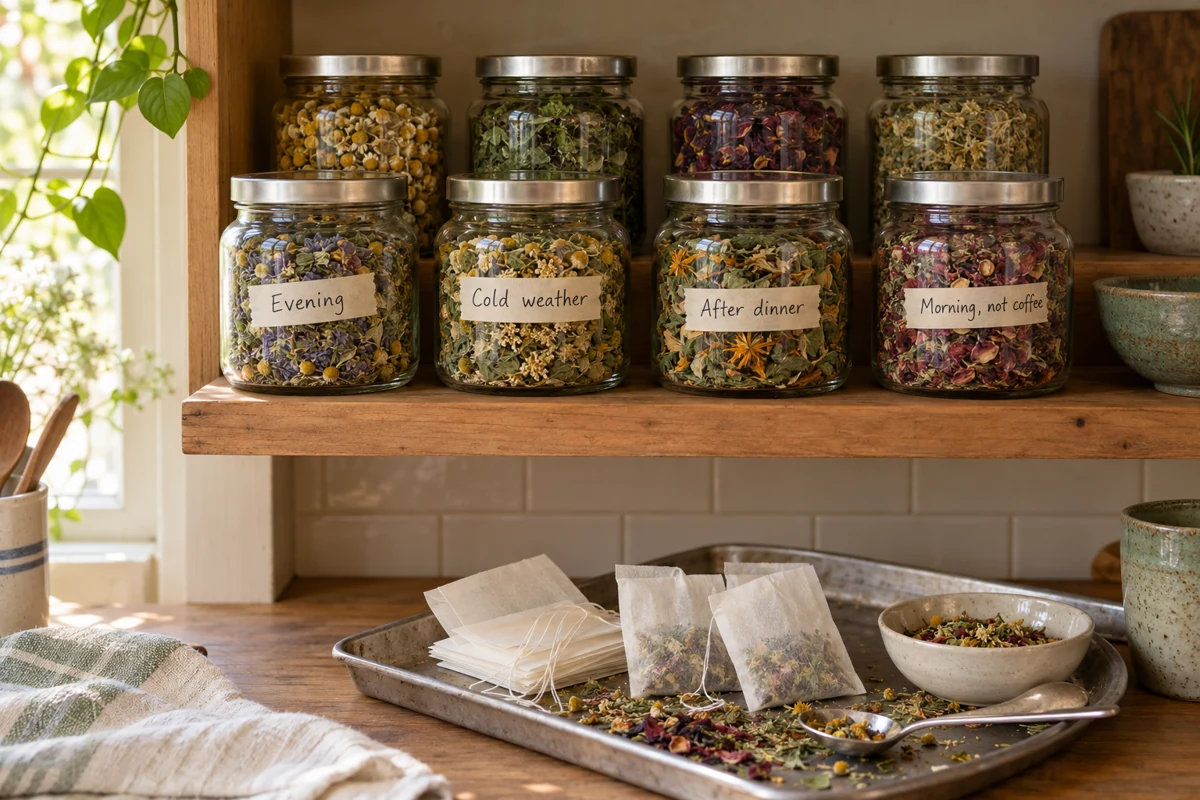
Want to do it once and be done? Mix a ten-bag batch on Sunday, fill ten paper tea filters, label the jar, and brew one bag per cup all week (page 9).
And the cost? Dried herbs, a kettle and a set of measuring spoons. No monthly bottle. No refills. No subscription.
A 4 oz bag of cut-and-sifted lemon balm is listed at $12.95. Using a 60-cup yield for a 4 oz bag, that works out to about 22¢ a cup. One capsule listing works out to about 15¢ per two-capsule serving. Prices and serving sizes vary, and tea and capsules are different forms—not dose-for-dose equivalents. Prices checked November 21, 2026; shipping excluded.
Sources: Bulk Apothecary: 4 oz lemon balm, $12.95 · Full Leaf Tea: 4 oz bag, approximately 60 servings · Swanson: 60 capsules, 30 servings, $4.59
Every profile also carries a short Vivian's Kitchen Note, the small things I learned by doing it wrong first: how to keep lemon balm's scent from fading (page 16), why a timer saves a bitter cup of green tea (page 84), why cut root strains better than powder (page 19).
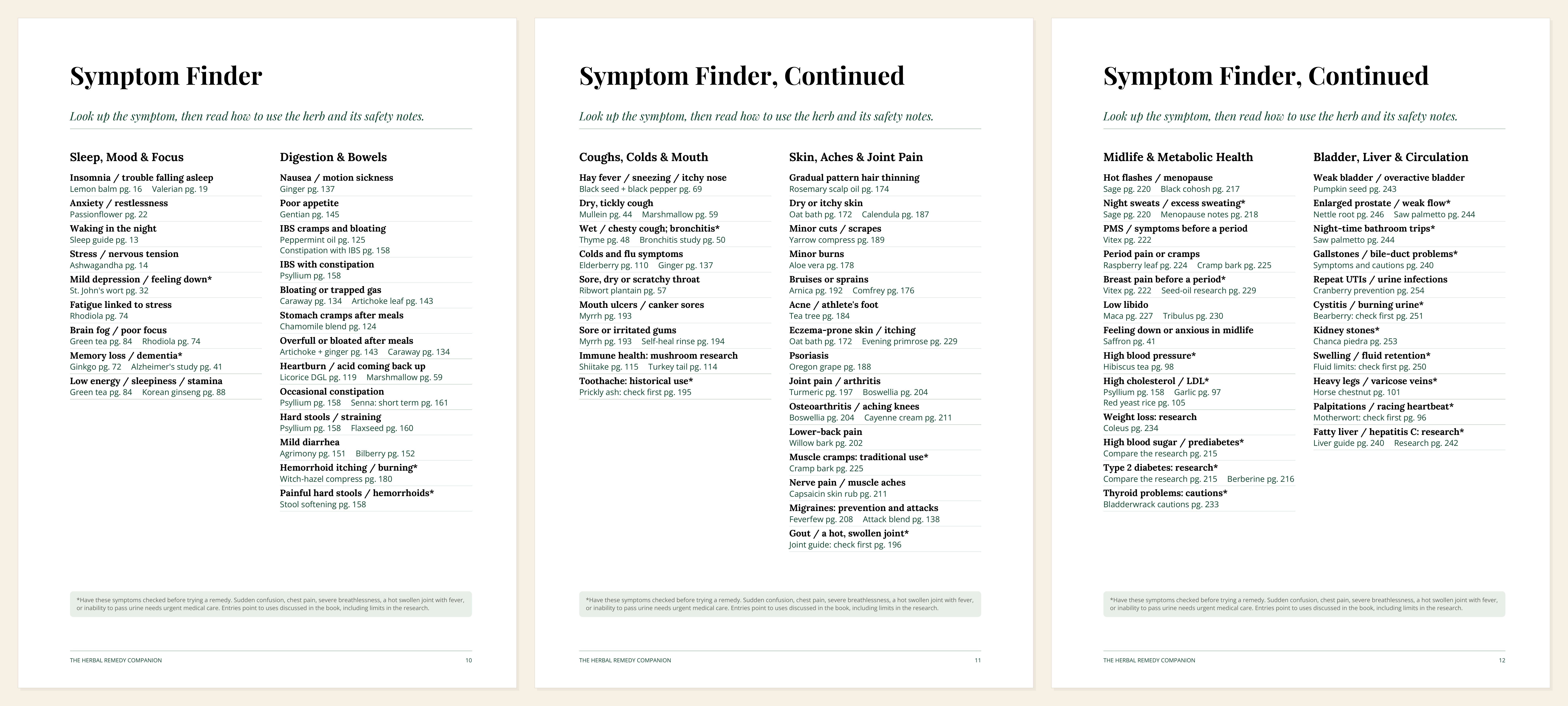
The Symptom Finder (pages 10–12) works like a menu: look up what's bothering you, and it sends you straight to the page. Here are some of the remedies waiting for you.
One bag, water that's cooled a few minutes after boiling, two minutes of steeping. Caffeine can begin increasing alertness in about 15 to 30 minutes. Page 84. [9]
Korean ginseng: simmer sliced root for 15 to 20 minutes. Studies suggest benefits for temporary fatigue and thinking tasks. Page 88. [10]
Rhodiola root extracts have a place in temporary stress-related fatigue, and human studies have explored mental performance. Page 74. [11]
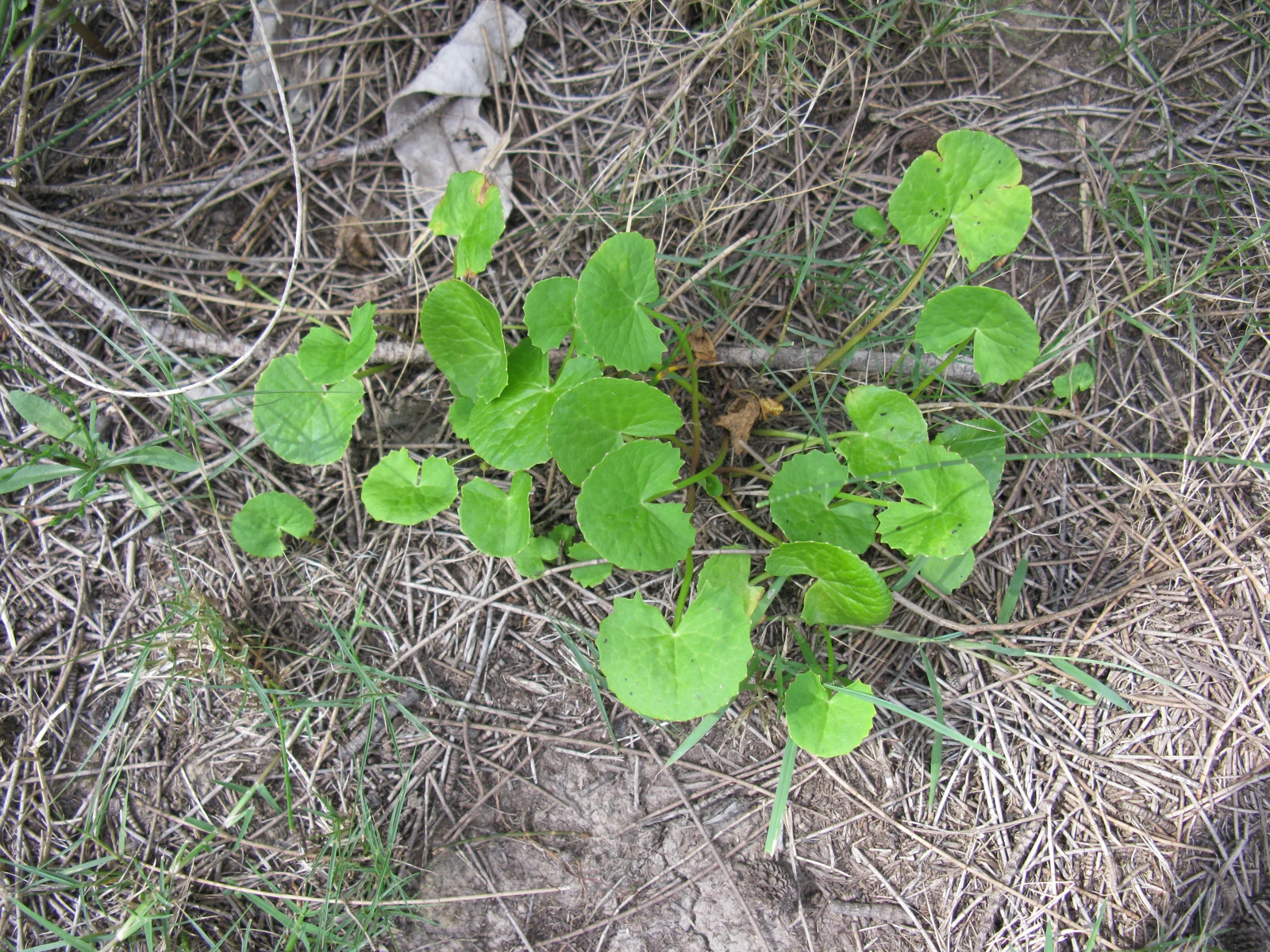
Lemon balm, covered while it brews. Long used for mild stress, restless sleep and an unsettled stomach. Page 16. [13]
A small trial found better sleep ratings after seven nights, which makes a week a useful first test. Page 22. [14]
Valerian: 10 to 15 minutes, one cup 30 to 60 minutes before bed. Page 19.
Compared with ashwagandha alone and with placebo. See the studied amounts. Page 29. [5]
Short studies found root extracts helped people feel less stressed or sleep better. Page 14. [12]
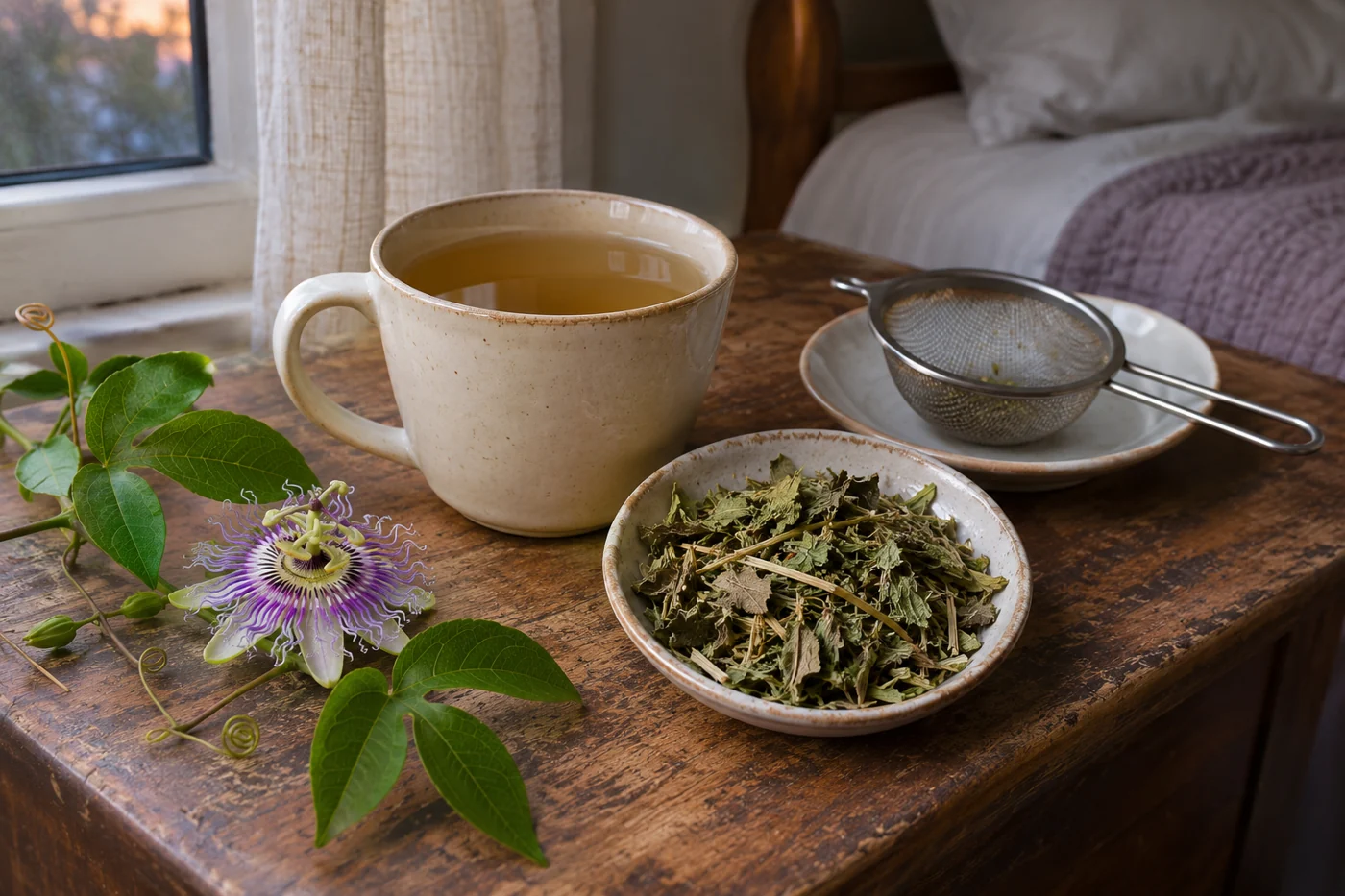
Some willow-bark extracts have recognized use for short-term lower-back pain. Page 202. [15]
Turmeric plus boswellia, 12 weeks, 201 people. Pages 198 and 204. [4]
Black pepper's piperine and turmeric's curcumin. Pages 198 and 200. [2]
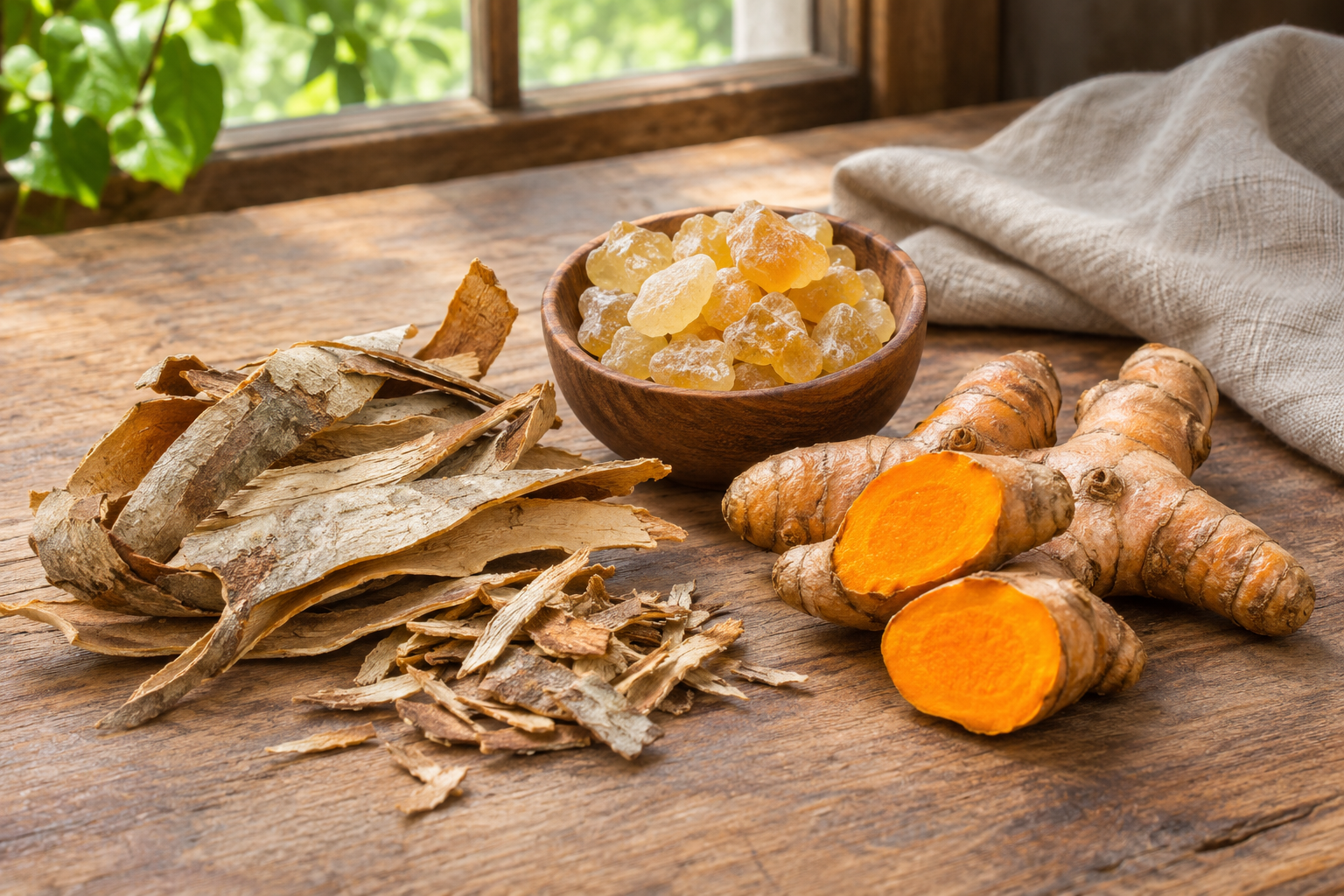
Cinnamon, berberine, fenugreek, psyllium and more, compared by herb, form and what the study measured. Page 215. [8]
A small 2008 pilot tested berberine in people with type 2 diabetes. Seventeen years later, a 113-person trial tested a new berberine-based medicine. Page 216. [6] [7]
Ceylon and cassia are different, and human trials have differed too. Page 236. [8]
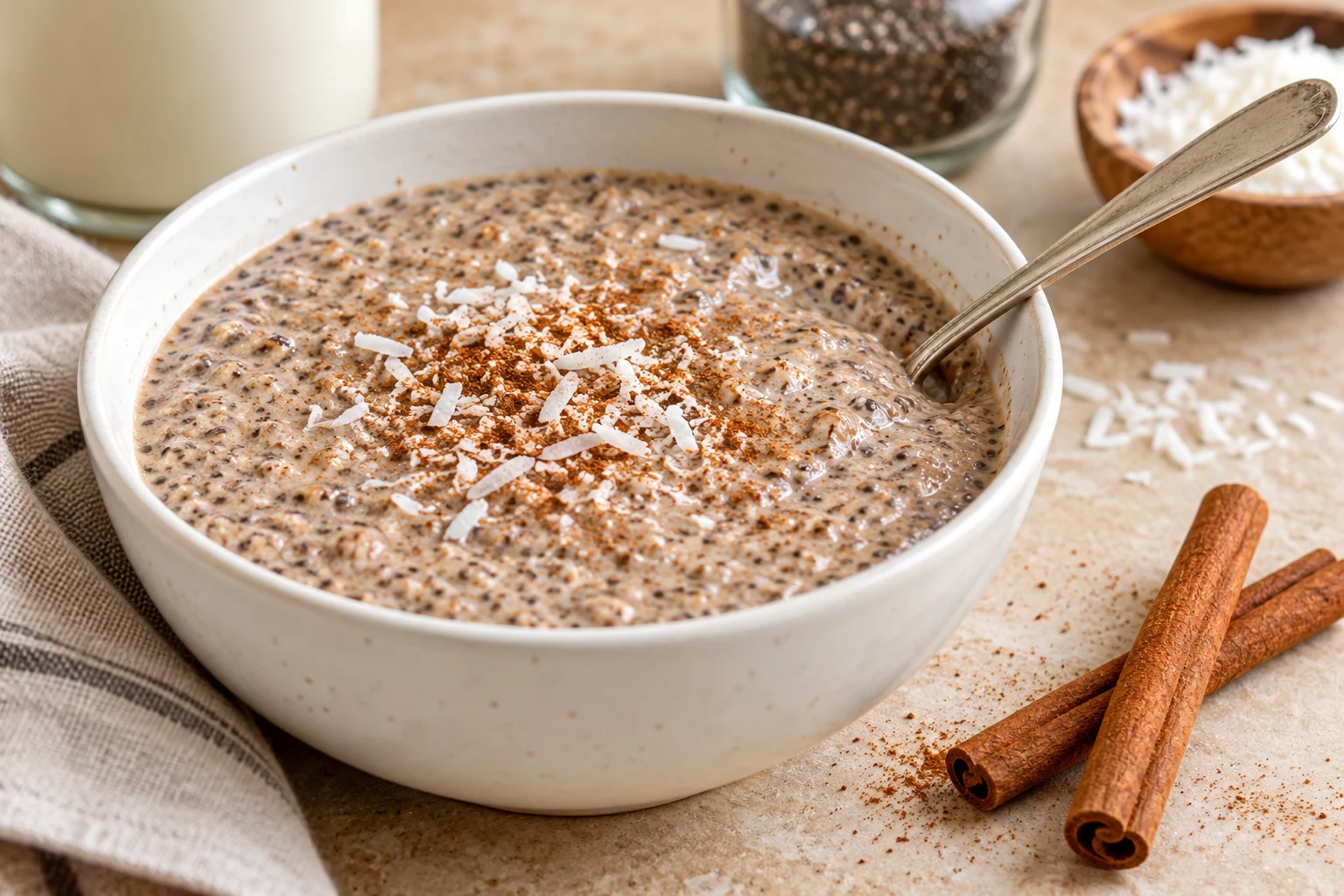
Pages 69 and 70. [3]
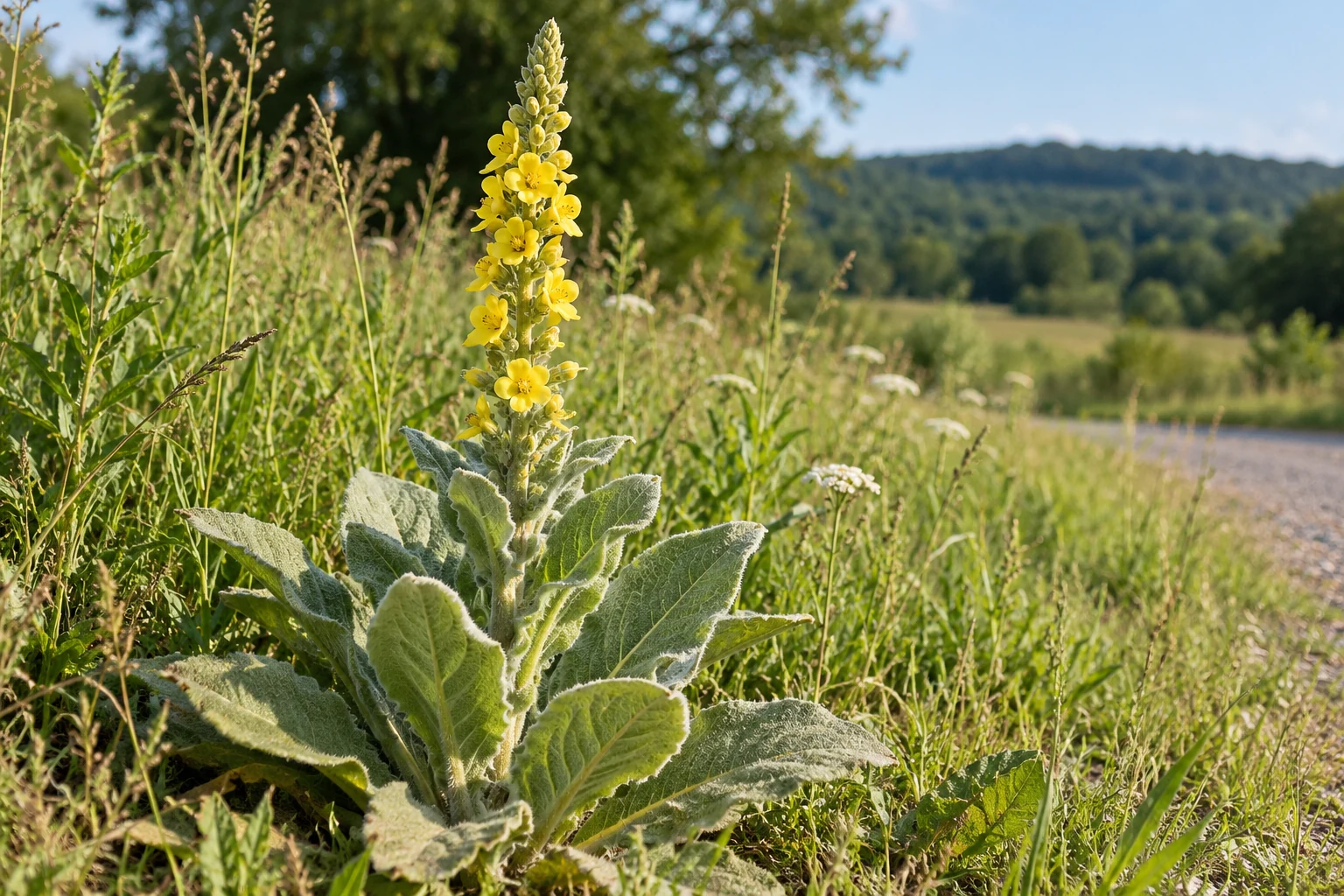
Mullein flowers have a traditional use for an irritated throat and the dry cough that comes with a cold. Page 44. [18]
Acute bronchitis, 11 days, compared with placebo. Pages 48 and 50. [17]
In a six-week trial, adults with mildly raised blood pressure drank three cups of hibiscus tea a day, and their top number fell more than in the comparison group. Pages 98 and 99. [16]
Six months, 100 men. Page 174. [19]
A four-week study of athlete's foot. Page 184. [20]
DGL, tested for heartburn in a four-week trial of 200 adults. Page 119. [21]
Witch-hazel bark, recognized by the European Medicines Agency for traditional use. Page 180. [22]
[1] The Herbal Remedy Companion: Getting Started at Home (p. 9) and the preparation directions on pp. 16, 22, 28 and 98.
[2] Shoba et al. (1998). Piperine and curcumin bioavailability. (pp. 198, 200)
[3] Majeed et al. (2024). Standardized Nigella sativa oil with piperine for seasonal allergy; 65-person trial. (pp. 69–70)
[4] Haroyan et al. (2018). Curcumin/boswellia in osteoarthritis; 12-week trial, 201 people. (pp. 198, 204)
[5] McKinney et al. (2026). Five-herb stress and sleep formula; 60-day trial. (p. 29)
[6] Yin et al. (2008). Berberine in a small type 2 diabetes pilot study. (p. 216)
[7] Ji et al. (2025). Berberine ursodeoxycholate; 113-patient phase 2 diabetes trial. (p. 216)
[8] NCCIH: Cinnamon, species, evidence and safety; trials compared on p. 215. (pp. 215, 236)
[9] NCCIH: Green Tea, preparation, evidence and precautions. (p. 84)
[10] Health Canada: Korean Ginseng, preparation, evidence and precautions. (p. 88)
[11] Health Canada: Rhodiola, preparation, evidence and precautions. (p. 74)
[12] Health Canada: Ashwagandha, preparation, evidence and precautions. (p. 14)
[13] European Medicines Agency: Lemon Balm. (p. 16)
[14] Health Canada: Passionflower, preparation, evidence and precautions. (p. 22)
[15] European Medicines Agency: Willow Bark. (p. 202)
[16] The Herbal Remedy Companion, Hibiscus research note. (pp. 98–99)
[17] Kemmerich (2007), thyme/primrose-root extract; European Medicines Agency: Thyme. (pp. 48–50)
[18] European Medicines Agency: Mullein. (p. 44)
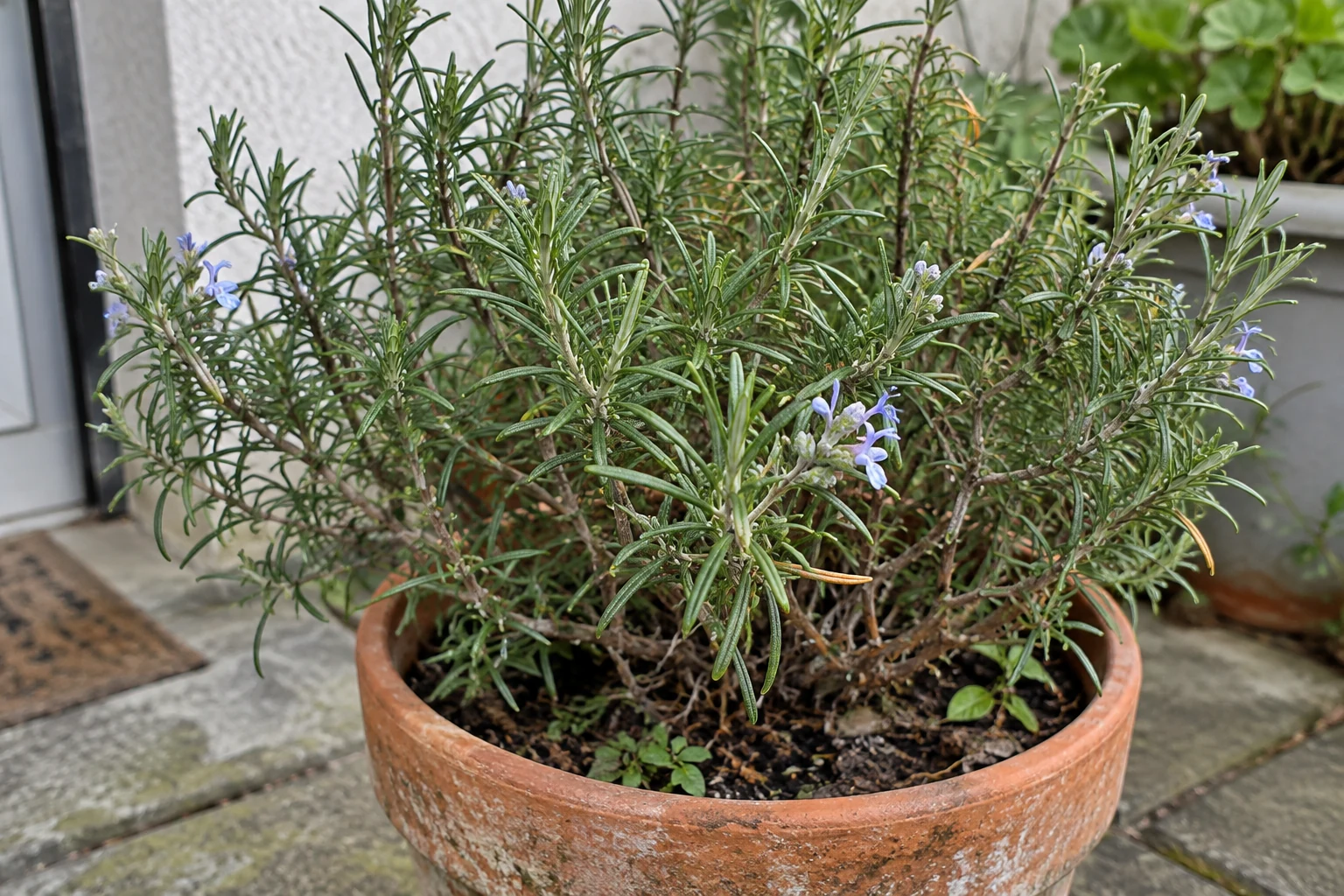
[19] The Herbal Remedy Companion, rosemary research note. (p. 174)
[20] The Herbal Remedy Companion, tea tree research note. (p. 184)
[21] The Herbal Remedy Companion, DGL licorice research note. (p. 119)
[22] European Medicines Agency: Witch-hazel bark, as cited in The Herbal Remedy Companion. (p. 180)
These guides are for educational purposes only and are not a substitute for advice from a qualified healthcare professional. Vivian Greene is the author persona and pen name used in these guides; her story is told in her voice and is not a clinical case history. Always check herbs with your pharmacist if you take medication, and keep prescribed treatment in place unless your clinician changes it.
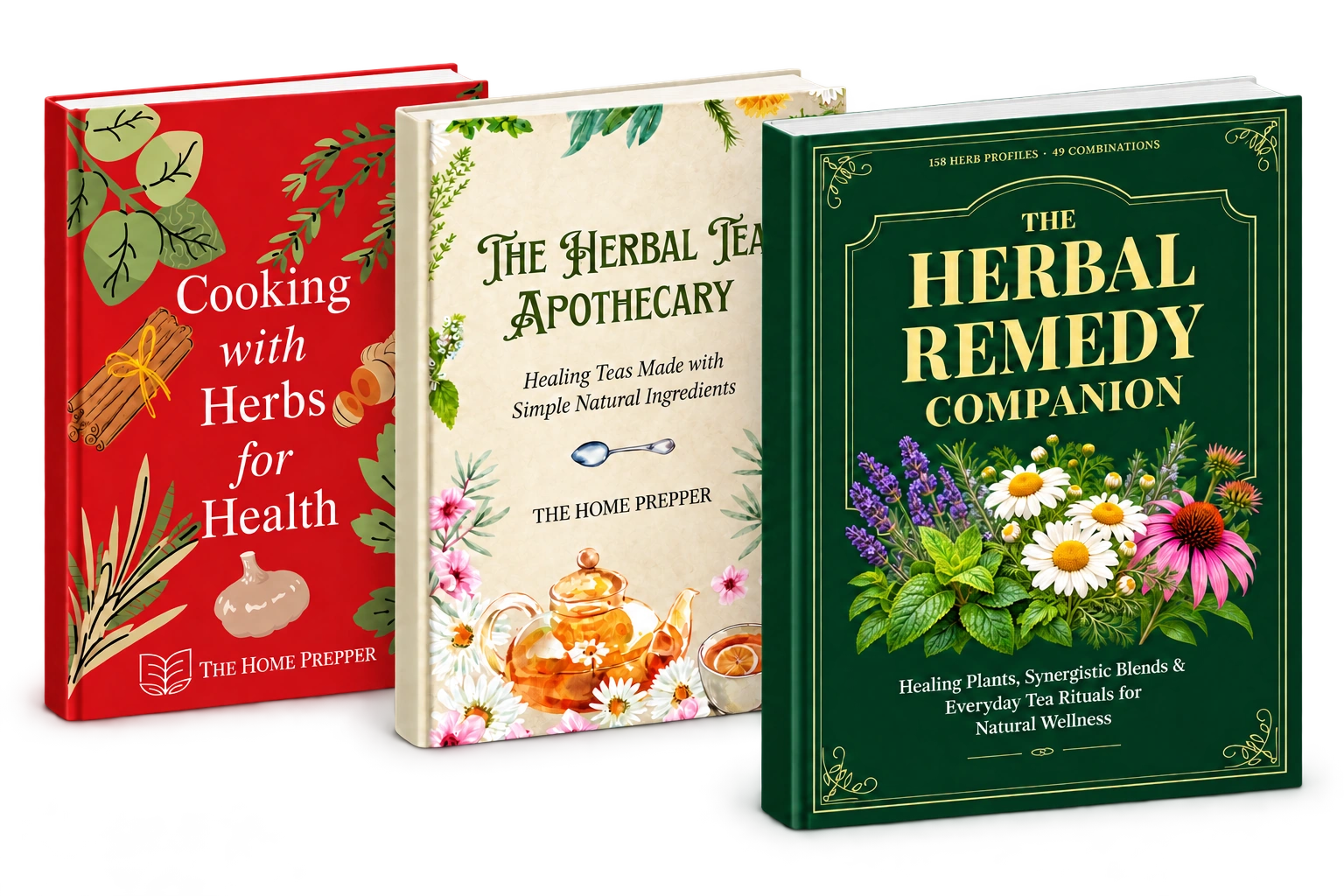
All three guides · Instant PDF access
Your price for all three digital guides:
One payment. No subscription.
One payment of $19.99 · 60-day money-back guarantee · Instant PDF access
Instant PDF download · Secure checkout through Digistore24 · Also available as a paperback on Amazon
Prefer the main book in print? See the separate paperback on Amazon →
Download the guides. Brew the first cup. Make the first batch. If it isn't for you, ask for a refund within 60 days and you'll get 100% of your money back. All the risk is on us.

“The handbook saved me so much time. Instead of Googling random remedies, I knew exactly which herbs to pair. My brain fog lifted, and I finally feel focused at work again.”
“I’ve struggled with blood sugar swings for years. The cinnamon porridge recipe was a game changer. Tastes great, and my levels have been more stable than they’ve been in ages.”
“Honestly, the teas are the easiest part of my routine now. A cup at night, and I sleep deeper without reaching for sleep aids.”
Choice one: keep doing what I did. Pay for the bill, then Google at 11 p.m., then pay for a guess.
Choice two: spend one afternoon learning the 3-Question Test, and never wonder again which remedies deserve your money.
Get The Self-Reliant Herbal PantryOne payment of $19.99 · 60-day money-back guarantee · Instant PDF access
P.S. One 12-minute visit cost me $215. This entire system, 158 herbs, 50+ teas and 73 recipes, costs $19.99.
P.P.S. You have 60 days to try it. If it isn't for you, you get 100% of your money back. The only thing you risk is another 11 p.m. guess.